2

Maximising Happiness

MaxHap paper

Right now Christine and I are experiencing one of the happiest periods in our lives. Just married, traveling the world… what could be better? One of the many great benefits of our current circumstances is that we have the time to think through the important questions we face as we plan out our lives together. As we’ve been discussing many of these questions they all seem to bubble up to an ultimate overarching question: How can we set ourselves up for lives full of happiness? How can we maximise happiness?

In tackling this question, there have been 3 topics we’ve started exploring:

1. Understanding what makes us happy.
We have a reasonable idea of what makes us happy at a high-level (e.g. being healthy, spending time with friends, success in our career, having a family etc.) but the devil is in the details. For example, I really enjoyed my career at LinkedIn but what exactly did I enjoy? Working at a consumer internet company? Working at a fast growing company? Leading a large team? Ownership over a large business line?… Only by understanding what makes me happy at this detailed level will I be able to properly determine the right next step in my career. Furthermore, another interesting component of understanding happiness is knowing how happy each aspect of life makes us (and over the longer term) so that we can appropriately balance the many competing priorities in our lives.

2. Making the right life decisions.
Understanding what makes us happy is the starting point but then we must also make the right life decisions if we are to maximise happiness. And I can tell you that right now it feels like we have a bunch of important life decisions to make. At the top of the list: Where do we want to live after our travels? What career moves do we want to make? When do we start a family? Not a day goes by when Christine and I don’t discuss these questions. The exploration of them will no doubt be a big part of our journey to maximise happiness.

3. Better dealing with things that can make us unhappy
No matter how well we do in making the right decisions to make us happy, there will inevitably be times when we feel less than happy. Things don’t always play out as expected, and furthermore, many of the happiest things in life require hard work that in the moment can feel difficult. While we consider ourselves to be people that generally have a positive outlook on things (in fact, I’d say Christine is one of the most positive people I know) one can always do better in this regard. Our initial exploration on ways to better deal with unpleasant things has led us to explore meditation. We already have thoughts to share on this topic but we’ll save that for future posts.

Exploring each of these 3 topics will no doubt be a dynamic and lifelong process. What makes us happy today may not be what we find to be important further down the road. And the set of decisions we have to face now will be very different to those even a few years from now.

Our plan is to make this an open exploration and to write on these topics regularly. By doing so we hope that we can share in this journey with our friends, family and all other readers of our blog. We look forward to hearing your thoughts and perspectives on this topic too.

More to come…

2

Snapshots of Bhutan

IMG_6627

History
One of the most fascinating things about Bhutan’s history is how mystical it is. From gods flying on the back of tigers to reincarnation of leaders across generations, it is hard to distinguish between historical fact and religious belief. The underlying reason is that Buddhism is so fundamentally ingrained into the Bhutanese way of life. 75% of the population are Buddhist.

The origin of Buddhism in Bhutan began with the second Buddha, Guru Rinpoche. In the early 8th century he travelled from nearby Tibet and brought Buddhism to the region now known as Bhutan. Everywhere we went in Bhutan you couldn’t help but miss representations of Guru Rinpoche from paintings to statues to costumed dancers. Our tour guide, Tenzin, also had a seemingly endless number of stories to tell us about Guru Rinpoche. So as you can imagine, Guru Rinpoche is a really important figure in Bhutan.

To come to the origin of the Bhutanese national identity, you need to fast forward to the 17th century to the story of the “unifier of Bhutan”. Prior to then Bhutan was really only a number of separate states, often considered as a southern part of Tibet. This all changed when a man named Ngawang Namgyal established himself as a religious leader and unified the region of Bhutan separate from Tibet (hence, Bhutanese refer to him as the “unifier of Bhutan”). More than just a religious leader, he was also a military and administrative leader. One of his most important accomplishments was the construction of the system of “dzongs” as fortresses to allow Bhutan to successfully defend itself from Tibet and other rivals in the region. However, when the “unifier of Bhutan” died in the early 18th century, Bhutan underwent a period of instability as regional leaders vied for power and Bhutan again separated into smaller states. Around this period, Bhutan began to have contact with British explorers linked to the East India Company who were in search of goods of value in the regions of Bhutan and Tibet. At times, interactions were hostile including the “Duar Wars” over control of the region of Assam in the 19th century. However, one Bhutanese leader, by the name of Urgyen Wangchuck, found a way to use positive relations with the British to his and Bhutan’s advantage. His support of Britain’s invasion and subsequent treaty with Tibet gave him the backing of the British and credibility with his own countryman to emerge as the most powerful man in Bhutan. In 1907, he was elected unanimously by Bhutan’s chiefs and religious leaders as the hereditary ruler of Bhutan. And so began a new monarchy (among the youngest in existence today) with Ugyen Wangchuck as the first king.

Since then, there have been 5 kings of Bhutan, all coming from Urgyen Wangchuck’s lineage. The second king, Jigme Wangchuck reigned from 1926 to 1952. During his time he oversaw the establishment of a strong alliance with India as they gained independence from Britain. It was during this time that many of the treaties between Britain and Bhutan were transferred over to India and Bhutan.

The third king, named Jigme Dorji Wangchuck is known as the moderniser of Bhutan. Educated in India and England, he saw that a policy of isolation would not be feasible, particularly after seeing China taking control over Tibet. He oversaw the opening up of Bhutan to international relations (including recognition as a country in the UN) along with a series of modernisation projects to build out infrastructure in Bhutan.

The fourth king, Jigme Singye Wangchuck, took over in 1972 at age 17. He continued along the path of modernisation set by his father. As he formulated his development goals, he emphasised the need for Bhutan to strive for development that is for the good of Bhutan and its people, not just development for development’s sake. In stating this, he coined the term “Gross National Happiness” (GNH) as a counterpoint to GDP. Hence today, Bhutan is famous for assessing the merits of development on whether it promotes cultural and environmental good, not just economic good. Towards the end of the fourth king’s reign, he recognised that for Bhutan to truly be modernised, it needed to follow a path to democracy. The king is quoted as saying “monarchy is not the best form of government because a king is chosen by birth, not by merit.” This process started in 1998 leading to the country’s first democratic elections in 2008. At this time, Bhutan officially transformed from absolute monarchy to a democratic constitutional monarchy.

The fifth king, Jigme Khesar Namgyel Wangchuk took over in 2006. Since his coronation he has continued along the path set by the kings before him to develop Bhutan along the tenets of maximising Gross National Happiness.

Truly Bhutanese
Bhutan has a number of unique quirks. To name just a few:

  • Tourist visa requirements – A great example of Bhutan striving to maximise GNH, is their approach to sustainable high value tourism. To enter Bhutan as a tourist, you have to organise everything through a regulated tour company, and you must pay a set fee of $250 per person per day (the fee covers all expenses including accommodation, food, transportation, and sightseeing). This is prohibitively expensive for the typical “backpacker” style tourist looking for bars and craziness, and instead you get more of the older/retiree style tourist looking to learn about Bhutanese culture. Christine and I felt like we were definitely among the youngest tourists in Bhutan, which makes sense given that we’re only semi-retired :).
  • The Takin  IMG_6528This odd looking creature is said to have been formed when the “Divine Madman” (another mystical Bhutanese historical figure) threw together the bones of a goat and a cow that he ate and formed the Takin. These animals are like nothing I’ve ever seen before. The way they move seems so awkward; kind of like a poorly animated beast in a 1980’s horror film. And their two toed hooves made them look pre-historic-like.
  • Cheese and chilly (ema datse) – Although Christine and I were served new and interesting dishes for each meal every day we trekked, the rest of our guides ate just one meal for breakfast, lunch and dinner every single day: cheese and chilli (ema datse). The guides were initially hesitant to let us try it because they thought it would be too spicy. In the end, the spiciness wasn’t the problem for us. It was that the cheese was so rich that we struggled to eat more than a few spoons full.
  • Target games –

    We learned before we arrived that the national sport was archery. Once on the ground, we realised that archery is only one of many similar target games they play. The Bhutanese love darts and another game where you throw rocks at a target. Christine and I tried it on our trekking tour but were pretty miserable at it.

  • Protective Phalluses –

    Surprisingly, you see phalluses everywhere! Not your Washington Monument style impression of a phallus. The real deal! Generally you’ll see them painted or “hung” at the entrance to houses in order to provide protection. The history behind it, similar to the Takin, is said to date back to the antics of the Divine Madman, who would happily show his penis as a symbol of strength.

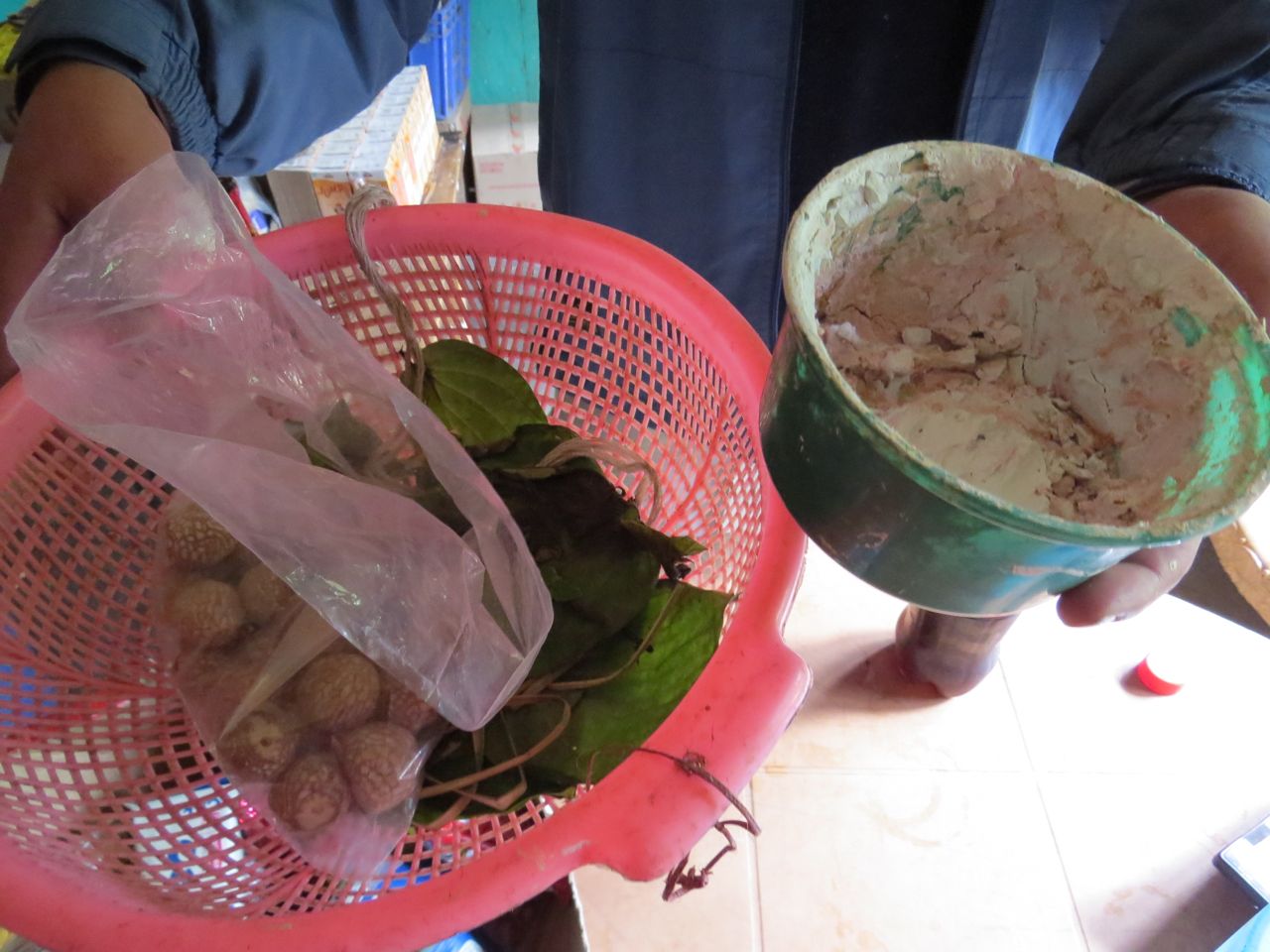
  • Chewing “doma pani” although the tradition is slowly being phased out due to health concerns (similar to tobacco smoking in western societies), the tradition of chewing areca nut wrapped inside of betelnut leaves with lime is still very popular with the older Bhutanese. What makes this practice so interesting is that the mixture makes your entire mouth turn red, and all over the place you see these red patches where people have spat out their doma pani out.IMG_6344
  • National Dress: Gho & Kira – Christine and I both thought that the national dress in Bhutan looked really good: women looked beautiful and elegant in the colourful ankle length Kira dresses; men looked dapper and intellectual in the their Ghos.

What we did

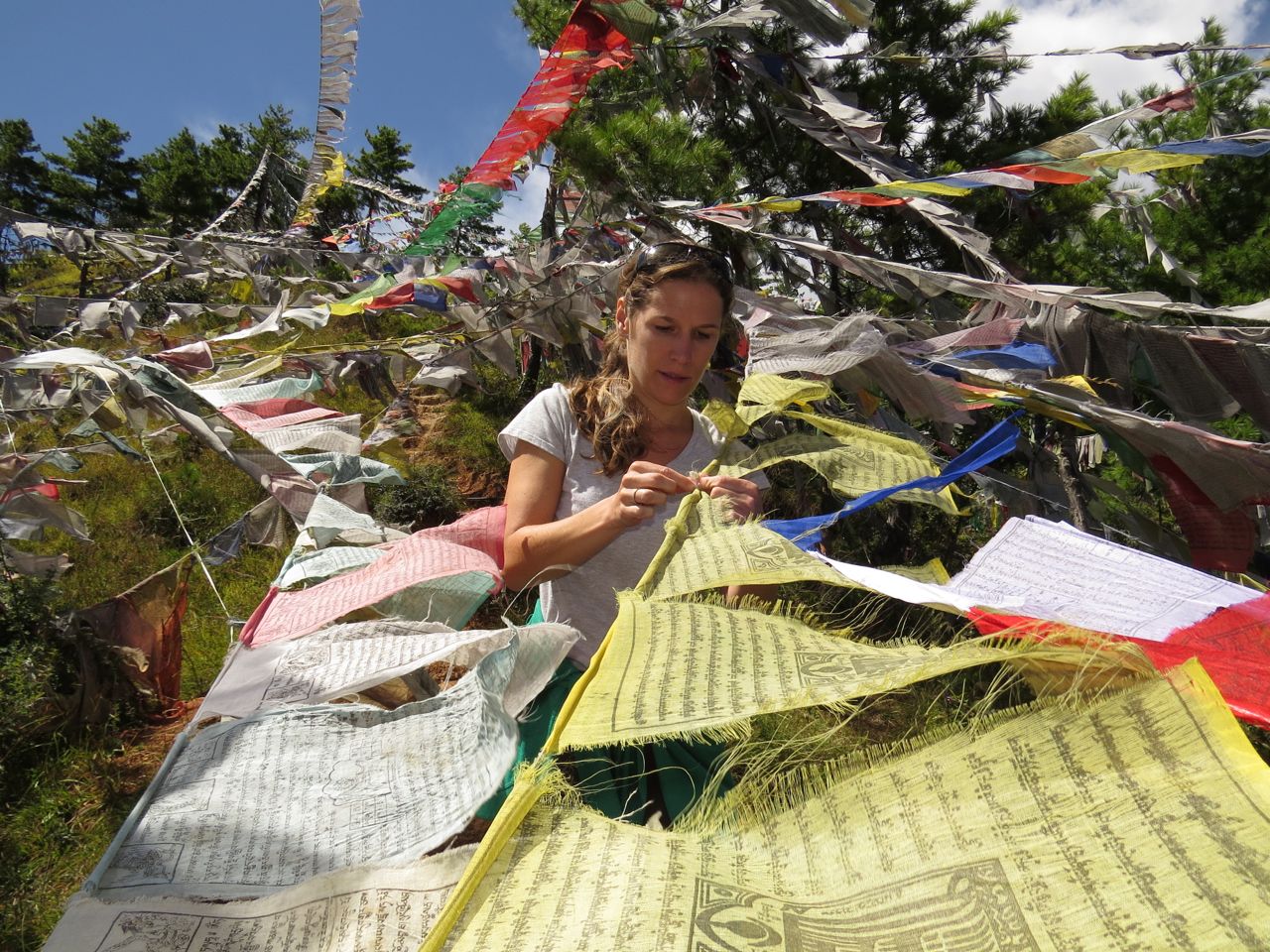
  • Paro: The main airport into Bhutan is in the city of Paro. Paro is not the capital nor the country’s biggest city (both of those honours belong to Thimphu) but it is nonetheless rich in history as one of the most prominent cities in west Bhutan. The scenery is beautiful, nested in the Himalaya range. The town is very quaint. The highlight of our time in Paro was the trek up to the Tiger’s Nest monastery (Taktshang Goemba).

    This place is simply stunning, built up high in the side of a mountain. The story behind it relates to Guru Rinpoche, the father of Buddhism in Bhutan, who is said to have flown there on the back of a Tigress and meditated there a while.

  • Trekking in the Himalayas:

    One of the main reasons Christine and I wanted to come to Bhutan was to do a trek in the Himalayas. Christine will write more about this in a separate blog post, but suffice to say, it was a highlight. It was visually spectacular and we felt very rewarded for the effort to hike up those peaks where the air was thin and the wind was cold.

  • Thimphu Tsechu Festival:

    After our trek we spent 3 days in Bhutan’s capital, Thimphu. Although it’s the country’s most populated city, it still felt small and charming. The main attraction while we were there was the annual Tsechu festival, a Buddhist religious celebration of song and dance. Beyond the performances, it was also really fun to see the locals decked out in their best attire.

4

Wong family roots

IMG_5799

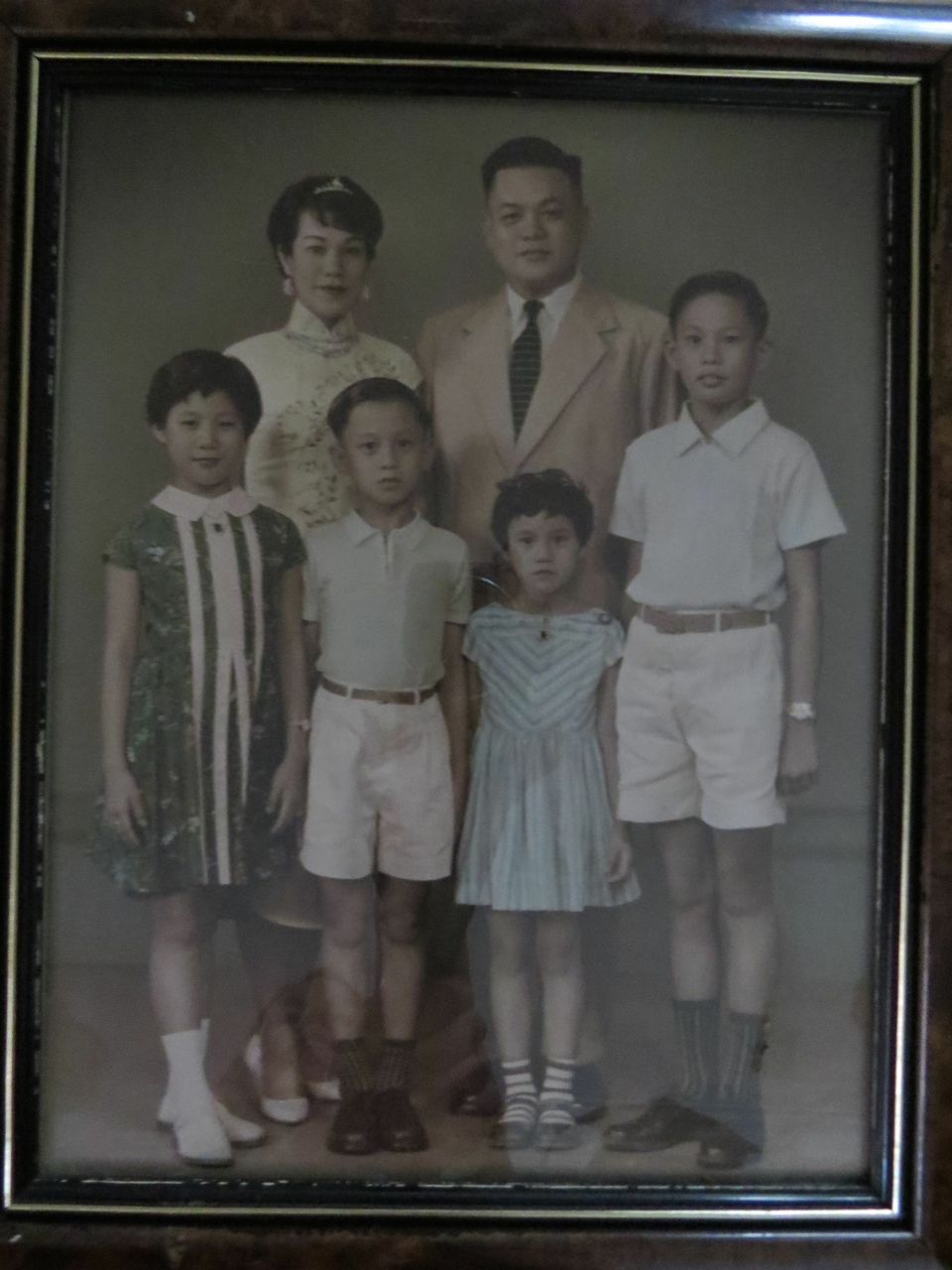
Wong family portrait. Back row (L to R): My grandmother and grandfather. Front row (L to R): Aunty Dorene, Uncle James, Aunty Lilian and my father

After spending 3 weeks traveling in China, it struck me that despite my Chinese heritage (i.e. the “Wong” in Sutherland-Wong), I don’t know much about who my Chinese ancestors were or why they left China. Today, all of my known extended family live outside of China in Australia, Malaysia and Singapore. While recently reconnecting with my Wong relatives in Singapore and Malaysia, I did a bit of investigation into my family history to find out more on this topic. What I learned was that a combination of major historical events along with adherence to a particular set of values have ultimately defined the path of the Wong family over the last 100 years.

From China to Malaysia

In Christine’s post on the history of China, she wrote about a particularly dark period in China’s history during the first half of the 20th century as China underwent a revolution from imperialism to a republic. It was a turbulent period as the Kuomintang and Communist Party (CCP) vied for leadership of China, until Mao and the CCP emerged victorious in 1949 (and even then, China would endure many difficult years ahead). During these years there was a mass exodus of Chinese away from China. Among them were the parents of my grandmother and grandfather (father’s side) who moved from China to Malaysia in search of a better life. It’s fascinating to think it was this period of turmoil in China that triggered a series of events that would one day lead to me being born in Australia.

My Grandmother and her parents (the Lee’s)

My grandmother is my sole living grandparent, at 91 years of age. Despite her body now being quite frail, her mind is sharp and her appetite surprisingly large for a woman who weighs less than 40kg and eats with false teeth. I try to visit my grandmother in Malaysia every few years. While she has grown frailer with each time I’ve seen her, it feels little else changes between visits. The smell of her place is always the same; a mix of incense from the Buddhist shrine at the front of her house along with the smell of cooked rice from her kitchen. And each time the smell immediately brings me back to memories of previous visits. The same photos on the walls; a couple of old family portraits along with the university graduation pictures of all of her children and grandchildren. The only updates happen when new graduation photos are added. The choice of photos offer an insight how highly my grandmother values education and family. Our relationship is good but admittedly not that deep. Language is a big barrier between us really getting to know each other; I regrettably don’t speak any Cantonese and her English is limited. However, I know she appreciates my visits and having family around.

Coming to the story of my grandmother’s family, her maiden family name is Lee (which is why my middle name is Lee). When her father, great grandfather Lee, arrived in Malaysia, he started out as a so-called “coolie” (effectively a servant labourer for the British colonists). One of the big industries in Malaysia at the time was tin. Malaysia is rich in tin resources, a valuable commodity to package tea that was being traded through Malaysia’s ports. From what my grandmother tells me, her father made a very positive impression on an English tin merchant. In her words “when the Englishman would leave his valuables out, my father would come and clean the room but not take any of the valuables. That was a sign for the Englishman that he could trust my father.” This trust seems to have led the English merchant to put great grandfather Lee in charge of a number of tin mines, ultimately making him a very rich and powerful man.

20141009_183504

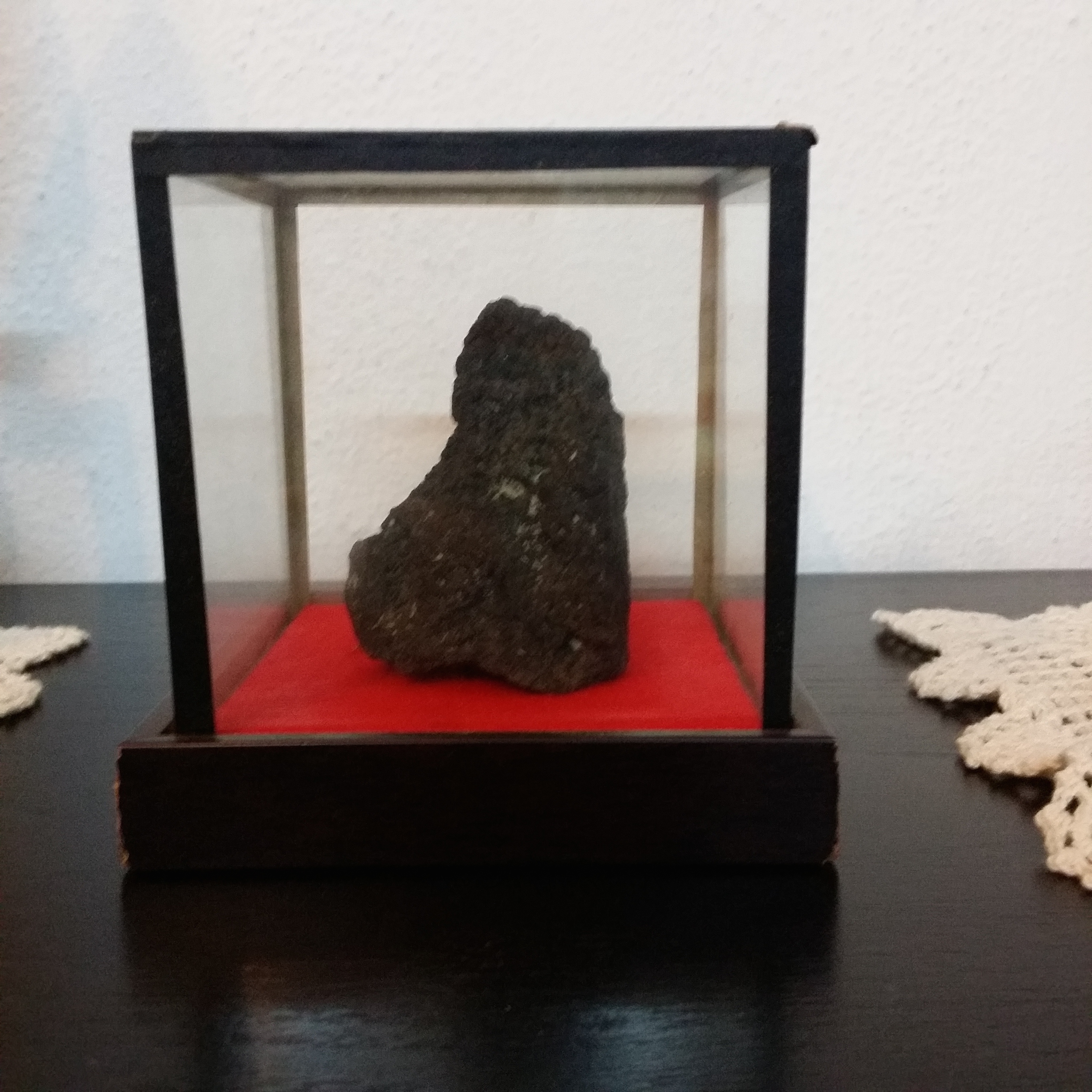
Family heirloom – piece of tin from my great grandfather’s mine passed down from my great grandfather to my grandmother to my uncle.

As my grandmother tells me this story, it is clear that she also intends to instil in me the importance of honesty and hard work – and her belief that they inevitably lead to good things. As for great grandfather Lee, what does a rich and powerful man do in Malaysia in the early 1900’s? Well, from what I understand, one way a man expressed his power and wealth in those days was by the size of his family. In the case of great grandfather Lee, he ended up with 4 wives and around 18 children. My grandmother was the daughter of his 3rd wife (who interestingly was the sister of the 2nd wife who had passed away during child birth). Today, she is the oldest surviving member of her family.

My Grandfather and his parents (the Wong’s)
My grandfather’s side is the originator of the Wong family name. I only have a vague recollection of my grandfather from when I was around 3 years old. He unfortunately passed away not long after that. I remember him being a big man (but I guess everyone looks big when you’re 3). Looking back at old photos, he does strike me as a big and imposing man. Most of my knowledge about my grandfather comes from the stories that my dad has told me. One of my favourite ones is that my grandfather would bring home 2 whole fishes to be cooked for dinner. One fish was for him. The other was for the rest of the family to share. So as you can see, my grandfather was quite the patriarch.

As for my grandfather’s parents, they also migrated from China to Malaysia in the early 1900’s. My great grandfather had 5 sons and a daughter. After his first wife passed away he married a second time. From what I hear, the daughter from the first marriage was shunned by his second wife and so not a lot is known as to what happened to her. My great grandfather was said to be a shrewd business man and merchant. He invested in real estate, rubber estates and tin mines. Similar to my grandmother’s family, my grandfather’s parents highly valued hard work to the point where they didn’t make much time to spend with their children or grandchildren. They ultimately believed that the rewards earned from hard work (i.e providing a large inheritance) would make up for the lack of participation in day-to-day life. When my great grandfather passed away in his eighties, my grandfather took over from him and ran the family business.

My Grandparents and their family

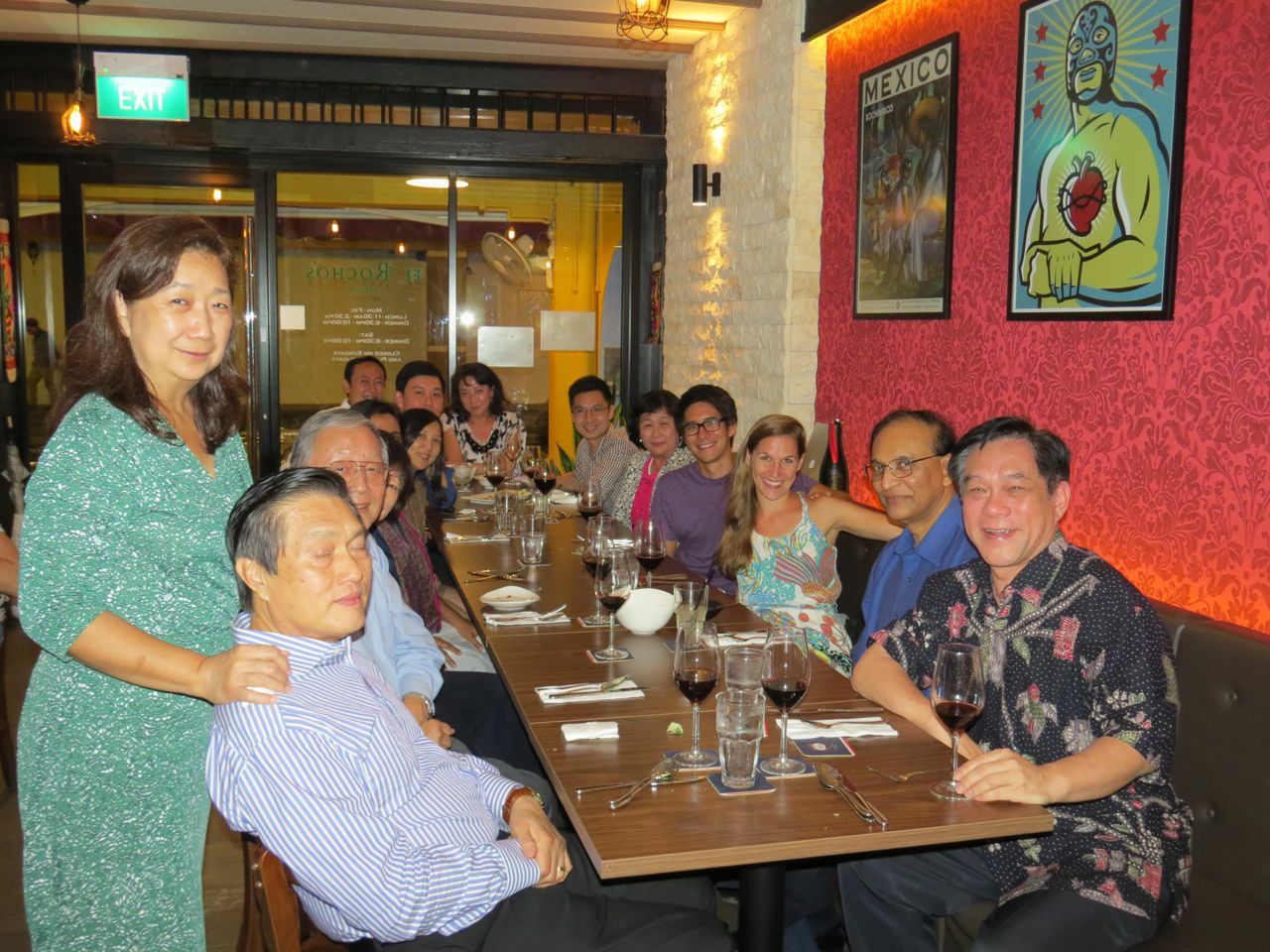
My grandparents came together as an arranged marriage. Although I didn’t delve into details with grandmother on how the marriage worked, it seemed to have worked well enough for it to survive until my grandfather’s death. They raised a family of two sons and two daughters in the small town of Kampar, Malaysia. They had a modest life. Not necessarily poor but also not rich. Given this, it says a lot that my grandparents invested in sending my father, the eldest child, to Australia when he was 17 for his final years of high school and then university. No doubt that would have been an expensive thing to do for a modest Malaysian family. They clearly valued education and believed in investing in their children. Despite intentions for my dad to return, he never did and settled in Australia. My dad tells me that Australia offered him a quality of life and freedom he couldn’t get back in Malaysia. I think this is both a reflection of the differences in lifestyles between Australia and Malaysia, and a reflection of my father’s desire to define his own path without the constraints of a strong patriarchal figure. Similarly, his brother, James, was given the opportunity to study medicine in Australia and afterwards settled in Singapore with his family. While my uncle was studying, his older sister, Aunty Dorene, helped support him by sending him money from what she earned as a nurse. This again illustrates how highly valued supporting family is in my family. I’m also reminded of this each time I visit my Uncle James in Singapore. My uncle and his wife, Aunty Theresa, are always incredibly generous to me and find a way to celebrate my visit. One of the highlights of our recent stay in Singapore was attending a big family dinner with the relatives of my uncle, the relatives of his wife and some close family friends.

IMG_5726

Extended family dinner in Singapore

As for my two aunties, Aunty Dorene and Aunty Lilian, they both have remained in Malaysia. Admittedly, it sounds like the opportunities that were given to the brothers (my father and uncle) were not necessarily also made available to the daughters. I think this was a matter of practicality that my grandparents couldn’t afford 4 overseas educations but also probably due to old cultural sexism between the importance of male vs. female education. Today my aunties, along with my grandmother, live in the town of Ipoh, not far from the smaller town of Kampar where they grew up. Aunty Dorene lives with my grandmother and cares for her. Aunty Lilian lives with her husband, Uncle Steven, and their son, Joe. Each works as cook. Funnily enough, my cousin works at an Australian restaurant in Ipoh (?!). My aunty and uncle run a hawker food stand making delicious dumplings and noodles (wonton mee).

So there you have it, the story of the “Wong” side of my family: troubles in China led to a migration to Malaysia in search of opportunity; the value of honesty and hard work led to opportunity being realised; and the value of investing in education and supporting family led my father to Australia where he would one day meet my mum and I would one day be born. No doubt, when we get back to Australia in November I’ll be quizzing my mum to find out more on the “Sutherland” story. Stay tuned.

0

5 steps to learn a new language in under a year

untitled%2520%25281%2520of%25201%2529-410 (Small)

As we travel around the world, Christine and I regularly have encounters that illustrate the opportunities that are unlocked by speaking more than one language. In Turkey, Christine wrote about an encounter with a restaurant owner that turned a simple meal into a wonderful evening of singing and learning about the lives of people in Cappadocia once we discovered he could speak German. A similar thing happened in Mongolia with the manager of a Ger camp we stayed in who similarly could speak German but not English.

I think most of us appreciate how powerful it is to speak more than one language. And yet, so few of us do (more than 75% of Australians and Americans only speak one language [1]). Why is this? My guess is that many of us believe that learning a new language is hard and takes years to achieve. I know that’s how I felt a year ago when I started to learn German. But now I know that this is not the case. In under a year, I’ve been able to get to a level of proficiency where I can watch many German TV shows, have conversations with my mother-in-law and spend 80% of my time with my wife speaking only German.

I firmly believe anyone can get proficient in a language in under a year and it only requires around 30 minutes of practice a day along with some creative ways to incorporate your new language into your day-to-day life. Here are 5 tips that were most useful for me in learning a new language. I’ve had the opportunity to test and refine these concepts with many multi-lingual travelers that we’ve met. Fortunately, each of these concepts resonated and they seem to be broadly applicable, regardless of background or language being learned.

1. Start with Duolingo:

Duolingo (www.duolingo.com) was the primary tool I used to learn German. And it is AWESOME. Most days I spent 30 minutes practicing (or perhaps maybe a more apt verb would be “playing”) with it. Almost every multi-lingual traveler I’ve met not only uses it, but like me, cannot help but sing its praises. To summarize why Duolingo is so great: a) there is a ton of science in the learning method. For example, it draws on research that learning sentences rather than words is more effective; it uses repetition at variably spaced intervals, which is also widely recognized as effective in learning; and it comprehensively covers reading, listening, writing and speaking; b) it’s personalized, identifying areas of weakness to provide greater content in those areas; c) it’s gamified and social which makes learning fun and motivating. ; d) it has a great mobile app which is one of the primary devices in which I used Duolingo (e.g. on the train to work); e) it’s entirely FREE thanks to one of the most ingenius business models.

2. Speak from day 1:

I remember in the early days of learning German that I didn’t feel like I was ready to speak. For example, when my fiancé and I spoke with her parents on Skype I spoke very little, embarrassed that I only knew a few words and afraid I would get things wrong. I had to push myself to get over this. Knowing words and phrases in your new language is great, but speaking them in real world situations is a whole other skill. It requires a level of quick recall and muscle memory that you can only develop by practicing to speak the language.

There are a range of ways you can find opportunities to practice speaking. You can find language meetups in your local town, sign up to websites (e.g. italki.com) that pair people learning new languages, or even just go out in public and spark up conversation with strangers who speak your language like these guys.

However, the best way to practice speaking is to…

3. …find a “Language Parent”:

Have you ever listened to how a parent speaks to their infant while she is learning to speak? What you hear is the parent speaking in simple phrases on a variety of topics, carefully listening when the child speaks, interpreting from broken phrases what the child means and often repeating back what they’ve heard in complete and correct sentences. The child feels completely safe to say whatever they want and to take risks in using their new language. This is probably the best environment possible to learn a language. And that is what your language parent will help you do.

A “language parent” is a term I heard coined in a TED talk by Chris LonsdaleIt refers to someone who is fluent in the language you are learning, who you feel very comfortable around to make mistakes, and who is obviously willing to be patient with you. In my case, my language parent is my wonderful and very patient wife. As soon as I began to learn, we started speaking German together and I was amazed at how quickly we were able to get to a place where the majority of our conversations were in German.

While not everyone may have a significant other to be their language parent, there are other ways to find one. In Turkey I met a woman who intentionally found a roommate that could speak English in order to practice her English. No doubt you’ll be able to find a friend (or befriend) someone fluent in your new language. See if you can make them your language parent!

4. Hammer through the grammar:

A couple of months into learning German, primarily using Duolingo, my language learning hit a brick wall. I was finding that no matter how much I practiced that I wasn’t really learning effectively or understanding the rules and constructs of German sentences. I ended up engaging a tutor for an hour a week for 10-weeks to intensively learn grammar. My time with the tutor essentially consisted of getting a grammar textbook and laboriously going through each exercise until we had gone through the book. It made the world of difference. While for some languages there aren’t as many new rules to learn, for most languages there are some grammatical differences you’ll need to get your head around so I encourage you to bite the bullet, buy a grammar textbook and hammer your way through it. I’d be interested to hear if other people have better (or more fun) ways to learn grammar, but this method worked well for me.

5. Immerse yourself:

One of the most impactful things I did in learning German was using my 3-weeks annual leave to go to Vienna and immerse myself, speaking only German with Christine’s parents and going to German classes each day. I highly recommend this type of experience. That said, even if this isn’t workable in your life there are other ways for you to immerse yourself in your new language. Read children’s books in your new language (and for European languages you may be able to find the CEFR level of the book to assist in matching the book to your level). Watch movies and TV shows (tip: turn on the subtitles for the language you are learning. Often having the words both spoken and written will help you understand what’s going on). Listen to songs and learn the lyrics. Read the world news in your new language. Change your phone settings to be in your new language (warning: there will no doubt be times where this decision will frustrate you, but it’s worth it). These are just a few ways to incorporate your new language into your day-to-day life, and there are surely many others. You just need to get creative.

I’d love to hear from others and their experiences in language learning. I hope these concepts resonate, or better still, are helpful in your current language learning. For those of you who are considering learning a new language, I hope that this encourages you to give it a go!

***

[1] Quote from US Secretary of Education, Arne Duncan in 2010 and 2011 Australian Census

2

Snapshots of China

IMG_5712

Beijing

Having been to Beijing before during the frenetic times of the Beijing 2008 Olympics, I was curious to return to see what the city looked like when it was “business as usual.” Somewhat surprisingly, it almost felt like the city was even more frenetic this time round. Traffic was heavier. Air pollution was thicker (smog prevented us from seeing the sun during the 4 days we were there). And it even felt like security checks were more intense (for example, you now go through security checks for the metro and many popular public monuments). But after spending 3-weeks in almost isolation in Mongolia, Christine and I were ready to take on a big city.

We hit the key tourist sites like Tiananmen Square and the Forbidden City. We also did a tour of Peking University after I presented to the MBA class there on careers post business school and why they should be using LinkedIn (yep, months after leaving my job at LinkedIn I’m still cheerleading for them. Go LinkedIn.). And we searched around for the best food Beijing has to offer from Peking Duck to Cantonese specialties (stuff I grew up with) to Hot Pot.

Great Wall of China

Visiting the Great Wall was just breathtaking, even second time around. When I did it the first time back in 2008, we went to the more “popular” (read: touristy) section of Badaling. Luckily, this time my wonderful friend and China expert, Nat Gray, encouraged us to go to the more secluded section of Jinshanling. We followed her advice and are so grateful we did.

We visited on a Sunday morning. There was kind of an eery feeling we arrived, in part due to the dense mist in the air, but mainly due to the fact that there was no one else around. Here we were, visiting one of the world’s most popular tourist attractions on a weekend and we were the only people in sight! It took us almost an hour before we saw other people on the Wall, and even then, we probably only saw about 20 or so other people during the four hours we traveled along the Wall. It was an incredible experience.

While driving to and from the Great Wall we did a bit of reading up on the history. Many of us know it was built to help defend China from its aggressive neighbours like the Mongols. What we didn’t previously know is that sections of the Wall were originally built even before China was a unified kingdom by the separate independent states. It wasn’t until the Qin dynasty (221-207 BC) when China was unified as a single kingdom did the project begin to make it a Wall for a unified China, and hence the moniker the “Great” Wall. Interesting, no?

Xi’an and the Terracotta Warriors

We put a 2-day stop in Xi’an on our itinerary largely to see the Terracotta Warriors. We were pleasantly surprised that Xi’an is a wonderful city in its own right. It also has a rich history, being the original capital of the unified China up until the Tang dynasty ended around 907. Some of the top things to do in Xi’an are to visit the old town (particularly the Muslim Quarter where you get to taste some incredible street food) as well as marvel (or better still, bike ride around) the 14km city wall.

Nonetheless, seeing the Terracotta Warriors was the highlight of our trip to Xi’an. The quick history on the Terracotta Warriors is that they were built by the first emperor of the unified China, Qin Shi Huang back around 210 BC. The purpose was for the army to ensure he would be as powerful in his afterlife as he was during his time in the real world. It is said he kicked off the project when he was 13 years old, and had 600,000 people work on it until his death at age 50. But the project was never officially documented so it wasn’t until some peasant farmers in 1976 accidentally stumbled upon it when trying to get water from a well that the incredible work was discovered.

The museum is incredibly well done. It is built on the actual site that the Terracotta Warriors were found and excavated, leaving each of the pieces in their original places. Being there makes you feel like you are part of an archaeological excavation. But what blew me away was that while there are tens of thousands of these life-size warriors, each of their faces is distinct. Incredible.

Jiuzhaigou and Huanglong

One of China’s not-so-secret natural treasures is Jiuzhaigou National Park. I say “not-so-secret” because even though most people outside of China have probably never heard of this park, most people in China do know about it. And when we visited, it felt like EVERYONE in China was there visiting with us. While admittedly the crowds did detract somewhat from the experience, the park itself was nothing short of breathtaking. I truly have never seen lakes with such vibrant colours before. If I didn’t know better, I would have said they looked artificial because they were that spectacular. The blues, greens, turquoises, milky whites of them were really incredible. My words, and even our photos, don’t do it justice.

Huanglong is a couple of hours drive away from Jiuzhaigou. Although it’s a fair bit smaller, it is no less breathtaking and fortunately doesn’t attract the same drones of people as Jiuzhaigou. It ended up making for an even better experience.

We spent a full day at each of the parks. A full day was enough for Huanglong but you could probably do 2-days at Jiuzhaigou if you had the time.

Shanghai

Shanghai was the highlight of our time in mainland China. Partly because it is a great city. But mostly because we spent the time there with one of my closest friends, Nat Gray. As her wedding present to us, Nat organised our whole Shanghai itinerary and shouted us for everything. It was incredibly generous of her (thank you again, Nat!). First night we went out for a dinner with her and her friends at a great Sichuan restaurant followed by drinks and karaoke into the wee hours of the morning (we only could manage to stay out to 3am after getting up earlier that day at 5:30am to make our flight, but we heard others in the group sang until 5am!). Next day we were all a bit hazy but still managed to pull ourselves out of bed to have dim sum with Christine’s HBS sectionmate, Sandra Weng, and her beautiful daughter, Serena.

During our 4-nights in Shanghai, Nat organised a wonderful itinerary walking through the best parts of town; drinking with the best views of Shanghai’s famous “Bund”; and eating at incredible restaurants including a food walking tour (if you’re interested, we highly recommend “Untour” and their food tour of Shanghai). Nat also bought us tickets to take the high speed train to Nanjing (1hr 15 mins from Shanghai) so we could see the Memorial Museum to the Nanjing Massacre. Was very interesting to learn about the atrocities committed by the Japanese in China during World War II. A very moving experience.

After four incredible days in Shanghai with Nat, we got a good appreciation for life in Shanghai and felt sad to leave.

Lijiang, Shuhe and Shaxi

Lijiang was the last stop of our travels around mainland China. Again, it was a recommendation of Nat Gray (and her friend, Amanda). Funnily enough, we had several people we randomly met in China during our travels who also all recommended (unprompted) that we check out Lijiang. The charm of the place is the old town, with its old style buildings and cobble stone streets that really takes you back in time.

We had been warned that Lijiang Old Town can be a little overrun by tourists, and while it was busy, we didn’t think it was all that crowded compared to what we’d seen earlier on our trip in places like Beijing, Shanghai and Jiuzhaigou. Our accommodation was at a wonderful boutique hotel, The Bivou, which was in another old town called Shuhe, 4km from Lijiang Old Town. One of the charms of staying in Shuhe was that it was smaller and less crowded that Lijiang, while having all the same charm.

During our stay we rented bikes and rode around to other old towns in the area, including Baisha and Yuhu. The highlight of our excursion was meeting a famous doctor and herbalist, Dr Ho. Christine is going to write about this in a separate post soon.

On another day we hired a driver to take us to Shaxi (about a 2hr drive away). We had heard about the famous Friday markets in Shaxi, which have been happening since the days of trading along the Tea-Horse Road (similar to the Silk Road). It was a very special experience, and once again Christine will write a separate post on it.

There are actually so many other activities we could have done in the surrounding areas of Lijiang if we had more time. It’s funny, that even though we’re traveling the world for a year that we still sometimes feel rushed for time. But there’s just so many things to do and places to see!

Hong Kong

We had not initially planned a stop in Hong Kong. However when we found out that one Christine’s closest friends (who also acted as one of our marriage celebrants), Shilpa, had relocated there, we made sure it was a stop on our journey.

It was so nice to reconnect with Shilpa. Although I was out of action for a couple of days (recovering from a cold I caught on our last day in Lijiang), the girls explored the city together, bringing their hula hoops along for good measure. We also got to catch up with Greg, an Australian gut we met in Cappadocia, for dinner. He recently moved there with his fiancee to teach English at a local school. We learned from Greg that Hong Kong has a number of fantastic hiking trails and beaches, which he had just started exploring. They sound pretty amazing. We didn’t get around to doing any on this trip (my illness and a typhoon warning kept us mainly indoors) but now are keen to return to Hong Kong to check them out.

0

Discovering new kinds of dairy in Mongolia


IMG_4330 (Small)

Mongolian cuisine is very much defined by the limitations of nomadic living. As a nomad, you can only really eat things that can travel easily with you. Think cows, yaks, sheep, goats and horses. You have a limited ability to grow crops as a nomad, and not a lot of space in your Ger (tent) or on your carriage to be lugging around elaborate spice racks. So what’s left is diet rich in meat and dairy, without a lot of fresh veggies, and generally quite basic flavour profiles. That said, within these limitations the Mongolians have devised a very creative diet, particularly when it comes to dairy. Our guide, Ashley, told us that Mongolians have very white teeth because they eat so much dairy. Although I’m yet to verify this causal relationship, it is true that Mongolians do seem to have white teeth and they definitely love their dairy.

Our closest encounters to traditional Mongolian cuisine, and the omnipresence of dairy, came on the few occasions when Christine and I had a chance to visit nomad families inside their Gers. On arrival, we were met with an almost identical ritual each time: milk tea was poured out of a tall furnace into small ceramic bowls; homemade bread was pulled out of a tin and cut into slices; and from underneath a table came out a very large bowl of whipped butter cream and a basket of curd chips. All of these were gently offered to us, and following Mongolian custom, we accepted each item graciously.

The milk tea seemed to be simply milk infused with a tiny bit of black tea and it tasted quite good. The whipped butter cream, which is meant to go with the homemade bread, tasted like the stuff I’ve made when I accidentally whipped cream for too long and it became butter-like. So in this case, the taste was quite familiar. That said, I was taken aback when I saw how much butter they typically spread on: “You like a bit of bread with your butter?” However, the curd chips tasted like nothing I’ve ever had before. I was told that they are made from skimming the curd off the top of yogurt, and leaving it out to dry out in the sun. The chips come in a range of shapes and sizes. Some are round with a small hole in the middle, kind of like a big button. Some look like big potato chips. Others are small, odd shaped pieces that kind of look like popcorn. Despite the variation in appearances, they all kind of have the same funky, sour taste of “off yogurt”. The first one I was offered, I obligingly ate it all. In the next Ger camp when I was offered it, my stomach could only manage to eat half of it before I quietly placed the remainder in my pocket. The times after that, I politely accepted the chip, pretended to take a bite and then subtlety placed the whole chip in my pocket.

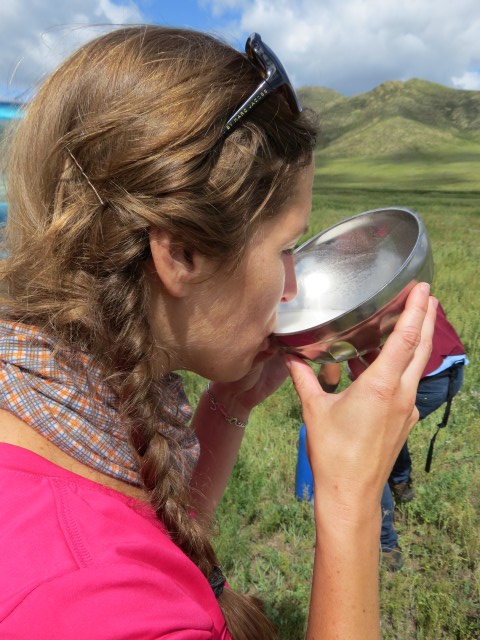
Yet these were the tamer side of our dairy discoveries in Mongolia. On the more exotic side was fermented horse milk (airag), which is popular in Mongolia and believed to have medicinal properties. The thought of drinking the milk of a horse initially sounded off putting, although Christine and I were pleasantly surprised that it didn’t taste too bad.

IMG_4422 (Small)

However, the prize for our most interesting dairy discovery goes to yogurt vodka. Yes, that’s right. Vodka made from distilling yogurt. Once upon a time I liked tequila until I had a really big night on it when I was 18-years old, and ever since then the smell of it or the tiniest sip will make me squirm. That’s pretty much the immediate reaction I had when I tasted yogurt vodka.

While I won’t be rushing to my local supermarket to seek out any of these new “delights”, I have a huge appreciation and admiration for the Mongolian people in their adaptation of foods to their environment. Mongolians have created a truly unique food culture.

Oh, and on the topic of food in Mongolia, here’s a video of me swallowing a live fish we caught in a river:

1

Hot Air Ballooning in Cappadocia

IMG_3413 (Small) One of the famous things to do in Cappadocia is a sunrise hot air balloon ride. Christine and I had high expectations for this excursion and we can honestly say that those expectations were exceeded. It was really a magical experience. We had to get up at 4am on the day of the ride (which isn’t as bad as it sounds since we have generally been woken up at around 5am each day in Turkey from the muslim prayers that are blasted through the loudspeakers on the miniarets). After a bit of admin to pay and get sorted into groups we then were transported to the site where the balloons took off from. It was still dark at the time we arrived so seeing these massive balloons glowing as they were getting heated up was quite stunning.

With little ado, we then jumped into the basket of our balloon. There basket was divided into 5 sections. One for the “driver” and 4 other sections that fitted 4 people each. Our driver quickly explained what we should do for landing while he periodically released hot air into the balloon. Shortly after, we felt the balloon start to move, and then when we looked down we saw we were no longer on the ground but a few inches up. And then, very smoothly, we lifted up, up and up. Before long we were 700 metres up in the sky! I’ve done hot air ballooning once before in Melbourne (which I loved), but I have to say that this experience was a whole lot more special.

First of all, there are probably 50 or so hot air balloons that take off every morning, so the air is littered with all of these balloons. It is just breathtaking to see. I actually said to Christine at one point that I thought we’d been transported back to Tomorrowland because it had that similar Alice in Wonderland kind of magical feeling.

The other reason this hot air balloon experience was so special was because of the landscape. Cappadocia, with its other-worldly rock formations and cave homes is a truly incredible place to experience from the ground, and even more incredible from the air.

The ride went for a little over an hour before we softly touched down in a small field. We toasted the experience with a glass of bubbly (apple cider) and then were shuttled back to our hotels where we were able to get a quick nap in before getting on with the rest of the day.

If you’re ever in Cappadocia, I highly recommend doing the hot air ballooning. It’s magical.

2

Surviving my first Hamam (Turkish Bath)

735_36-cemberlitas-hamami-4

OK, I’ll admit it. I was kind of freaked out about going to a Hamam (Turkish Bath). After hearing from several friends that it was a somewhat horrific experience, I initially had decided that I didn’t want to do it. Christine, however, was very keen for us to try it because she figured it would be good to experience a unique, traditional practice. After some back and forth, I reluctantly agreed to go through with it. Having now come out the other side and lived to tell the tale, I can say that it wasn’t all that bad, and I might go as far to say it was a good experience. Wouldn’t rush back to do it again, but I’m glad I did it.

The quick run down on Hamams are that they are bath houses that have been around in Turkey for centuries. Back in the day people didn’t have their own bathroom in their home so they went to a bath house to get bathed. In Turkey, the Ottoman’s were apparently very fond of their bathhouses so you have hundreds of them all around Istanbul, of which around 60 are still active. The side of bathhouses that some people find a little “stressful” today is how you actually get bathed. What was described to me was having a massive old Turkish guy scrubbing me down so that my skin is raw and then manhandling me with all his weight… as I said, I wasn’t really up for it at first.

Looking through Tripadvisor for the best Hamam to go to, it was clear that there isn’t really a Hamam that everyone likes. For all the Hamams there were people who were quite traumatized from their experience (not accounting for high-end Hamams that give you a luxurious yet less authentic spa experience). The one Hamam that seemed to fare slightly better than the others on Tripadvisor was Cemberlitas Hamam so we settled on that. Cemberlitas was originally built back in 1584, making it one of the oldest Hamams still in operation. Upon arrival, Christine and I were given our tokens and wash cloths and then we were quickly separated into the men’s and women’s Hamams (no couples treatments in Hamams!). I was told to strip down and cover myself with a towel, then come back to the entrance of the men’s Hamam room. After doing so, I was greeted at the entrance by a slight, smiling, older Turkish guy who took my token and grabbed my hand. Now, there really wasn’t any turning back.

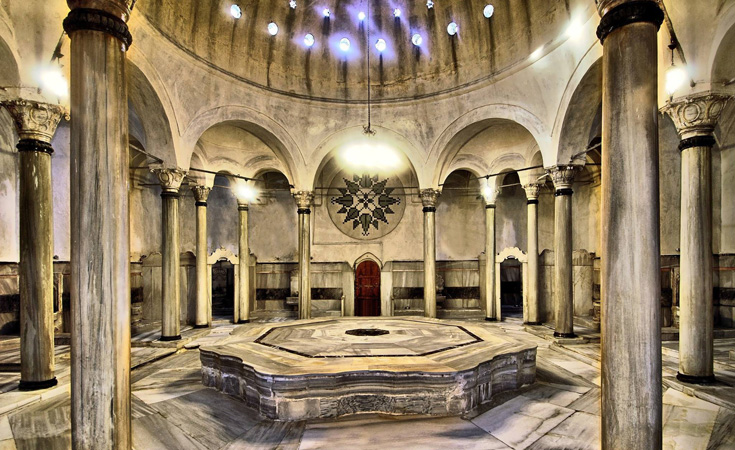
When we walked through the Hamam door we came into this outside area littered with running taps and releasing water into marble sinks. I was then guided from here into the central Hamam chamber. I quickly recognized this place as what you see in the photos when people talk about Hamams. The room was warm and steamy. Overhead was this beautiful domed ceiling with many large round holes that allowed the sunlight to pierce through. Under the dome was a large roundish flat marble stone, probably about 6 metres in diameter.

Other than me and my attendant, there was only one other guy in the room, who looked like a customer, lying down on the marble stone. I was then told to also lie on the marble (to be clear, my guy didn’t speak all that much English so it was a mixture grunts, pointing and a few broken words). Shortly after lying down a bucket of warm water was dumped on me. And then the attendant left. I wasn’t quite sure what to do at this point, but figured I would just lie there and see where things went. I felt quite relaxed in the Hamam. Great temperature and soothing with all the steam. And the beauty of the old structure added to the ambience. To think that for hundreds of years that men have been coming here to bathe, it felt very cool to be going through this experience (which to Christine’s credit is exactly what she had intended). The silence in the room was broken when a big burly Turkish guy entered the room. My heart sank. My first thought was that this guy is going to destroy me. I then breathed a sigh of relief when he approached the other guy in the room. A few minutes later, the smaller guy who had originally brought me into the room reappeared. “Ah I get it, this guy is my bather.”

He started off by grabbing my wash cloth and using it to scrub me down. This was kind of like an exfoliating process. Fortunately, it didn’t feel as rough as other people had described. Kind of soothing actually. He also mixed in a bit of a massage here and there. After a few minutes, he had pretty much exfoliated my whole body. He then rinsed me again and moved onto the soaping phase. At this point he put soapy water into the washcloth and somehow this created a ton of foam which he lathered all over me. The whole part of this washing process probably went for about 8 minutes. All in all, it wasn’t as rough as I had expected. There were a few times when I felt like he was a being a little “too thorough” with his cleaning coverage of my body parts, and I certainly wouldn’t describe him as gentle, but really not all that bad.

After being rinsed down again, I was then led back to the outer room I had seen when I first entered. Here I was given a short massage, rinsed down by slightly cooler water and that was it. My guy then took me back into the main Hamam room where he told me (again through grunts and broken English) that I could stay here and relax and that I should tip him on the way out.

So that was it, my first Hamam experience. As I said, I’m glad I did it. I know that other people have had pretty horrendous experiences so it sounds like it can be quite variable, probably also depending on the bather you get.

Finally, a big thank you my beautiful wife for convincing me to go through with it. You always know best :).

3

Tomorrowland: Boom, Belgium, 2014

untitled%2520%25281%2520of%25201%2529-375 (Small)I can only recall a handful of times in my life where I’ve experienced a kind of sensory overload that has made me feel like I’ve been transported to another world (previous occasions would probably be my trip to Kolkata in 2006 and Burning Man in 2011). But that is what I felt at the Tomorrowland music festival in Belgium last week. It was another world.

In normal circumstances, Christine and I probably wouldn’t have signed up to fly to a 3-day long music festival in Belgium. Generally we prefer to spend our precious few vacation days doing romantic trips together more akin to our Sardinian honeymoon. But now that we’ve embarked on a one-year long around the world trip, when our close friends Teeba and Basel suggested we join them for Tomorrowland this year, we found ourselves saying “why not?!”

Quick background on Tomorrowland for the non-initiated (which included me as of a few months ago) is that it is one of the world’s largest (if not “the largest”) electronic dance music festivals, with 180,000 attendees. Established in 2005 by a couple of Belgian party dudes, it quickly grew from 10,000 people coming to a one day event to 180,000 people coming to a festival that spanned 3-days. Each year they sell out within a couple of hours (or sometimes only minutes) of making the tickets available. Part of the attraction is the ability for the event to attract the entire lineup of the world’s most well-known DJs (think Above and Beyond, Paul Van Dyk, Tiesto, Moby etc.). However, I’d be selling Tomorrowland short to say it is all about the lineup, because it really is much more than that. The setup of the stages, the art installations and chill-out areas are beyond anything I’ve ever seen at a music festival before. The best way I can think of describing it is to say is that it felt like Disneyland for adults (with apologies to my friend Jaime who I know would cry out “Disneyland is for adults” if he were to read this…). There’s a YouTube clip of the 2012 Tomorrowland festival that captures the spirit well that has had over 115 million views! Worth checking out.

In case that clip made no sense to you, let me explain what we got up to. Having finished our honeymoon in Sardinia, Christine and I flew to Lisbon to meet our friends Teeba, Basel, Shilpa and Jessica, along with our new friend, Rahul, who Shilpa had brought along from Singapore. While it may have been a more direct flight to go straight from Sardinia to Brussels (near where Tomorrowland is located) the reason we went to Lisbon was so that we could take the special Tomorroland chartered flight out of Lisbon (they set up several of these out of many cities from Europe. Lisbon was the only one we could tickets to).

The party plane lived up to it’s expectations. Shortly after take-off, the window shades were lowered, the cabin lights turned off, beer trolleys came out and dance music was turned on. What ensued was a dance rave at 30,000 feet. When we landed in Brussels 2.5 hours later, we all were not sure where the time went.

From Brussels we were transferred to the aptly named town of Boom where Tomorrowland is located. We commented to each other that we expected that the residents of this small town must hate having their home invaded every year by so many people. However, we were pleasantly surprised to see locals coming out of their homes as our buses passed by to smile and wave to us, many also waving the distinctive Tomorrowland flags. Later in the festival I had the chance to meet a local and asked her what people really thought. While she said not everyone was thrilled with the event, that many people did embrace it and that the organizers invested a lot in winning over the locals, including giving them free day passes to come to the event.

After the short 30 minute bus ride, we arrived at the location on Thursday evening. While the majority of attendees stay at a location outside of Boom (e.g. in a hotel in Brussels), about a third of people stay onsite at Tomorrowland in the camp grounds called Dreamville. In our case, we opted for an upgrade and stayed in the Dreamlodges in Dreamville. They were described as pre-built tents, but in the end way exceeded our expectations. Having been diverted away from the masses that went to set up their own tents at the camp grounds, we arrived at the check-in counter of what felt like a tropical island resort. We were then guided to our cute canvas tiki tents where two flowers awaited us laid upon the mattress of our comfortable beds. Having expected to be somewhat roughing it in tents, I was very pleased to know I’d have a bed I could look forward to return to each day! (TOMORROWLAND TIP: splurge a bit and do the Dreamlodges. They’re worth every penny).

Later that evening they had a welcome event for everyone staying at Dreamville (which in itself was a bigger concert than many I’ve been to before), however we decided to not go too big this night knowing that we had some big days ahead. Also, the performance of the DJs was not as good this evening. Too much unnecessary chatter coming from the DJs which kind of interrupted the flow. Fortunately the performances at the actual festival were all much better!

After a refreshing nights sleep, we awoke to the hum of dance beat sounds in the distance. Tomorrowland was officially beginning. We continued to feel convinced that we had made the right call to do the Dreamlodges when we saw the breakfast buffet (once again more akin to what you’d see at a luxury resort than at a dance festival) and this feeling was yet again reaffirmed when our tickets allowed us to skip the lines at the entrance to the festival.

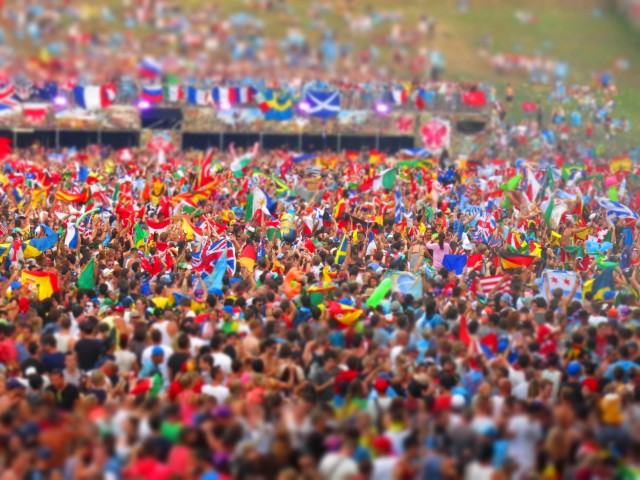
Once inside Tommorrowland, we were all taken aback as to the sheer enormity of the place and the attention to detail of the organizers in creating an environment that truly felt out of this world. I will try to describe it here but no doubt will not do it justice. The festival is inside a park that covers about a 1 squared km space. Scattered throughout the park are 13 stages, each with its own theme. Between the stages are lakes, paths, bridges, food stands, chill out areas, rides and some of the most incredible installations you’ll ever see. Much of it felt like it was shaped around an Alice in Wonderland theme with big brightly colored toadstools, big mirrors and even a couple of DJs who looked liked Mad Hatters (more on these guys later). There were hedge mazes, installations of scores of Barbie dolls attached to long-stemmed flowers, bridges with hundreds of thousands of messages inscribed on the wooden slats (attendees were asked to send their messages prior to the event), light shows beaming across water installations, a massive ferris wheel that looked in proportion to the London Eye… Added to these sights, you had the sounds of the world’s best DJs coming at you from all angles along with the incredible energy of the 180,000 strong crowd. What was also amazing about the crowd was the incredible international representation. I read that more nationalities were represented at Tomorrowland than the 2012 Olympics. And it felt that way with the sheer number of flags people had brought it. And I was proud to see that, as usual, Australia was well represented (in fact, other than Belgium, I think I saw more Australian flags than any other nationality. Aussie, Aussie, Aussie!).

Over the course of the 3 days, the group of us (Basel, Teeba, Shilpa, Rahul, Ardy, Jacques, Jessica, Pato, Eyal, Tamara, Rawan, Rasha, Christine and I) wandered from stage to stage, danced, smiled, laughed and generally soaked up the experience. Too many highlights for me to mention in a single blog post, but if I were to choose one, it would be what occurred on Saturday evening mid way through the festival. After spending several hours in a dark tent dancing to trance music, the group emerged for a wander around the grounds and stumbled across the Grand Theater stage, which we were to later christen as “Happy Land.” The stage was one of the smaller ones at the festival, situated on a platform in the middle of the lake. The DJs playing were called Bart & Baker. None of us had ever heard of these guys and they looked a couple of decades older than any of the other DJs playing at the festival. But they were fun. Really fun. And as I alluded to before, these were the guys kind of dressed up like Mad Hatters. The tunes they played were kind of like a mix of Loony Tunes cartoons, upbeat jazz and electronic dance music. Across from the stage was a small chillout area (also on a platform on the lake). A few of the group peeled off to this area to dance. What then ensued was somewhat of a dance off (or perhaps a better way to describe it was “follow the other side”) where people would dance funny moves from one platform and the people from the other platform would copy. So much fun. It kept us entertained for hours :).untitled%2520%25281%2520of%25201%2529-368 (Small)

Some other notable highlights from the 3-days to mention were being introduced to Nervo, two DJ sisters from Australia (I’ve clearly been away from home too long), participating in the 8-hour marathon trance session with Markus Schulz followed by Paul Van Dyk, and getting to see my favorite DJs right now, Above and Beyond, on main stage (although the downside of mainstage was that they probably didn’t take as many risks as they would have had they been on a smaller stage).

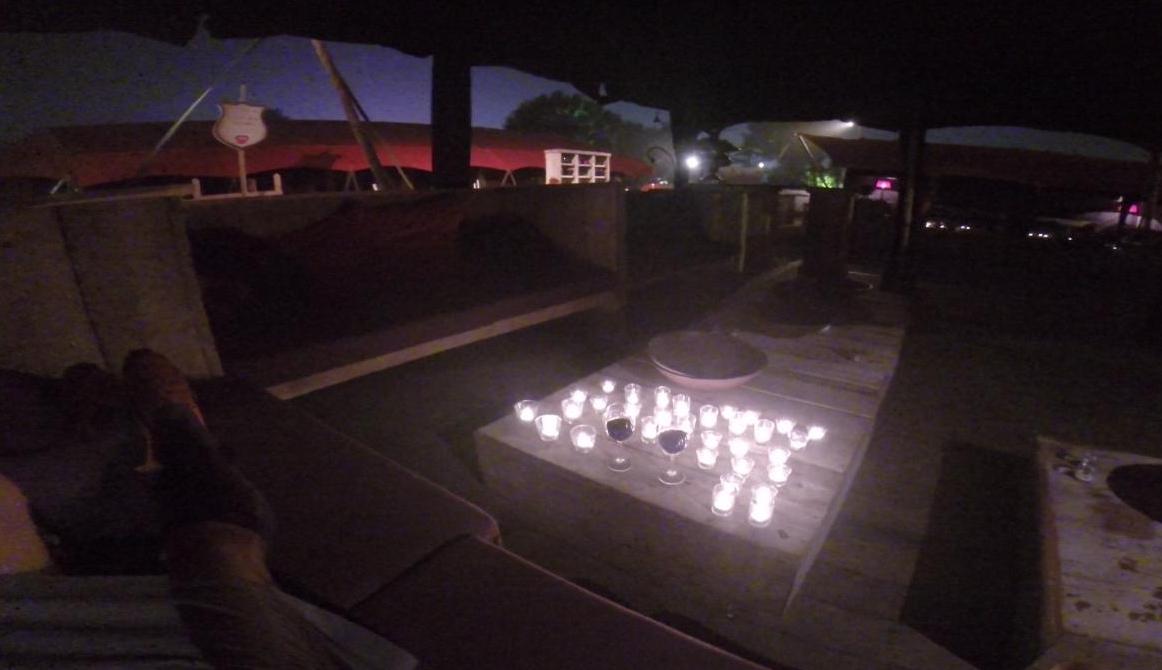
Fast forwarding to the end of day 3, on Sunday evening at 11:30pm (30 minutes before the official close of the event) Christine and I sneaked away from Tomorrowland and made our way back to the bar at our Dreamlodge. We arrived minutes before the beginning of July 28th, my birthday. Since everyone else was celebrating the final few moments of Tomorrowland, we had the bar to ourselves which gave Christine the opportunity to collect 34 candles from all of the other bar tables to make me a mini birthday celebration for me. That along with a nice drop of red wine was how my 34th year began :).

34candlesv2

The next day, we stumbled out of bed early at 7am to make our flight to from Brussels to Lisbon. For the first time in days we had some heavy rain (we heard they use sound canons at Tomorrowland to keep the storms away…) which appropriately matched the mood we felt as we dragged our heavy legs to the bus and bid farewell to the little town of Boom. We imagined the residents must have let out a sigh of relief to have their town back. Similarly, we felt relief to be returning to “normal” life in the real world. Tomorrowland exceeded my wildest expectations. A friend asked me at the event if I’d do it again. While I couldn’t imagine mustering up the energy to do it again next week (or even next month), in a year’s time (or in several years) I can definitely imagine coming back.

****

SPECIAL THANKS to Jessica Postiglione for providing most of the photos for this post!

0

“These are a few of my favourite things…” (to do in Vienna)

IMG_1173The other day I found myself at a bit of a loose end after Christine had left me home alone in Vienna to go to her Hen’s (bachelorette) weekend. So rather than just mull around the apartment I decided to make a day of it and hit up all of my favorite places in Vienna. Hopefully you’ll find this list useful if you ever find yourself in beautiful Vienna :).

Museum’s Quartier
IMG_1146
I can still remember my first impression of the Museum’s Quartier from my first visit to Vienna back in 2009. It was a mid-summer’s Thursday evening, and the space was packed with young people meeting and drinking together, with cool tunes emanating from a small DJ booth in the corner of the square. In many ways, it epitomizes for me what Vienna is as a city: old world art and culture mixed with youth and vibrancy. Admittedly the place was a little quieter on the overcast morning this time I visited, but regardless the MQ definitely makes the list for me for top places to visit in Vienna. Best seen in the evening on summer’s day, you can chill out on one of the many cool public benches that decorate the square, grab a coffee or drink at the ueber cool cafes or bars, or even visit a museum or art gallery if you’re so inclined (it is the Museum’s quartier after all!). Interesting fact: the MQ used to be the stalls for the army’s horses back in the day. If you take a close look, you’ll notice that the buildings in the quartier have horse figures and horses heads embellished all over.

Glacis Beisel


At the back of the Museum’s Quartier you’ll find one of my favorite Beisels in Vienna, Glacis Beisel. A Beisel is essentially a typical Austrian small restaurant. Menu is usually limited to a short list of Austrian favorites (e.g. Wiener Schnitzel). The reason I love Glacis Beisel is because it puts a modern touch on the traditional Beisel, with cool decor (see pic above of some of the street art painted on the entrance to the Beisel). Previously I had only frequented Glacis during winter when you only have the option of indoor  seating, but today I noticed how charming their outdoor patio looks. I’ll have to go back to experience the summer side of Glacis!

Hofburg

IMG_1157

Next I headed into the 1st district which is really the heart of Vienna. First stop here was the Hofburg, which was the former winter residency of the emperor until the turn of the twentieth century, and today is the official residence of the President of Austria. In my opinion, the Hofburg is the grandest of all the beautiful buildings in Vienna. It is also home to my favorite museum in Vienna – the Sissi Museum and Kaiser Apartments, where you get to hear about the fascinating (and tragic) story of Austria’s last emperor and emperess.

Stephansdom (St Stephan’s Cathedral)

IMG_1162
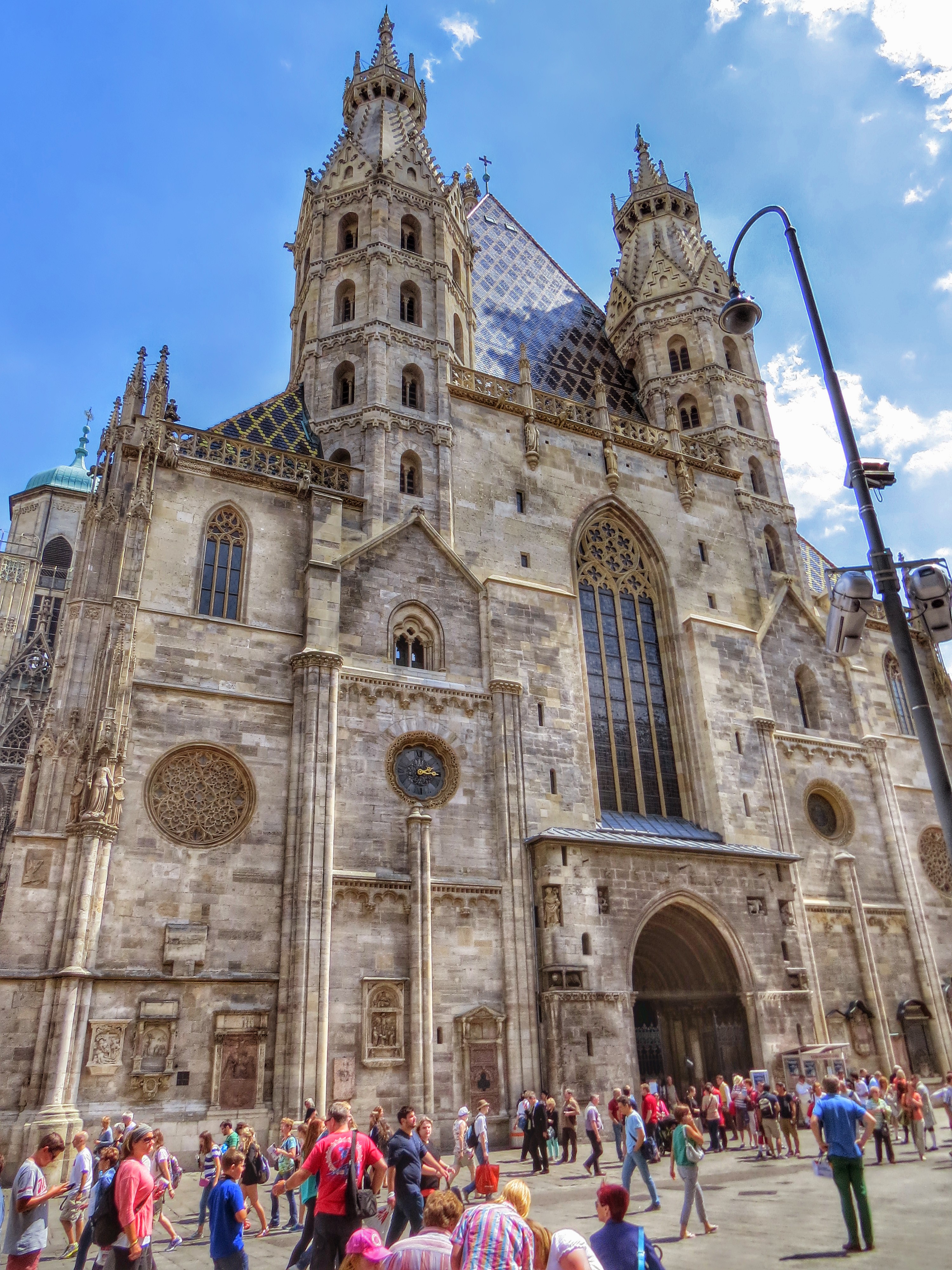
The tall spire of this iconic Vienna landmark can be seen from many places in the city. I’ve been told that the bell in the tower is the biggest in Europe. Other than that, I don’t know a lot about this place. But suffice to say it’s iconic and worth passing by :).

Trzesniewski’s


By now I’d built up a bit of a hunger walking around, so time to stop by Christine’s favorite Viennese sandwich shop, Trzesniewski’s. This place is a bit of an institution in Vienna, established over a 100 years ago. What makes it special is that everything is bite size. Each open-faced sandwich is barely bigger than a bit so you end up getting to taste 3 or 4 different flavours. And the beers (Pfiffs) are tiny too!

Stadtpark

IMG_1173
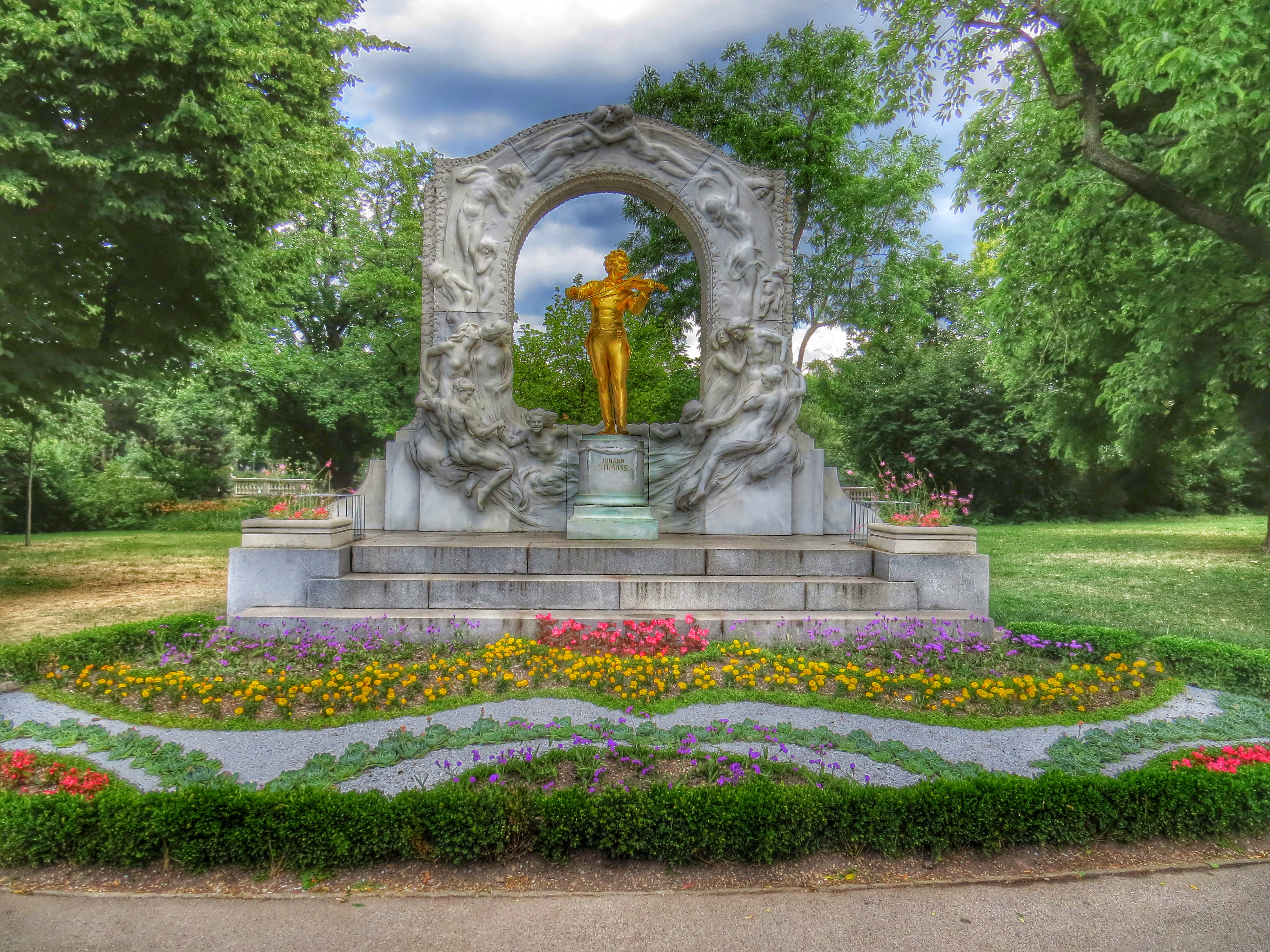
Satiated, I then ventured to the Stadtpark on the border of the 1st district. While there are many pretty (or even prettier) parks in Vienna, the reason I like Stadtpark is because of the beautiful golden Strauss statue that you’ll find here. Johann Strauss II was a prolific Austrian composer, particularly known for his waltzes. When Christine and I were choosing a waltz for our wedding first dance, it wasn’t really a question of which waltz, but rather which waltz by Strauss!

Praterstern


Admittedly, Praterstern park is lower on my list of the must see places in Vienna, but it’s worth a mention if only because the big Ferris wheel is an iconic part of the Vienna skyline (even made it onto our wedding invites!). And if you’re a runner, like Christine, you’ll probably enjoy jogging through this park. The park is well loved by children with the many rides on offer, and on the day I was visiting there seemed to be some sort of children’s festival going on.

Schoenbrunn


There was really no better way to end my day than with a trip to Schoenbrunn. I think Schoenbrunn is my favorite place in all of Vienna (note that Schloss Laxenburg, the venue for our wedding, doesn’t count because it is technically outside of Vienna. If it were in Vienna, then this would of course be my favourite place!). Schoenbrunn is one of the old main summer residences of the emperor. In addition to the main palace that greets you at the entrance of the park, Schoenbrunn also has some of the most beautiful gardens and at the backside of the grounds, atop a small hill, lies the Gloriette. Together, these sights make Schoenbrunn one of the most beautiful places you’ll ever see. And if that’s not enough reason for coming here, there is also a zoo (Tiergarten) inside the grounds which is the oldest zoo in the world!