So we finally got around to putting together the video for our Antarctic expedition. It’s a little on the longer side (7 minutes) but covers most of what we got up to. Enjoy!

So we finally got around to putting together the video for our Antarctic expedition. It’s a little on the longer side (7 minutes) but covers most of what we got up to. Enjoy!

Glacier Grey on our way to an ice hike
Exploring the End of the World (Tierra del Fuego)
It was in the middle of the night when our airplane touched down in Punta Arenas (Southern Chile), a medium-sized, sprawled out city that serves mainly as a military base and hop off point for Patagonia hikers and Antarctica travellers. We had 5 days to spare before our epic Antarctica journey. For some reason we hadn’t really made any plans in advance, which was probably attributable to a bit of travel planning fatigue (it felt much better to play with my nephews in Australia than doing google searches) combined with an increased desire to go with the flow. I guess you could say we decided we’d just wing it. Initially we figured we could just spend the 5 day hanging out in Punta Arenas. However, after one day of strolling through the city, visiting a couple of museums, and stopping by the fish market for ceviche we felt like we had seen it all. That’s when an idea struck us: let’s explore Tierra del Fuego, the archipelago off the southernmost tip off the South American mainland. So we found the nearest car rental place, jumped on Google to book a few hotels, downloaded a map and then set off.
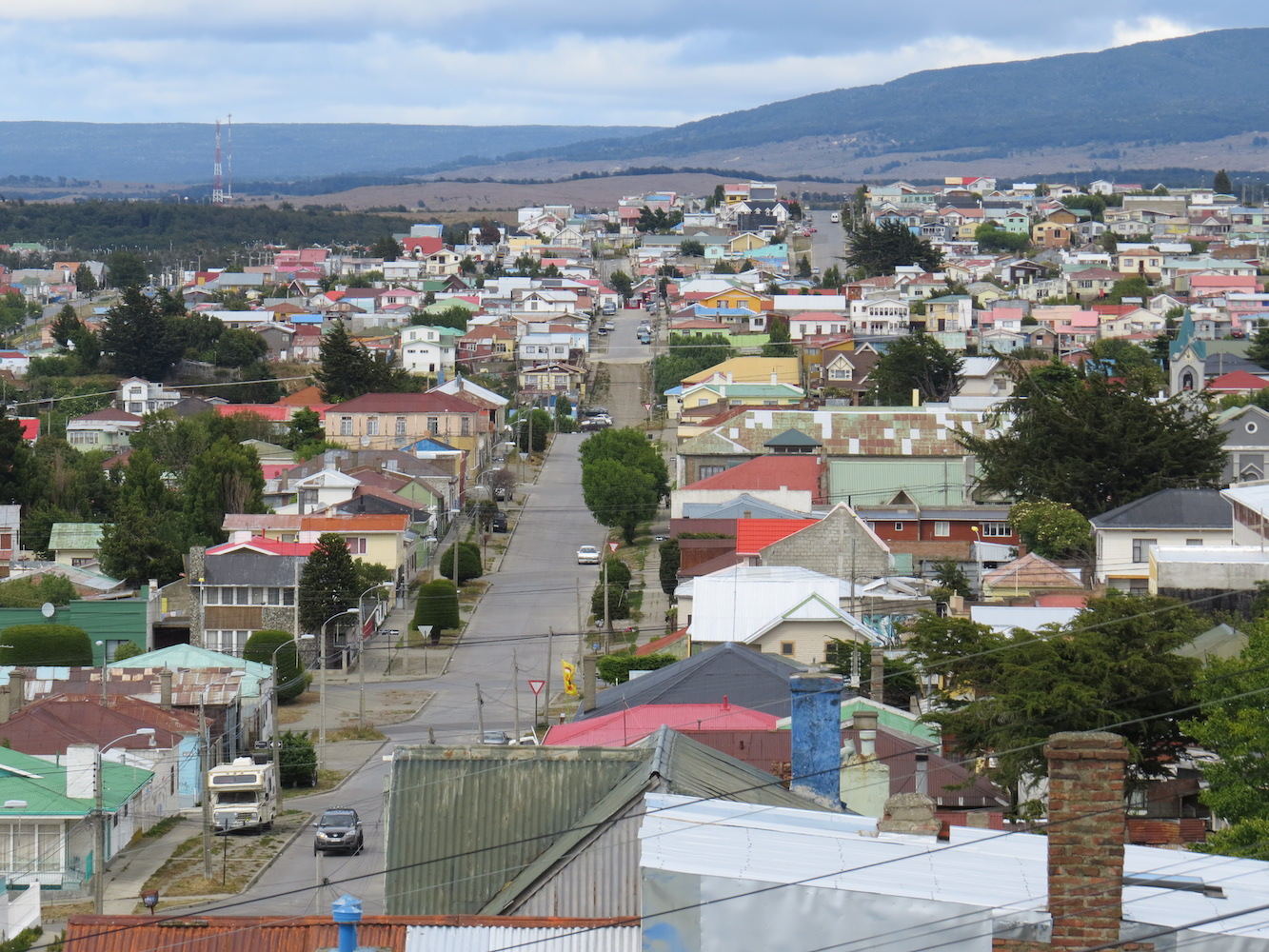
Punta Arenas


The further away we got from Punta Arenas the more beautiful the landscape became, a mix of steppe and grassland. Guanacos (a type of lama) started to emerge and suddenly seemed to be everywhere.

Guanaco in Tierra del Fuego


After a day of driving through this beauty we arrived in Porvenir, a small port town. The place had a unique feeling. A ghost town with colourful houses that while looking charming had seen better days. A hint that we were approaching the “end of the world” after all. Leaving Porvenir the next morning the paved roads gave way to dirt and gravel. Slowly, we were winding our way through the rugged nature. Once in a while we saw signs hinting to former gold mines. Bumping along the increasingly difficult dirt track, we realised that we hadn’t seen other cars in a long while. It struck us that our little Renault rental car might have not been the best choice for this terrain. Compared to our Australian Outback adventure where we were fully prepared with a 4wd camping vehicle, this car was so bare bones that it didn’t even have a clock on the dashboard! It also hadn’t occurred to us that we should have stocked up on water or brought something to eat. Plus, Google maps (also not unsurprisingly) had lost satellite connection. With a somewhat uneasy feeling in our stomachs we continued the journey. It was either a choice of going all in or returning. We chose to keep going. And were happy that we did. After 2 more hours of off-roading (I’m still surprised that the car didn’t fall apart … turns out French cars are more solid than I thought) we hit the coastline and with it a somewhat better and more frequented road. The day turned out to be a highlight. Little did we know that we would pass by the only king penguin colony in the area. Beautiful creatures!

Entrance of the King Penguin Park
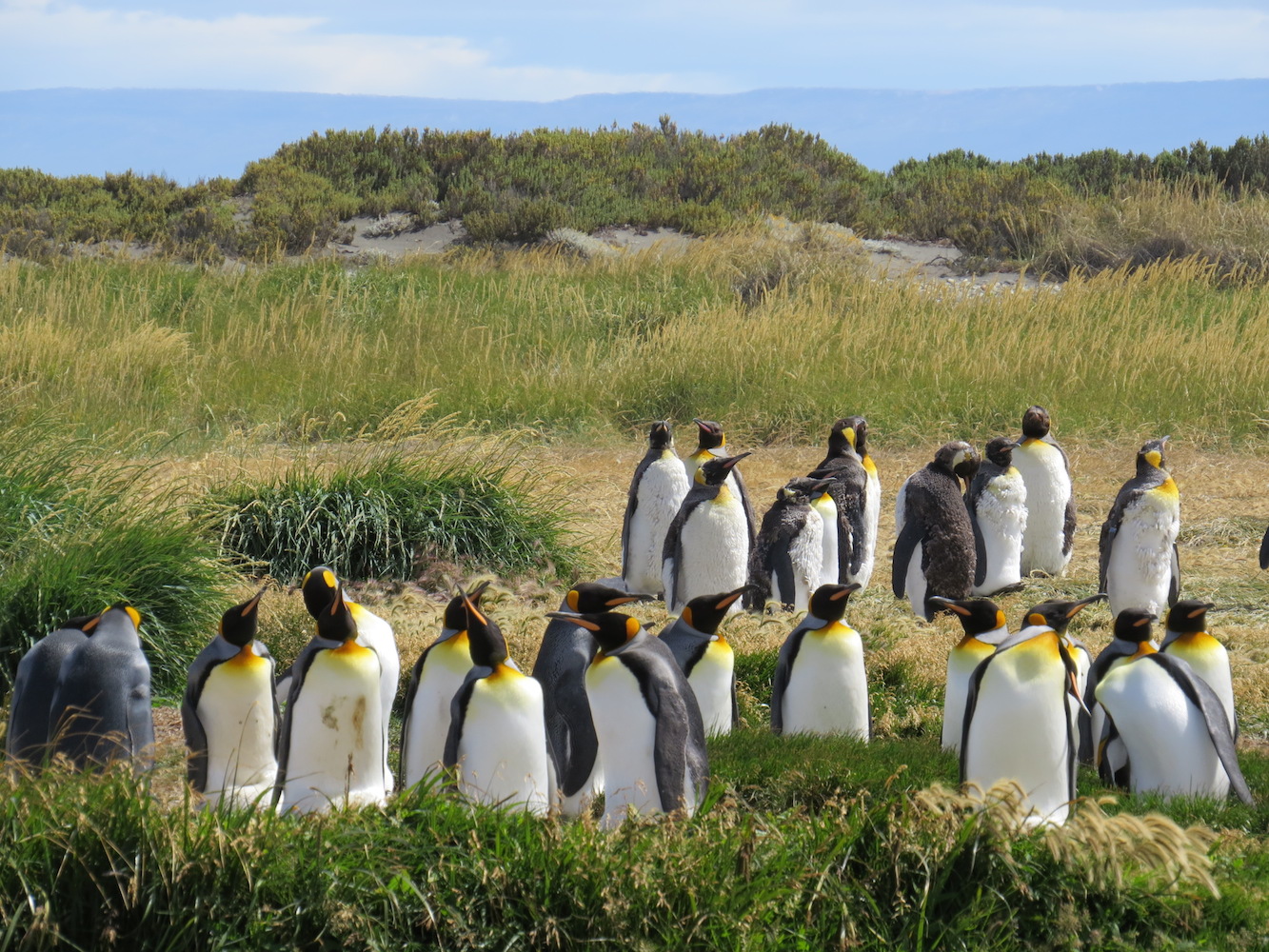
King Penguins in Tierra del Fuego

King Penguins in Tierra del Fuego

King Penguins in Tierra del Fuego
Hugging the beautiful coastline we continued the journey, passing big farms and a couple of small villages, before turning land-inwards.


Then the landscape changed from steppe into woodlands. Soon we arrived at our accommodation for the night, Parador Russfin. A street sign pointed us towards a reception. To our confusion we found ourselves at the office of a wood cutting factory. Were we at the right place? With my very limited Spanish vocabulary and lots of hand waving we finally figured out that we indeed were at the right place. Tripadvisor had failed to inform us that this place was basically an accommodation for the seasonal wood workers in the area – and the occasional tourist that passes by. Well, we got our fair dose of adventure after all! Dinner and breakfast were served in the factory canteen where we found ourselves amongst workers in blue overalls. Fun things happen if you don’t plan much in advance. The next day we jumped back into our little Renault winding our way back to Porvenir and then setting over via ferry to Punta Arenas. Next day we flew out of Punta Arenas to Puerto Williams to begin our Antarctic adventure. Albeit only spending a few days in Tierra del Fuego, we had gotten a teaser of its rare beauty.
Hiking in Torres del Paine

Beautiful Patagonia (Chile)
While most hikers in Torres del Paine come fully prepared with the big hiking packs, tents, sleeping bags and cookers, we were somewhat less prepared. Once again, we were kind of winging it by just bringing along a small day pack with a change of clothes, a few toiletries, a camera, headlamps and Kindles. For one, we didn’t have a tent, mats or sleeping bags with us on our year-long journey. It would have just been too much to carry around the world given our diverse set of activities and and our decision to travel with carry-on luggage only. Plus, Torres del Paine offered several lodges across the main trail, called the W-trek. So we opted for either staying in bunk beds or rented tents along the way. And lastly, the thought of trying to get on with the absolute minimum seemed a good challenge.
The whole week exceeded our expectations. The landscape was just stunning. The sharp edges of the grey stone massif with its distinct granite peaks reaching high up into the sky looked spectacular. As a contrast to the peaks, the well-trodden hiking paths took us past unbelievably clear, ice blue lakes surrounded by scrubland. The lakes have an incredibly bright blue colour due to the fresh glacier water and the lack of sediments and provide a beautiful contrast to the vegetation with its green, brown and yellowish colours. To our surprise, the lodges were well equipped and quite comfortable (apart from the occasional snorer in the mixed dorm rooms). For the most part, the meals (including a bagged lunch) tasted surprisingly good. As advice for the less heavy meat eaters out there, opt for the vegetarian option once in a while. Otherwise, get ready for a filet of meat and rice for dinner 🙂

The Torres – the famous three granite peaks

On the way to Valle Frances

Valle Frances


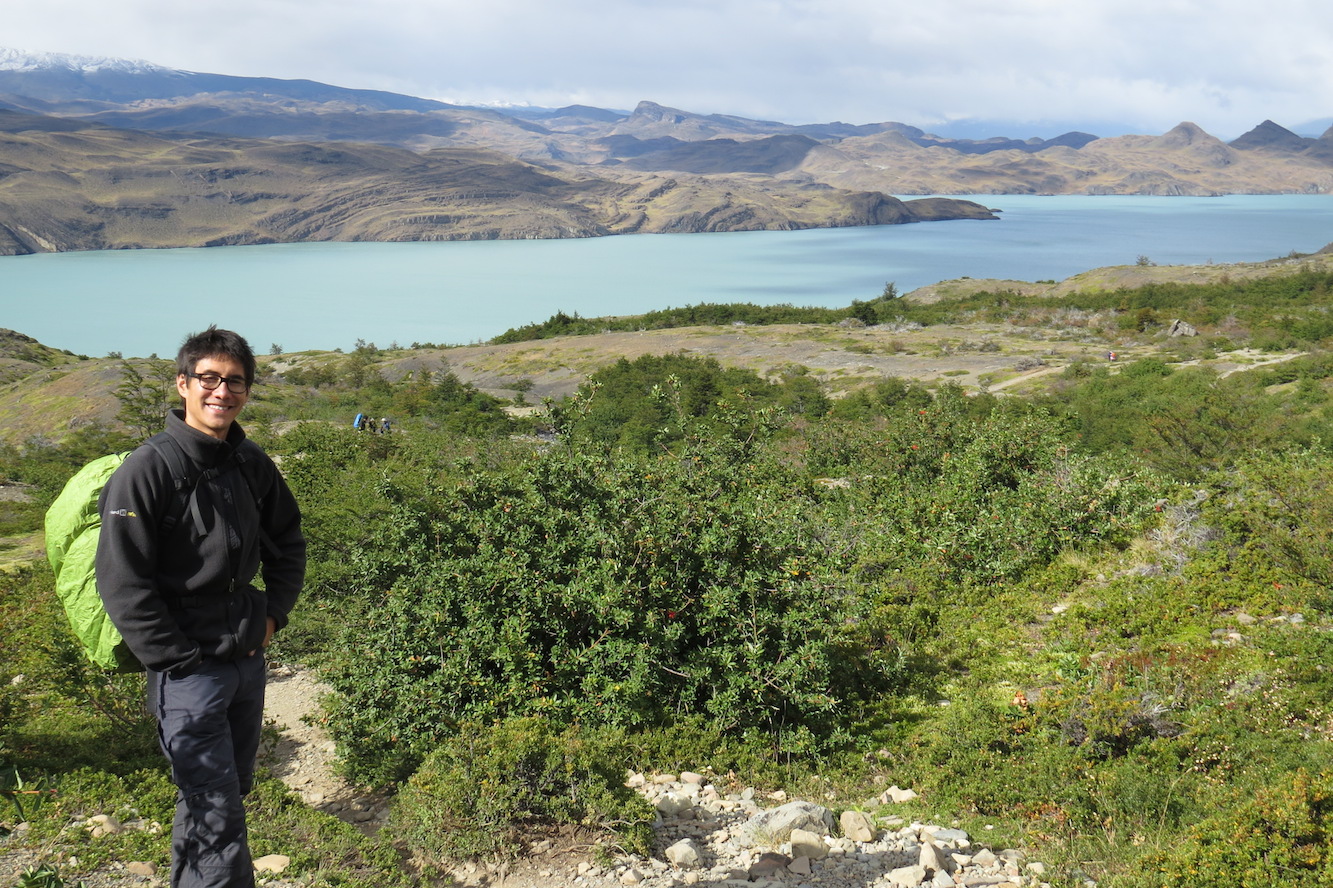
Hiking in Torres del Paine


Thinking that nothing could beat this stunning scenery, we encountered yet another highlight on this trip, Glacier Grey. It’s a massive glacier that winds its way down the valley all the way into the lake Lago Grey. We had booked a glacier hike and were excited to set foot on this massive piece of eternal ice. Just getting there was a trip in itself: with the dingy across the choppy waters of Lago Grey, followed by a 1.5 hour ascent through rocks. We put on crampons and after a few instructions we set foot on the large ice shield. Surrounded by the high peaks of the National Park with the glacier coming down on one side and the blue lake on the other, this felt like being at the heart of Patagonia!

Hiking towards Glacier Grey
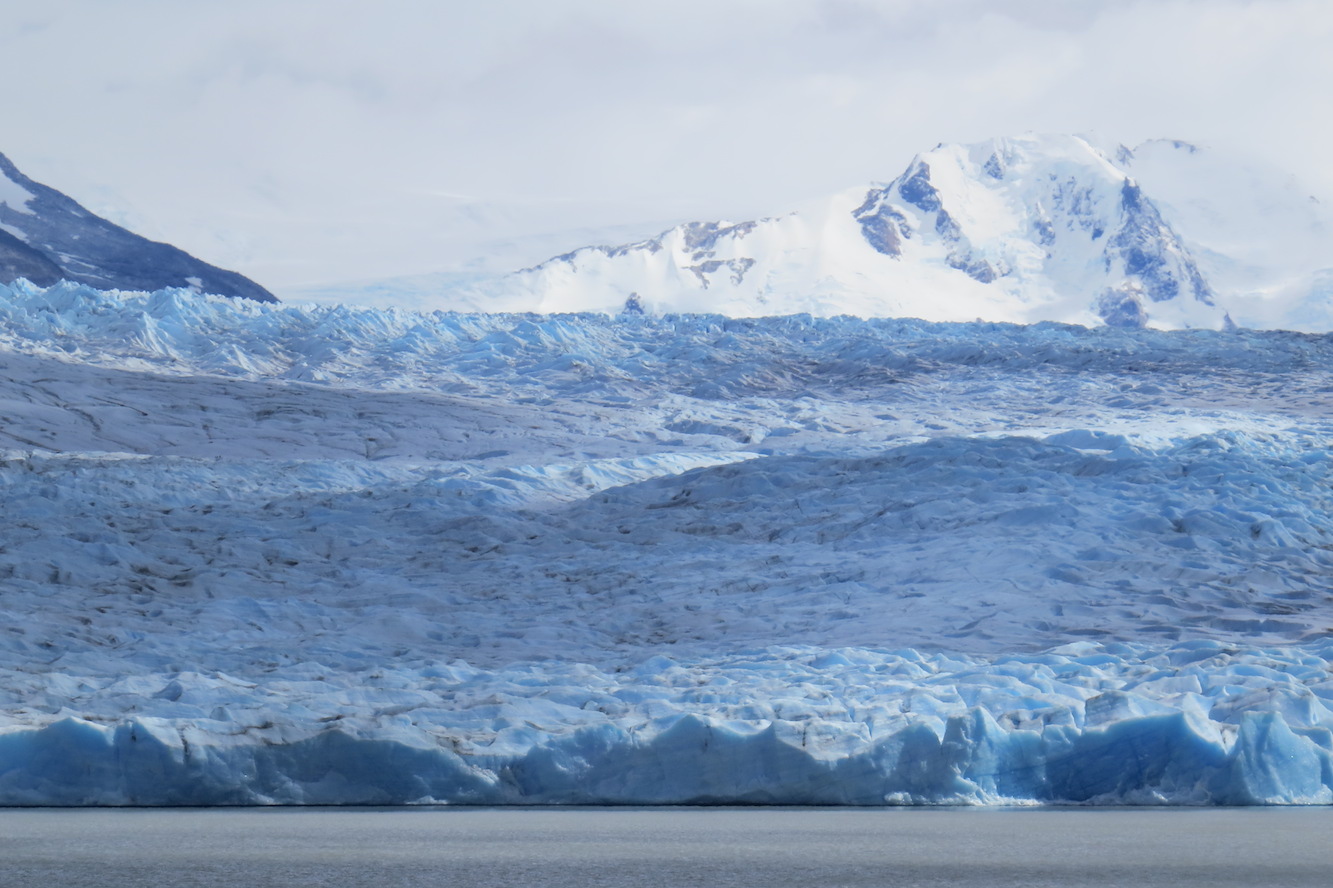
Glacier Grey
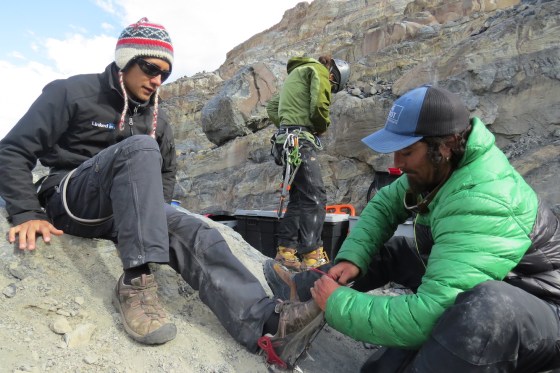
Getting ready for our glacier hike

Hiking on the glacier


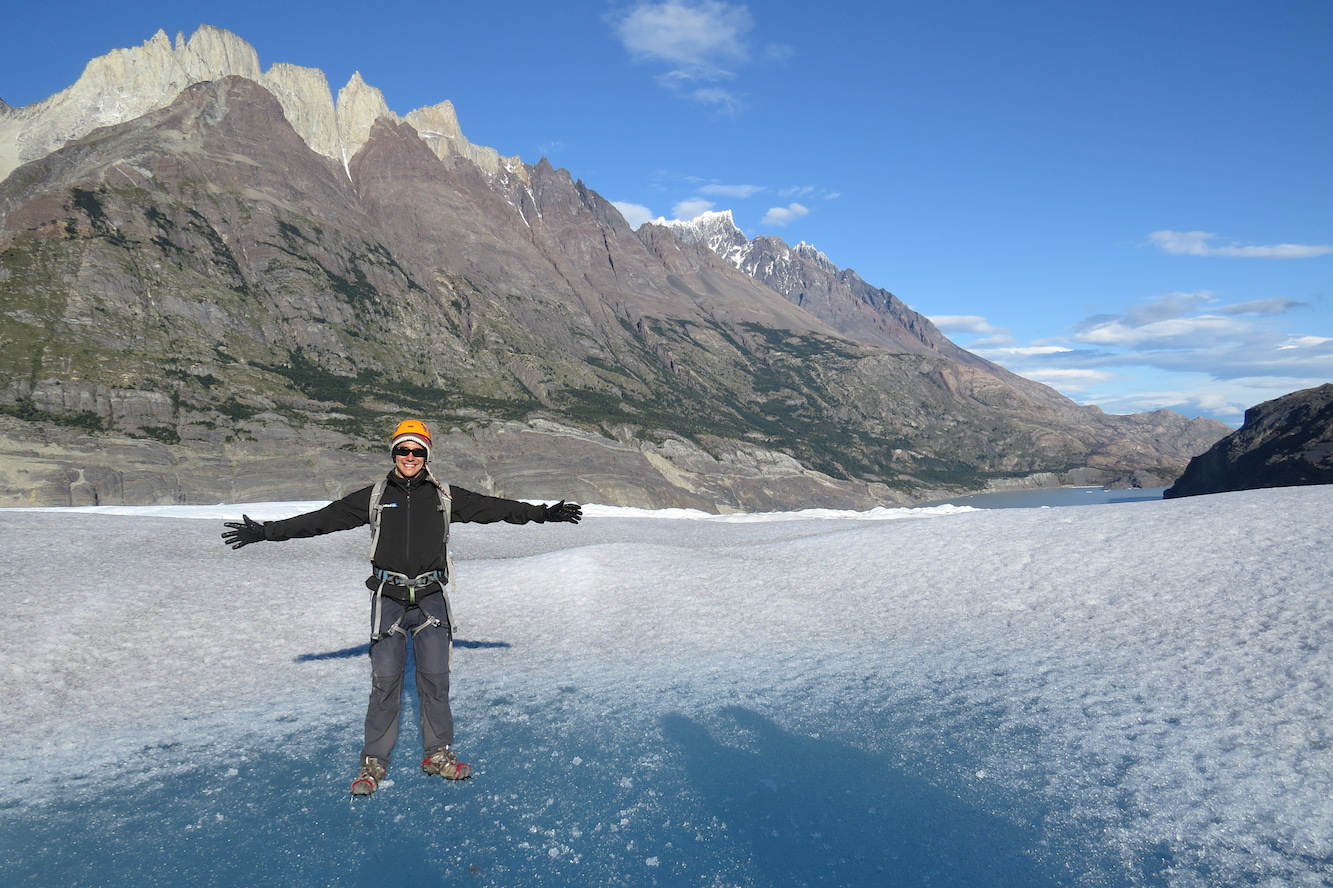
Torres del Paine’s stunning scenery!
One other highlight on our hike was to make friends along the way. Most hikers walk the W-trek from East to West so we kept running into the same people at the lodges. At dinner on Day 1, we set next to a Swiss-Italian couple, Anna and Marco. Marco spoke only Italian but that ended up not being a major barrier for us to communicate. While Anna translated most of our conversation, Marco would at times happily chat with us in Italian, cracking jokes and looking at us expectantly for a reaction. At times we had no idea what he was saying and laughed along with his jokes. It was refreshing to meet someone who didn’t let a language barrier get in the way of connecting with others! Excited about our new friends, we caught up again in other lodges along the way and even hiked the last day together.

With our hiking buddies Anna and Marco from Switzerland
Halfway through our journey, we arrived at one of the lodges early in the afternoon. Waiting for our rented tent, we struck up a conversation with a couple sitting next to us and hit if off right away. Morena, an actuary, and Sebastiaan, a software developer, were both from Holland. I was intrigued by the fact that they both worked part-time in interesting jobs and managed to take a two-month vacation every year – one month for traveling and the other month for volunteering. Quite inspirational! Over a couple of beers the conversation moved from work-life balance, volunteering and travels to metaphysics and meditation. Before knowing it, the afternoon had passed and we were sharing dinner together.
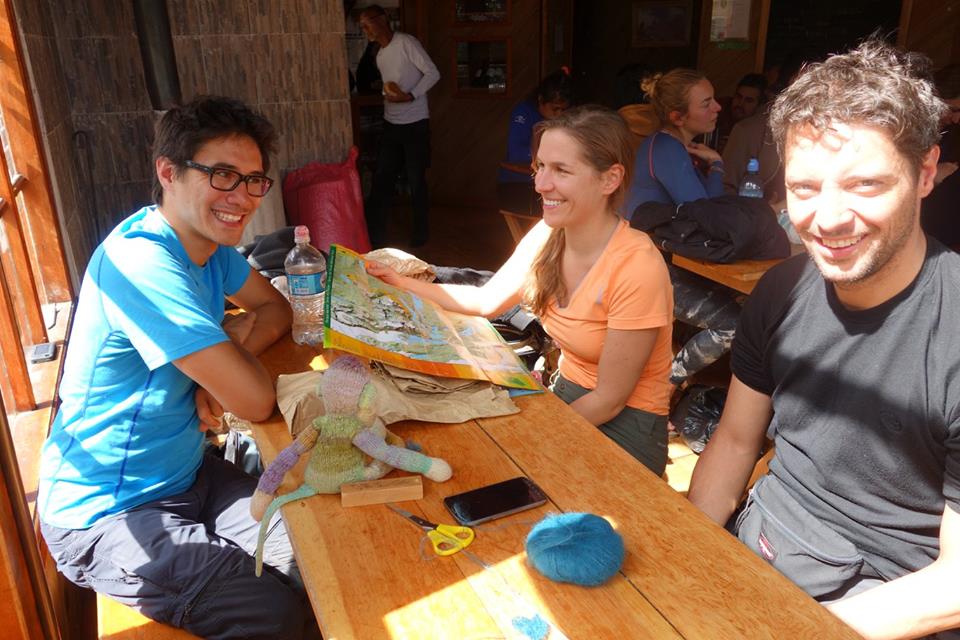
Meeting Morena & Sebastiaan at Refugio Cuernos
Sadly, Morena and Sebastiaan were going against the stream on the W-trek, hiking it from West to East. So unfortunately we wouldn’t be able to catch up along the way. Just before we parted ways, however, we figured out that we’d all be back in Puerto Natales on the same night. A double date it was. And even better, it was Sebastiaan’s 40th birthday giving us a good reason to celebrate! We ended up having a lovely dinner and fun evening at Mesita Grande Pizza (great thin-crust pizza, highly recommended). After parting ways that night, I felt confident that somehow the four of us would again cross paths somewhere in this world.


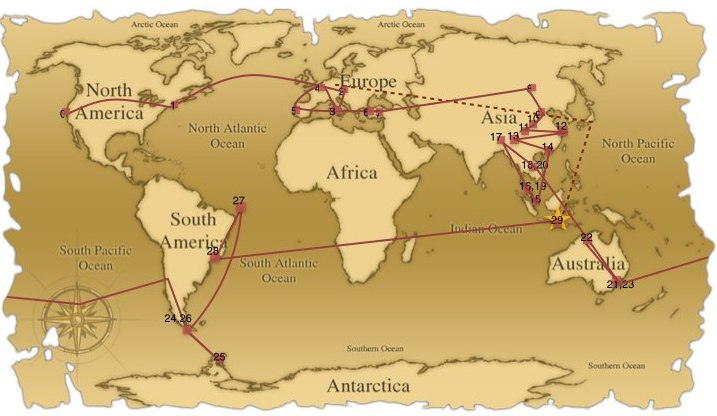
Although we had originally planned to stay longer in South America and then head to Africa to finish up our year abroad, our plans have recently changed. Instead, we’ve ended up back in south east Asia. Bali to be specific. To do a hula hooping course (I’ll let Christine fill in the details soon!).
From here we plan to visit Japan and then finish up our year abroad in Berlin. If anyone has plans to be close by these places over the next couple of months, please let us know!
Best,
C&C
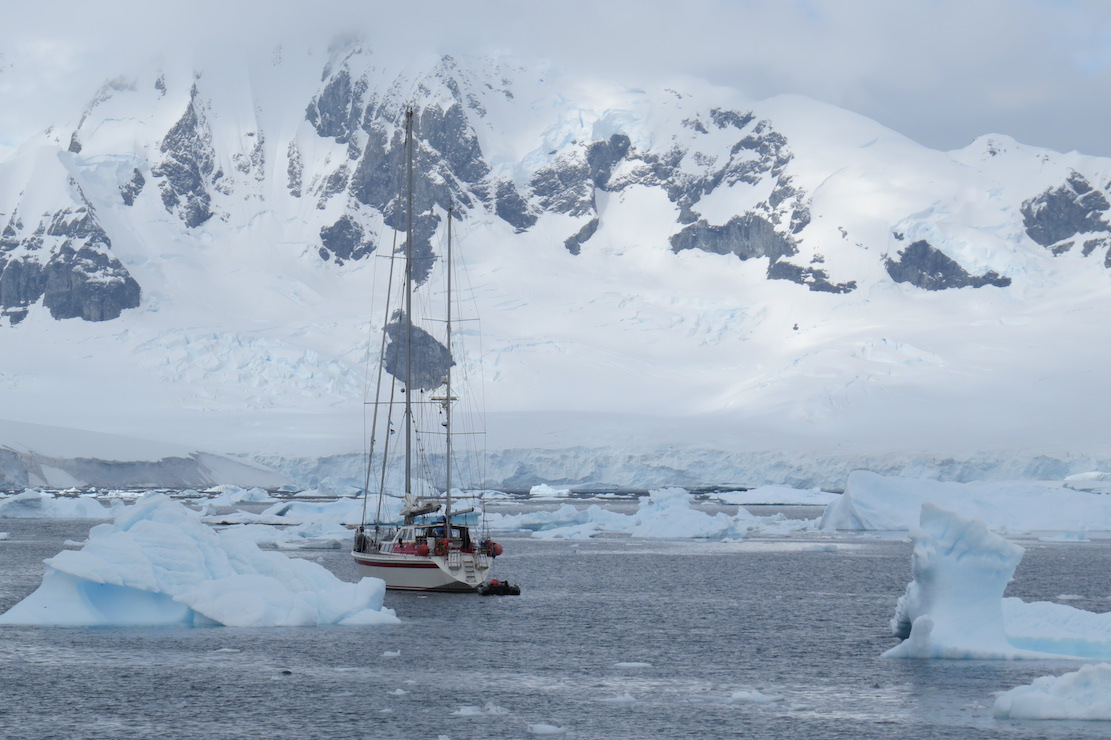
Santa Maria Australis in the Antarctic Peninsula
A year ago while we were planning our trip to Antarctica, our research uncovered that there are really only two options for touring the region. Since there is no accommodation for tourists on land and highly restricted access via air, your choices are to either go on a large cruise liner (ice-breaker), or alternatively you can sail on a smaller sailing yacht. The cruise liner is relatively safer and more comfortable. Sailing in on a yacht is considerably bumpier, more cramped and you are required to help out with many of the duties from sailing to cooking and cleaning. Despite what you might expect, the yacht option is no cheaper than the cruise liner. A year later, as we boarded our Qantas flight out of Sydney en route to Puerto Williams, Chile, where our boat awaited us, I struggled to understand what was going through our minds when we decided to go with the sailing yacht. I dreaded it may be a decision we would later regret…
Why Antarctica?
My fascination with Antarctica sprouted a few years back after reading about Ernest Shackleton’s doomed expedition in 1914 on board The Endurance. Since then it has held a firm place at the top of my bucket list. Similarly for Christine, Antarctica represented a real adventure and the trip of a lifetime. Antarctica is the only continent uninhabited by humans and in many places on the continent, entirely uninhabitable by any flora or fauna. The vast majority of the continent is covered in ice all year round. Some areas have not had a drop of rain for more than 2 million years and the general lack of precipitation in Antarctica makes it the largest desert in the world. Although conditions are generally too harsh for land animals, it’s a different story for animals that thrive in the sea. Whales, seals, orcas are found in abundance. Deeper beneath the sea you can find fish with antifreeze in their blood as a natural adaptation to the ice cold waters. And then of course there are the continent’s most well known animals, those loveable penguins.
Although many countries have made claims on Antarctica, in 1959 a treaty was signed by these nations to establish Antarctica as a territory only to be used for scientific research that belongs to all mankind. This treaty protects Antarctica’s environment and prevents any commercial development on the continent, allowing it to remain in its untouched, pristine condition. The only exception to this is the handful of scientific bases scattered across the continent and even those operate in a way to ensure they leave no permanent mark. Science in the region is varied, from meteorology to oceanography to global warming to understanding whether life could exist in Antarctica deep below the ice. Some scientists compare the harsh conditions in Antarctica to those on Mars, and so the discovery of life forms could give hope to finding life in other environments beyond this world.
The Antarctic treaty is due to end in 2041. While many are trying to get this treaty extended there’s no guarantee how things will play out. So there may be a limited window to see Antarctica in its current, untouched form. And that’s why we were eager to go there now.
Puerto Williams is the southern most town in South America. Originally little more than a fishing village, in recent years the population has spiked with the set up of a naval base, along with the increased tourism to Antarctica for which the town is well positioned to support. Puerto Williams along with Ushuaia on the Argentinian side are the two most popular ports of embarkation for Antarctica tours. That said, Puerto Williams is still little more than a village with fewer than 2000 inhabitants.

Puerto Williams
Puerto Williams made a great first impression upon us. Stepping out of the airport we saw sunshine, blue skies and a stunning view over the waters of the Beagle canal onto the picturesque town centre, just a few kilometres away. Seeing all the other passengers from our flight get into their private cars, it became evident that there wasn’t really any public transport or taxi infrastructure supporting the airport so Christine and I figured we would have to walk into town. Fortunately, a few hundred metres later, a friendly local asked us if we’d like a lift. His name was Nelson. Nelson didn’t speak much English but between his limited English and Christine’s limited Spanish, we were able to tell him the place we were staying, which he knew, as well as some details of our upcoming trip. To our delight, he told us he knew the skipper of our boat and described him as “muy bien”. Upon arrival at our Hostal, we tried to communicate to Nelson that we’d like to buy him a drink to thank him for giving us a lift. Unfortunately neither Nelson’s English nor Christine’s Spanish was up to the task, so we had to settle with just saying “muchas gracias” and then parted ways. Our Hostal was called Residencial Pusaki and owned by a lady named Patty. Patty was equally as warm and friendly as Nelson and made us feel very much at home at her place. Seemed everyone in Puerto Williams was incredibly friendly.
We had two days in Puerto Williams before we began our Antarctica expedition which turned out to be the perfect amount of time to explore the small town. It gave us a chance to make a couple of short hikes, visit the local museum, stack up on some supplies and visit the 1 cafe, 3 restaurants and 2 bars on offer.


Meeting the boat and crew (day 1)
After two days in Puerto Williams we headed down to the marina to join our boat, the Santa Maria Australis, where we met the captain and the rest of the group. A great first impression. Everyone seemed super friendly. People were already cracking jokes, playing off one another. Both Christine and I loved the intimacy of having such a small expedition group, something we would not have had going with the option of a cruise ship.
Our captain was Wolf Kloss, a German sailor who had been sailing to Antarctica more than 30 times since 1989. It was this depth of sailing experience in the region that convinced us to go with him and SIM Expeditions. I also took comfort in his German heritage since I tend to associate Germans with safety and doing things properly which seemed appropriate for the expedition at hand. Before meeting Wolf, I had pictured a burly German guy, who is serious, strict and has a sharp German accent. In reality, Wolf was nothing like this. He was relaxed, cheerful and incredibly friendly. While he ran a tight ship, he did it in a surprisingly positive and light hearted way. His crew were a young Austrian couple, Daniel and Beate, who grew up in a town only a stone throw away from the town Christine grew up in. Daniel even went to the same high-school as Christine’s brother. Small world! While young, they themselves were incredibly experienced sailors having sailed together on their own boat around the world for more than 6 years. Throughout our expedition I was to be constantly impressed about how smoothly they ran all the operations of the boat in such varied and trying conditions.
And if there wasn’t already enough combined sailing experience among the captain and crew, so too did we have a huge depth of sailing experience with the other 7 passengers on the boat. Turned out that Christine and I were the only ones without much experience. Our fellow passengers were: Roberto (owner of a boat building company) with his son Leandro (industrial engineer, entrepreneur) from Buenos Aires; Joerg (pipe organ builder) from Sipplingen, Germany; Heinrich (process consultant) from Soest, Germany; Michael (tax advisor) from Bammental, Germany; Werner (editor in chief) from Berlin; and Martina (physiotherapist) who was Daniel’s mother from Bad Hofgastein, Austria.


The first day was all about getting the boat ready and settling in. To our surprise, the yacht was quite spacious. High ceilings inside the saloon and cabins meant that no one would have to crouch. Our assigned room was close to the rear with bunk beds. That pleased us since we’d heard that the back of the boat rocks less at rough seas. After packing the boat with supplies we then covered our first round of safety instructions. Shortly thereafter, it was time for a round of pisco sours at the local bar (one of the only two bars in town) followed by a fun dinner. Our first impression was further solidified – this group is really fun. Everyone was interesting and seemed easygoing. A lighthearted group that was excited for this special trip! We spent our first night on the boat that day and slept surprisingly well.
The dreaded Drake (days 2 to 6)
To get from Puerto Williams to Antarctica requires crossing a stretch of open sea known as the Drake Passage, that connects Cape Horn with the Antarctic Peninsula. It is considered to be one of the most tempestuous straits in the world. Even on the large cruise liners, many people struggle with intense sea-sickness during the 2 day crossing. For our yacht, the passage was expected to take more than 4 days and be a somewhat bumpier journey. The crossing would be a good first test of whether we’d made the right decision to sail on a yacht.
We set sail south out of Puerto Williams down towards the Drake on a picture perfect day with blue skies and sunshine. This turned out to be a good omen for our crossing of the Drake Passage. In the end, the entire crossing was, for want of a better phrase, smooth sailing. Christine and I had no problems with sea sickness. May have helped that we took sea-sickness tablets and wore acupressure bracelets. Who knows? Wolf later remarked that it was one of the better crossings he’s experienced. I guess we got lucky.


The day we set out was a Sunday. We learned that Sundays on the boat are good food days with treats like eggs for breakfast and freshly baked cakes for afternoon tea. Turns out Thursday are also a special day called “Seaman’s Sunday”, at least on German boats. So we would be getting cakes and elaborate meals twice a week. Nice. Impressive that Daniel and Beate found the time to pull this off with all the other things they had to do.


Although we had no troubles with sickness, there were still some new things to get used to. First, was learning how to balance on a boat. Simple things like carrying your coffee to the table, or going to the toilet became feats of acrobatics. We would constantly hear Daniel yell out “one hand for the seaman!” to remind us to keep a hand free to balance when walking around the boat. Another thing to get used to was getting out of bed in the middle of the night for our nightwatch. Once on the Drake we had 4 days of continuous sailing which meant working in shifts of 2 hours on and 6 hours off. Although it was tough at times to pull yourself out of bed, I nonetheless took pleasure in the adventure of being at the helm in the middle of the night on the Drake Passage.


For most of the crossing we saw nothing but sea to every point on the horizon. However, there were a few treats to break up the monotony. Just before we entered the Drake we stopped by Lennox Island and stumbled across a lone king penguin, unusual for the area. Such a majestic creature with the orange across its beak, neck and head.
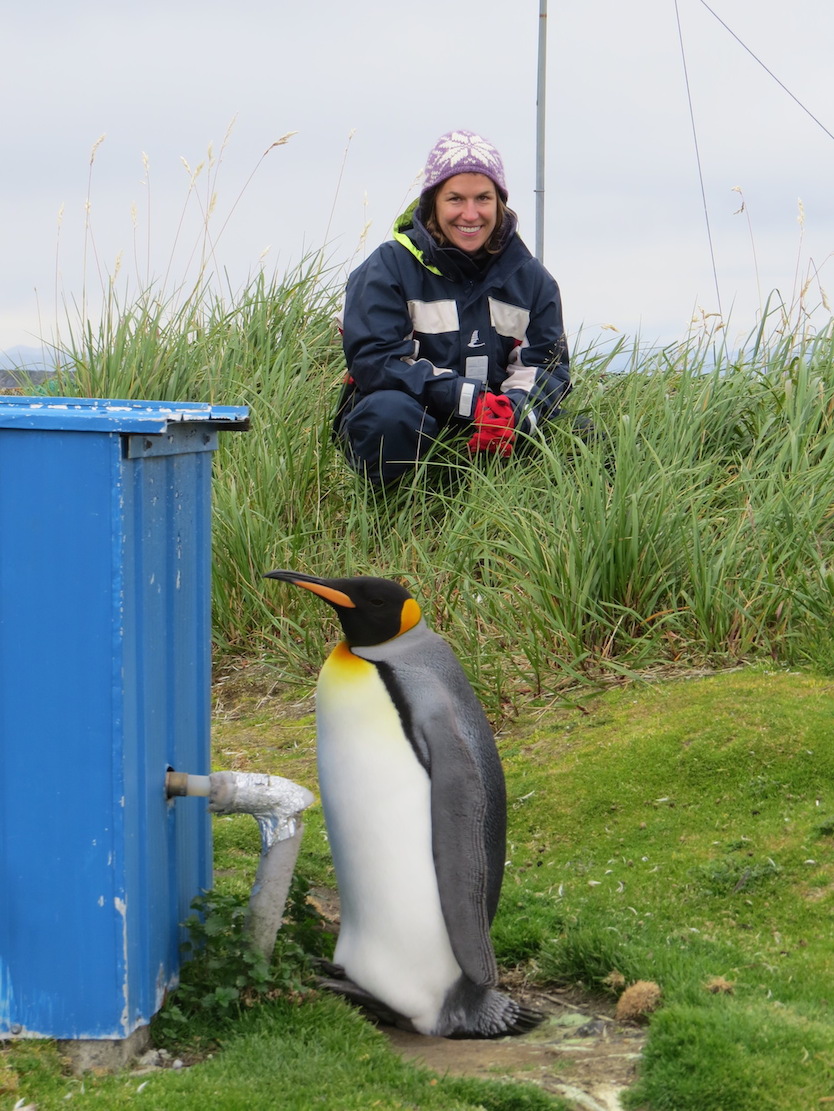
Christine and king penguin
Later, on the Drake, a group of dolphins came racing along beside our boat, darting from side to side and at times jumping out of the water playfully.

Dolphins swimming with the boat
Others on the boat also had some brief whale sightings although none unfortunately on our watch. And then on day 6, we started seeing icebergs. First small ones, and later huge ones, 40m high and hundreds of meters long. It was a sign we were getting close. By the evening we finally reached our first stop in Antarctica, Deception Island. We cracked open beers to celebrate our arrival.
It’s an expedition, not a tour (day 7)
Early on during the trip, Wolf set expectations that our trip to Antarctica would be an expedition, not a tour. During a hike to a penguin colony on our first day in Antarctica, I started to understand what he meant. What I thought would be an easy walk over the hill to see penguins became a true 5-hour expedition, that included some seemingly never ending ascents of icy inclines so steep that our gumboots struggled to maintain grip. We started off from the shoreline covered in black volcanic stones (Deception Island itself is actually an active volcano and one of the biggest crater islands in the world), passed ice covered lakes, where the blue of the water shone through incredibly brightly, and then trudged our way up over the peak to where we could hear the chatter of the penguins through the mist down below us. The stretch between us and the penguins was a steep slope down, covered in snow and ice. The only way to get through was to slide on our bums. Lots of fun, but we dared not to think about having to go all the way back up.


At the bottom of the ice peak we found ourselves among hundreds of Chinstrap penguins with their chicks. Despite how excited I was to see my first colony of penguins, I have to admit that the initial thing I noticed was their bad smell. And up close, I saw that they were pretty dirty too from the food they regurgitate to their young. Plus, their poo everywhere! Somehow the documentaries fail to show that side of penguins when they breed. That said, they were still incredibly adorable. Their waddle is just as cute in real life as on the documentaries. It was really funny to watch the younger chicks chase their parents around, seeking regurgitated food!

Chinstrap penguin colony


After spending the better part of an hour hanging out with the Chinstraps, we headed back to tackle the steep icy slope that we slid down to make our way back. Christine remarked “it’s like we’re climbing Mount Everest” seeing everyone slowly making their way up, at time losing their footing and stumbling. The only one in the group who seemed at all prepared for this was Heinrich who’d brought along clamp-on grips for his boots (“they only cost 3 Euro from Aldi” he proudly told us). The rest of us had to make do with just our gumboots. But we all made it out alive and felt very accomplished to have done it. I wouldn’t expect we would have had an experience like this had we gone with a cruise ship voyage.
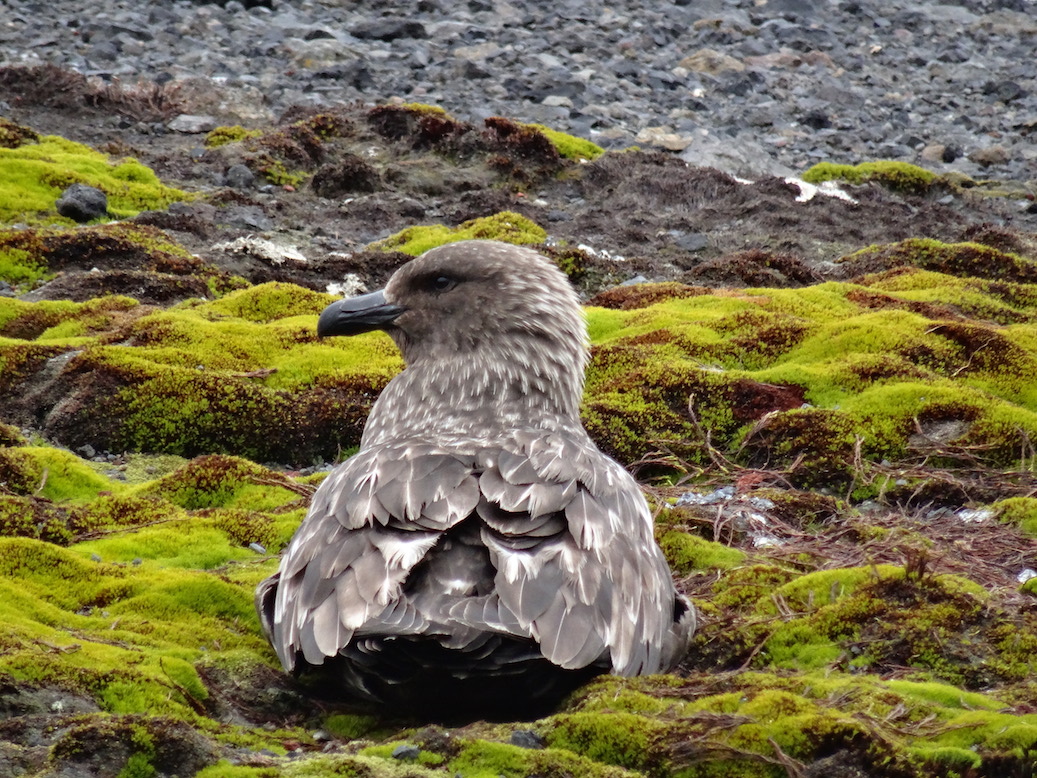
Skua


Fur seal
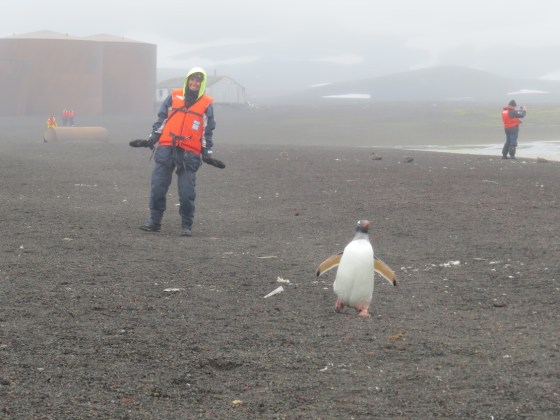
Two penguins (TLP!)
Later in the afternoon I asked Wolf where would be a good place in Antarctica to go kayaking or to take a quick dip. Two things I was keen to include in our Antarctic expedition. He thought there would be better places later on to kayak but here would be as good as place as any to take a swim. So Christine and I took the plunge from the boat into 1 degree Celsius waters. It was so cold that we’re literally in and then out in less than 10 seconds. I was glad to be able to check that off he list of “crazy things I’ve done and will never do again”… or so I thought. Later on, Michael mentioned that he’d be up for swimming in Antarctica but would prefer to dive off an iceberg. I couldn’t resist and made a pact to jump in with him when we had the opportunity.


That evening, Roberto and Leandro volunteered to cook dinner. What followed was an impromptu Argentinian evening: Pastel de Papa, followed by Alfajores (cookies with chocolate and dulce de leche) and even some Tango dancing in the 2 square meter saloon. A fitting end to a great first day in Antarctica.


Whales! (days 8 to 9)
Besides penguins, the other creatures we were most excited to see in Antarctica were whales. Although our crew told us that there were no guarantees on seeing whales, we nonetheless got our hopes up. Fortunately, we were not let down. On day 8, while sailing south from Deception Island to our next anchorage on Enterprise Island, a huge group of more than 10 humpback whales came up to our boat to say hi. They swam around and under our boat, and at times their head would pop up less than 2 metres away from us. Just magical.
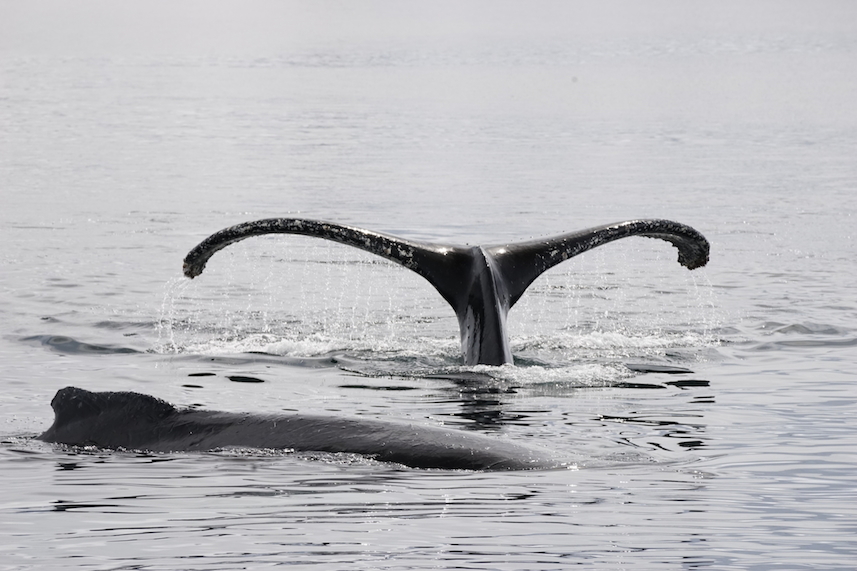
Humpback whales

Humpback whales

Humpback whales
We thought that this experience would be hard to top, but were proven wrong. The following day, it happened again. Another large group of humpbacks came right up to our boat. This time the water was perfectly still and the sun was shining. It’s hard to describe how serene the moment was. Again, I thought that this experience would be hard to top. Again I was wrong. Just moments later Wolf asked, “do you want to try kayaking next to them?”. So Christine and I quickly threw the kayak in the water, jumped in and gave chase. As we were paddling out we saw the group go down under water. We knew this would mean they probably resurface in a minute or two in a different location. The key was to follow the bubbles. Once we spotted where the bubbles were we knew they’d resurface there. We started paddling full throttle to the bubbles. When we were about 5 metres away, Christine started getting nervous so we dared not go closer. And then they resurfaced right next to us. Breathtaking. Just a few metres of water and an inflatable kayak between us and these massive, majestic creatures. This experience is one of our absolute highlights for our Antarctica trip and probably for our entire travels to date.

Kayaking

Kayaking next to humpback whales
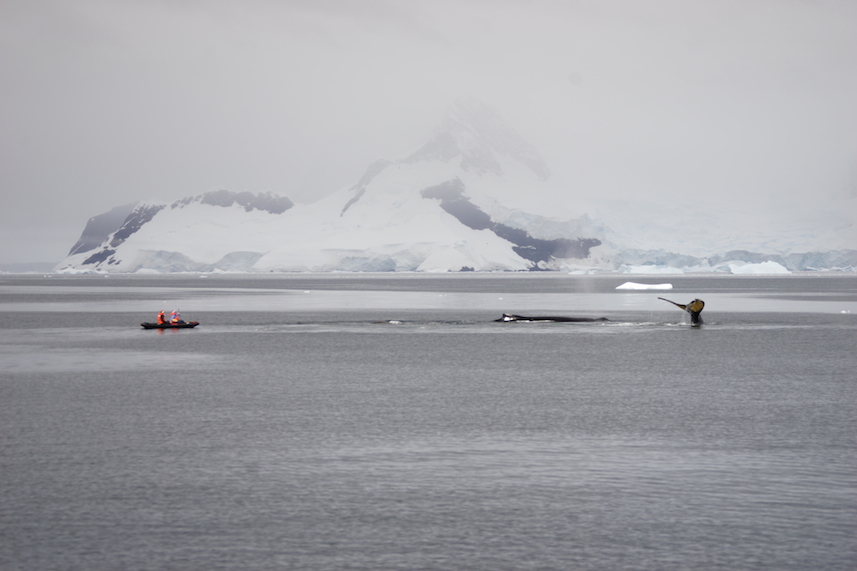
Kayaking next to humpback whales
We stayed out on the water and followed the whales around for a little while before returning to give some of the other guys a turn on the kayak. Afterwards, Roberto remarked “you wouldn’t get to do that on a cruise ship.” By now I was thoroughly convinced we made the right decision to go on a yacht rather than a cruise liner.
In the early afternoon on day 9 we arrived at our next anchorage, Cuverville. Cuverville is a popular spot for both its beautiful scenery and also large Gentoo penguin colony. To me, Gentoo’s look cuter than Chinstrap penguins with there bright red beaks, so I was very excited to go meet them.
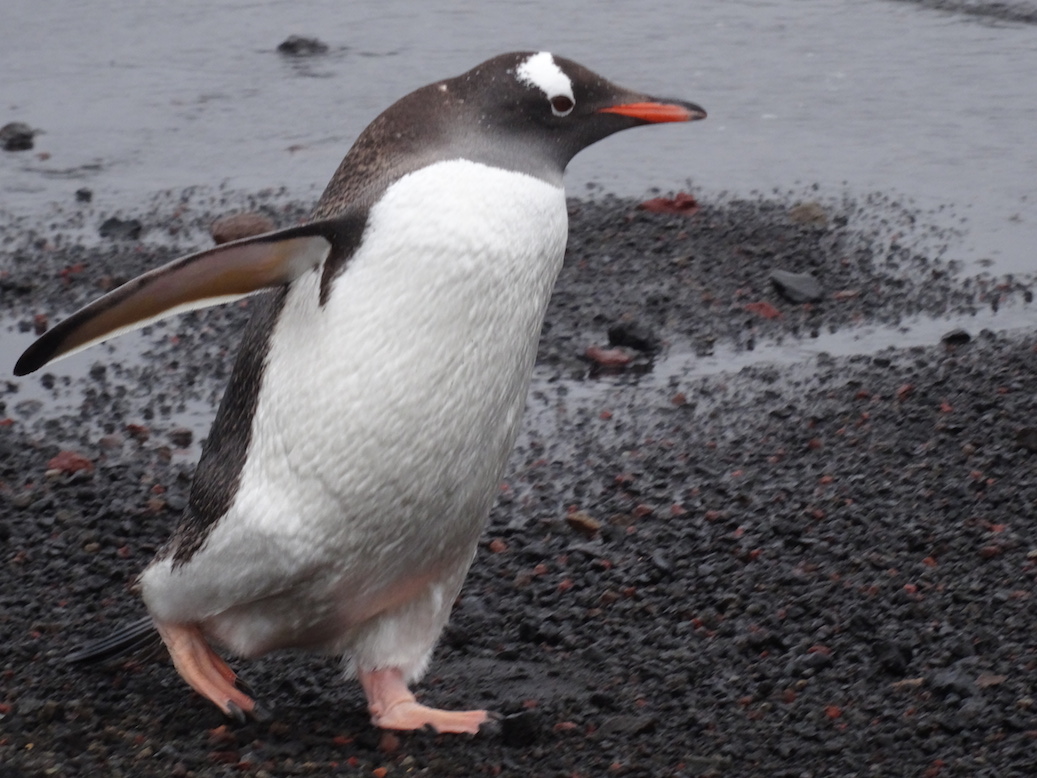
Gentoo penguin


Walking among the penguins we thought that this would be a good place for Christine to do her Antarctica hula-hooping video. It turned out OK, but I had a feeling that we could do better and made a note to be on the lookout for better locations for the next video.

Hula hooping with penguins
Later that day we enjoyed a feast. Not only was it a Sunday but also Martina’s birthday. Daniel and Beate went all out in baking a Malakov birthday cake accompanied by champagne, and cooking Martina’s favourite meal, lasagna. Delicious! An amazing day ended with interesting conversations and lots of laughter.


Scientific base visit (day 10)
As mentioned, the Antarctic Treaty declares Antarctica as a territory dedicated to science and research. So throughout Antarctica there are numerous scientific bases representing various countries. While we were fortunate enough to be taken on quick tours of the Spanish base at Deception Island (Gabriel de Castilla) and the Argentinian Base (Base Brown) near Skontorp Cove, our most substantial base tour was at the Chilean base, Gabriel Gonzalez Videla. The base is right in the middle of a Gentoo penguin colony, in a cove called Paradise Bay. 13 members of the Chilean air force live here from November through February each year. They arrive in November and typically spend 3 weeks digging the base out of the accumulated snow. The air force has two objectives at the base. One is to support the scientists that work on their base from time to time. The second objective is to provide emergency support for anyone that needs it in the region. The colonel showed us around the base, including the living quarters for the crew. He was proud to announce that this year they’ve finally been able to hook up satellite television. A big boost for the crew’s morale. They also have internet access. Arriving into their dining room we’re surprised to be greeted with coffee and biscuits. As a thank you, we invited the colonel back to our boat that evening for whiskey and popcorn. In this environment he opened up and told us what it feels like to lead a team in one of the remotest places of the world. An interesting conversation.


Argentinian base


Iceberg graveyard (days 11 to 12)
The best weather we had during our whole trip was on day 11. Blue skies and sunshine the entire day. This happened to coincide with our sailing through one of the most beautiful channels along the Antarctica peninsula, the Lemaire Channel. Lemaire is an impressive narrow canal taking you between tall ice peaks on either side, and also through some of the most densely packed ice we’d seen to date.
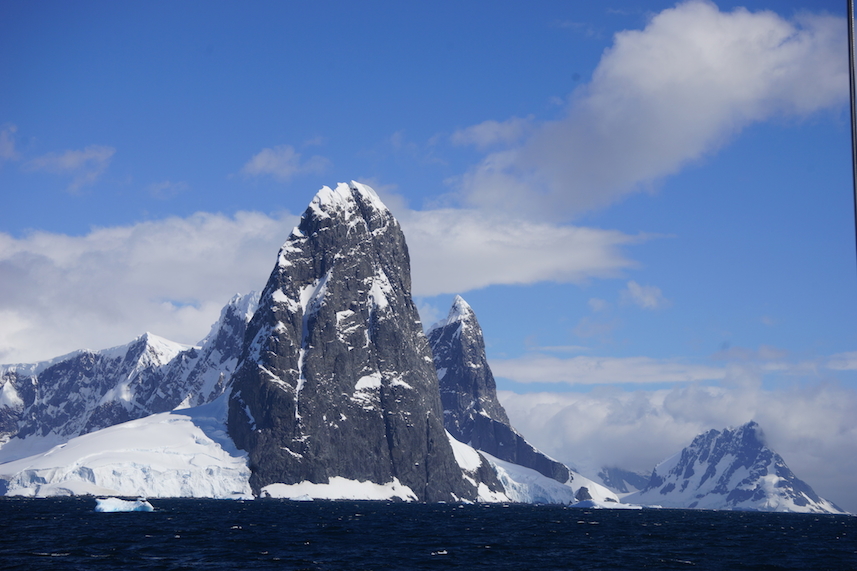
Lemaire

Iceberg
Christine and I were steering at the helm through the Lemaire. Deeper into the canal the ice got denser and denser, until it became almost impossible to avoid them. At this point we handed the reigns back to the captain, and he decelerated the boat speed to barely a crawl. Slowly, we drifted through the packed ice. The quietness was occasionally broken by the sounds of ice fragments scraping the side of the boat.
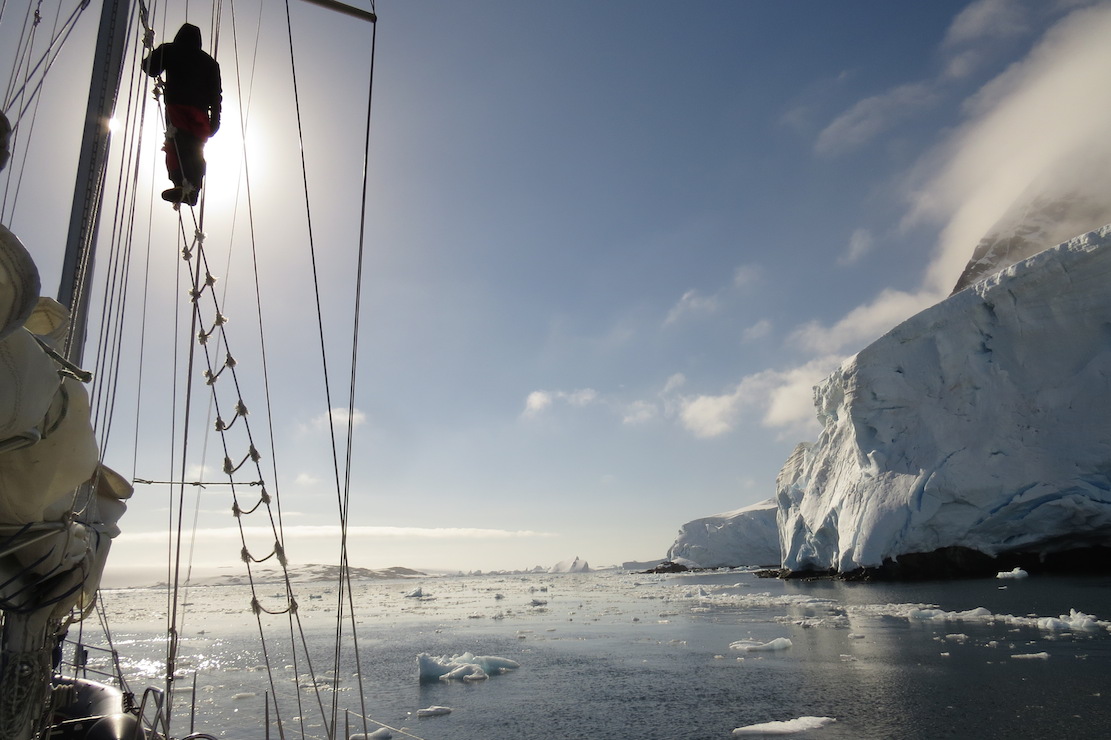
Lemaire
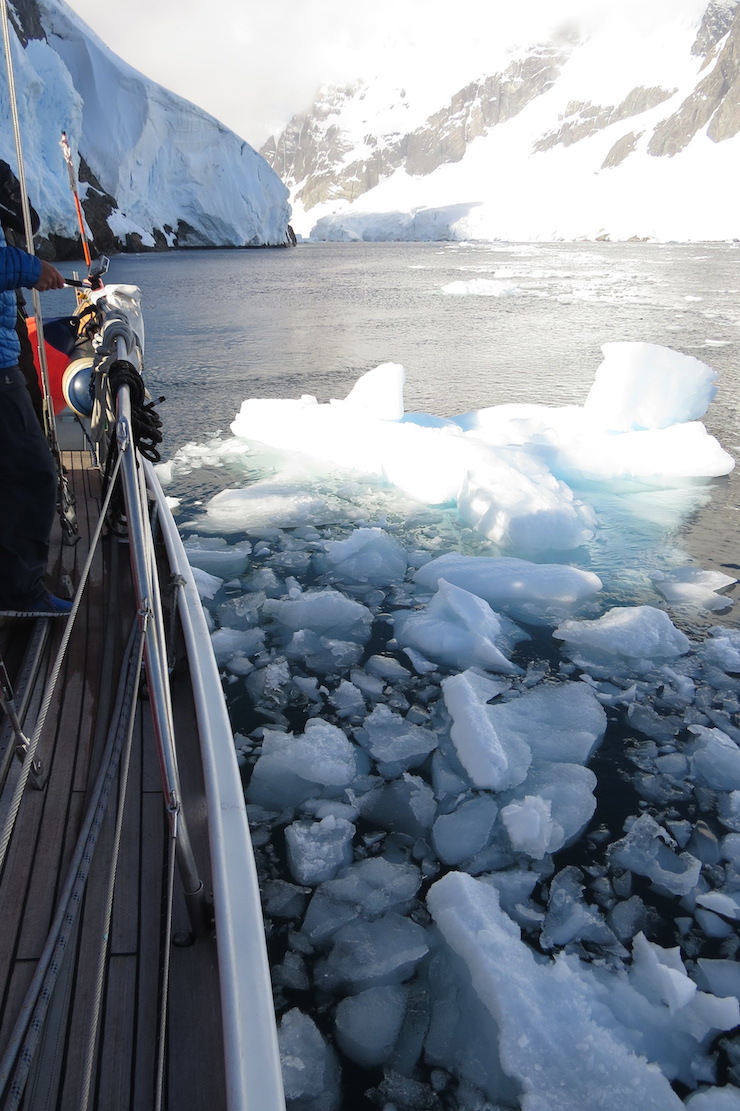
Lemaire
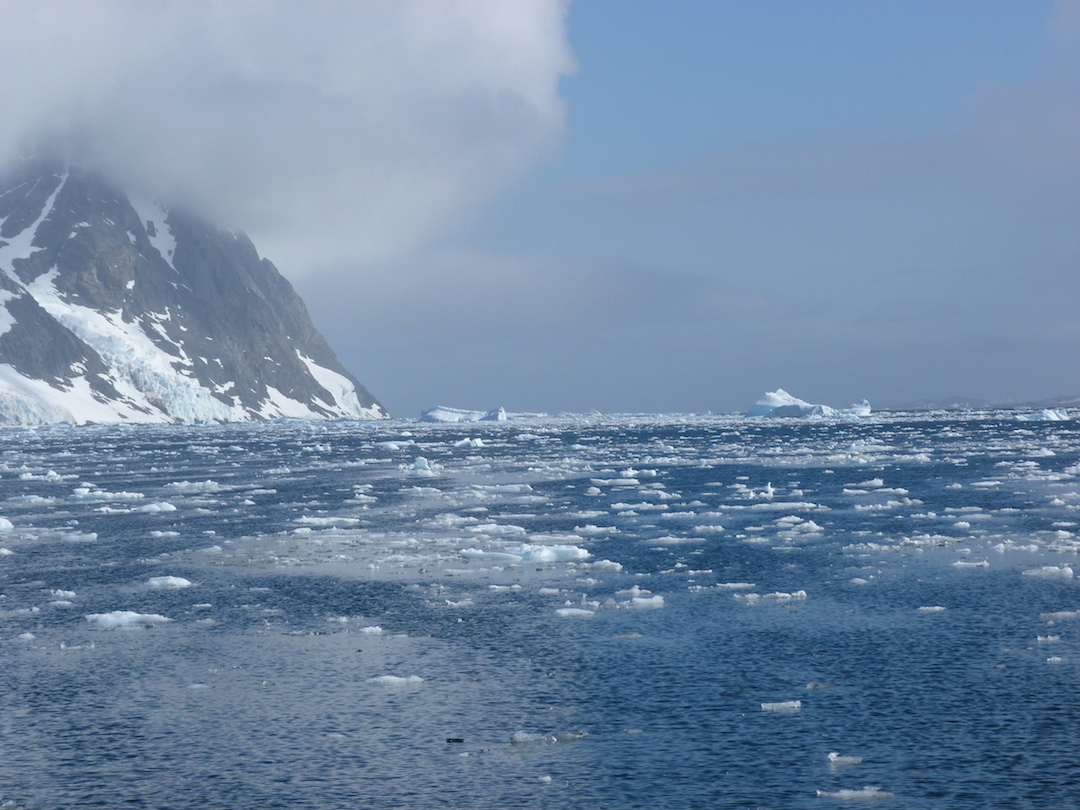
Lemaire
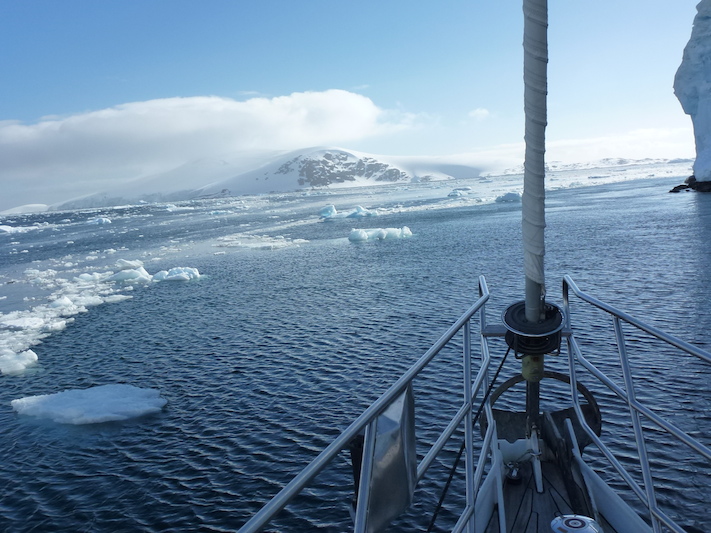
Lemaire
After what seemed an eternity, we at last reached the end of the canal where the sea opened up again. Then we saw the most spectacular landscape to date: Port Pleneau. Nicknamed the “iceberg graveyard”, Port Pleneau is an area where huge icebergs accumulate together after they are blown into a bay. All around us were icebergs from 5m to 30m tall, each with unique shapes. Some looked like faces, others like sky scrapers. Looking across the landscape it felt like we were in another world. Spectacular.

Iceberg graveyard
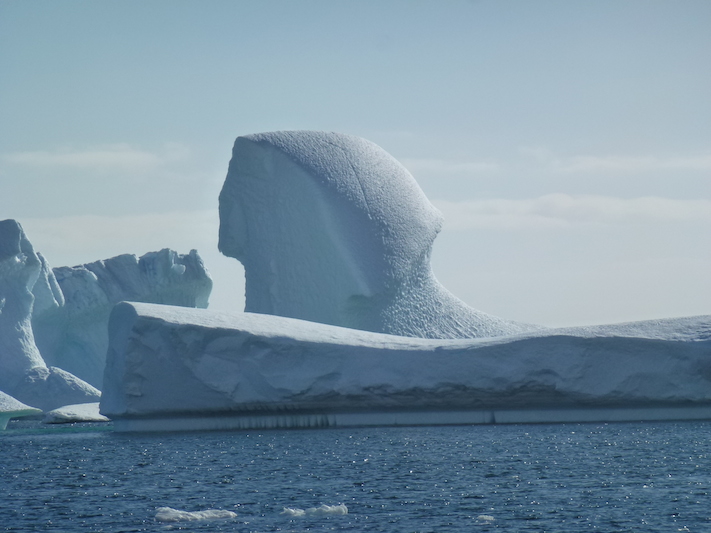
Iceberg graveyard

Iceberg graveyard
Sailing through these impressive and imposing structures, it struck me that this would be an even better spot for Christine’s hula-hooping video. So after reaching our anchorage, Daniel sped Leandro, Christine and I on the zodiac to one of the icebergs, where Christine climbed out and we shot one of our favourite hula hooping videos yet. Leandro and I also took the chance to climb on the iceberg. It felt surreal standing on a floating piece of ice, swaying with the movement of the water.

Hula hooping on an iceberg

Standing on an iceberg
That evening, everyone was in high spirits after experiencing one of the most spectacular days of our expedition. Martina, Joerg and Werner cooked up a German/Austrian feast of smoked pork ribs with potato puree and Sauerkraut. We then witnessed a stunning, colourful sunset followed by the rising of a full moon. A perfect end to a perfect day.
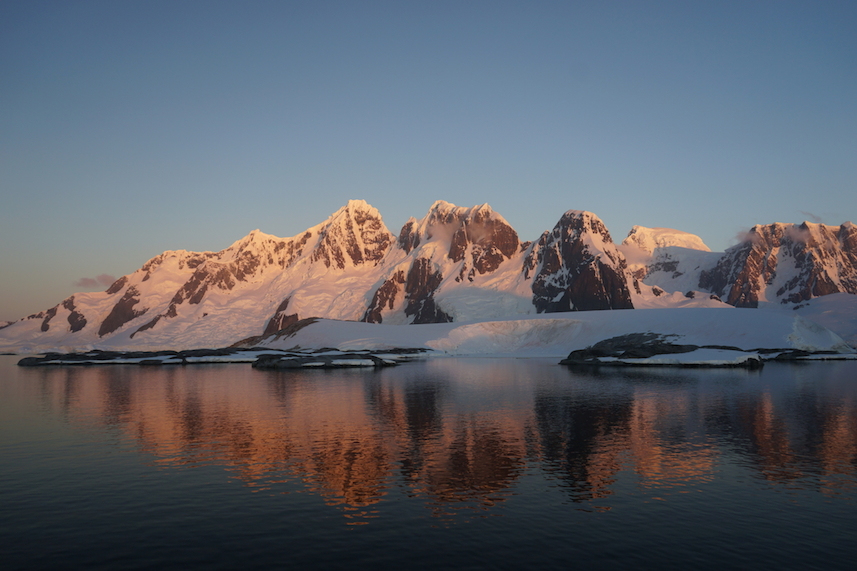
Port Pleneau

Daniel, Beate and Martina
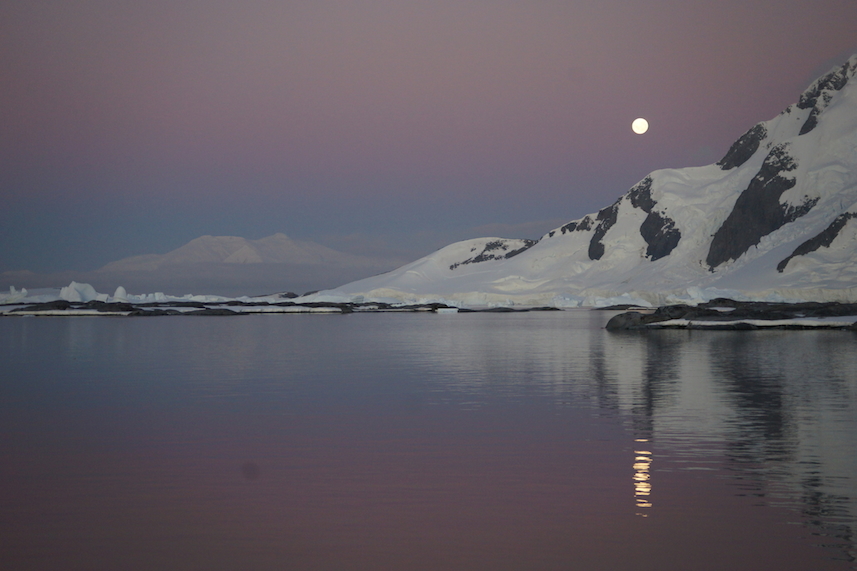
Moonrise at Port Pleneau
The next day was far from perfect. We awoke to almost the exact opposite weather conditions. Blasting winds, dense cloud cover and drizzling rain. Christine and I made a brave attempt to kayak over to a seal and penguin colony.
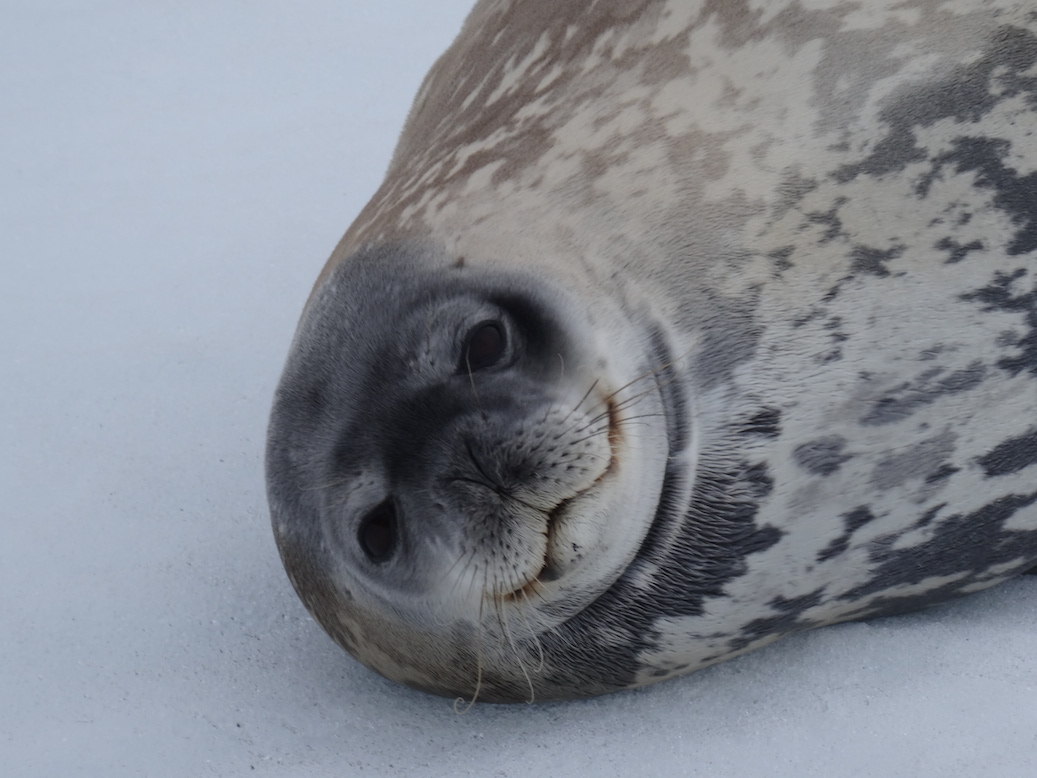
Weddell seal
Battling the strong winds, we barely made it. When we later returned to our kayaks we saw that the wind had blown it metres away and in the process snapped one of the kayak paddles. Bummer. The whole group retreated to the yacht to wait out the storm. Unfortunately it didn’t die down the entire day so we had to abandon our visit to the Ukranian base, Vernadsky. No vodka shots with Ukranian scientists. Instead we had to settle for red wine and pisco sours (personally prepared by Captain Wolf) back on the boat. A worthy consolation.

Captain making pisco sours
Visiting the southernmost post office in the world (days 13 to 14)
After a full day of being stuck in Planeau we were relieved to see the winds subside so we could make our way to our penultimate anchorage in Antarctica, Port Lockroy, home to a British base. This base is one of the few bases in Antarctica not dedicated to science. Instead it is a heritage listed museum, where you get to see what it was like for the former British scientists that lived there from the 1944 until 1962. The museum is really well done. And it’s ably supported by a souvenir shop and post office (the most southern post office in the world) that appears to be an incredible money maker for the base.
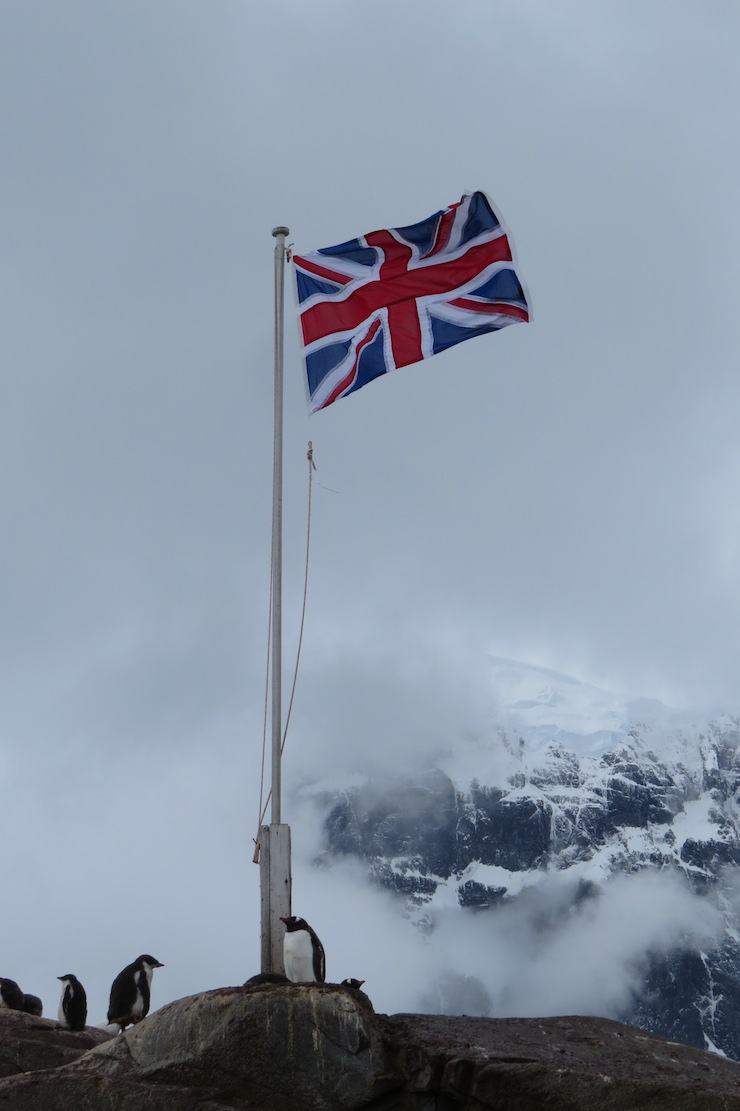
Port Lockroy


I’d almost forgotten my pact with Michael to dive off an iceberg, but as our time in Antarctica was coming to an end, we realised that if we didn’t do it now we may not get the chance. And so again I headed off in a zodiac to climb an iceberg, this time with Michael accompanying me and both of us only wearing swimsuits. At first, things felt OK standing half naked on top of the iceberg. Then my feet started to feel like they were burning. The only way to give my feet relief was to dive off the iceberg into the freezing water that felt even colder the second time around. Once again, I was in the water for barely 10 seconds before returning to the zodiac and rushing back to the warmth of our yacht. Now I think I can safely say that I’ve checked it off the list of “crazy things I’ve done and will never do again.”

Michael and I standing on an iceberg

Me diving off an iceberg
The following day we headed a bit further north to make our final stop in Antarctica at Melchior Bay, and prepared for our return trip back across the Drake.
Return of the Drake (days 15 to 19)
While we had an easy crossing of the Drake the first time around, the same cannot be said of our second crossing. Most of the journey was through waves up to 5m high that would hit our boat in rapid succession from all angles. Christine and I both felt our stomachs churn early on in the crossing, but eventually our bodies adapted. Fortunately for us, we never really got hit with a full bout of sea sickness. Unfortunately the same cannot be said for some of our fellow passengers, who struggled throughout the four day crossing. During that time, Christine and I got into a routine of sleeping, waking up for our 2 hour shift at the helm, eating, and then sleeping again. We probably were sleeping (or at least in bed) for 14 hours of the day. It seems unreal but some combination of the boats rocking and our sea-sickness tablets was probably the cause of these marathon sleeping sessions.
A highlight on the way back was observing the albatrosses that loved to follow our boat for long stretches. I never knew how graceful these birds were. Daniel told me that they spend most of their lives out at sea, only coming back to land once every two years to breed. Amazing animals.

Albatross
As we approached land, our initial plan was to make our first anchorage at Cape Horn. However, we got blown too far east and had to settle on Nueva Island, a little further north. When we finally set anchor I could feel the relief on the boat to finally be done with the Drake. To celebrate, we again cracked open beers this time accompanied by freshly roasted peanuts.
Return to Puerto Williams (days 20 to 21)
We used our last days to slowly make our way back up the Beagle Canal, and on the afternoon of day 21 we finally arrived back where it all began in Puerto Williams. That night, over dinner, we toasted a successful and incredible journey. And then made our way to the yacht club bar for a final drink (or in the case of some, many drinks!).

Our expedition group at the farewell dinner
~~~~~
All in all, the expedition to Antarctica rates as one of the best journeys we’ve ever made. The scenery was like nothing else. And to know that this landscape has remained largely untouched for millions of years makes it all that more special. The animals too were an absolute highlight. Both the adorable penguins and the majestic humpbacks that we got up close and personal with.
And as for the decision to do the sailing yacht rather than the cruise, we couldn’t be happier with our choice. It was truly special to go with such an intimate group, and we both really enjoyed the adventure of sailing across the Drake. One major advantage of a sailing yacht that I didn’t mention earlier, is that you get to do a lot more landings. There is a restriction in Antarctica that no more than 100 people from a boat can come ashore at any time, which massively limits how much time cruise passengers spend on land and where they get to go.
I also can’t speak more highly of Wolf Kloss and his crew from SIM Expeditions. Fantastic operators. Before we booked with Wolf we considered some other operators and found Wolf and his team to be the most professional and impressive of the lot. And during our trip it was clear to us how valuable Wolf’s experience was to handle the challenging, unpredictable and constantly changing conditions of Antarctica. So as you can imagine, we feel very fortunate to have chosen Wolf. And what’s more, the Santa Maria Australis is a very well equipped and comfortable boat too.
Thank you Wolf, Beate, Daniel and our fellow passengers for an incredible expedition!

Fun photo

One of the main reasons Christian and I decided to stay in Australia for two months was to spend more time with family and friends. Over the last 5 years while we’ve lived in San Francisco, we’ve typically only had time to see our families once per year, alternating Christmases in Sydney or Vienna. This year, we got to spend over a month in Vienna leading up to our wedding which was particularly nice. So adding two full months in Aussie-Land felt like the icing on the cake. Luckily, my sister and her family live in Australia as well and I was especially looking forward to spend time with my two little nephews (Jayden, 3.5 years; Lukas, 18 months) and, vice versa, for them to see their auntie for more than the occasional quick visit. I guess with kids it’s particularly apparent how quickly time passes and how much can happen in just a few months. I constantly had the feeling that I was missing out on some important parts of their childhood. Apart from squeezing in a short Outback adventure we ended up splitting the remainder of the time between Christian’s family in Sydney and my sister’s family in Austinmer. Reconnecting with Christian’s friends from high-school, university and college (i.e., Aussie terminology for student housing) was the other highlight. Our schedule was packed with fun activities from beach picnics, to leisurely lunches, kayaking, hiking, cricket and basketball games and many fun dinners. Not only did I get to know an incredible group of people, I also got a better sense for Sydney-siders, what they do, how they live and what they value in life. At times I felt like being at home in this city, not just a visitor passing by. We did not foresee that we would have such a hard time leaving as our time was up, almost feeling homesick. Here is why:
Enjoying food heaven with great company:


Taking advantage of Sydney’s beach & outdoor lifestyle: Sydney is unique in that it combines the urban with the beach lifestyle. The city centre smoothly merges with suburban neighbourhoods at beautiful sandy beaches. I can see why people here strive for a good work-life balance. It does make one happy to get up to the rising sun and go for a run on the beach feeling the wind on your skin and hearing the roaring ocean just a few feet away. It’s pretty invigorating to be amongst such a healthy and energetic group of people. My admiration goes especially to all the ocean swimmers out there. Doing 1k+ morning swims in the open water (many of them are legitimate races) is the ultimate level of fitness! On the weekends, the ocean walk hugging the coast from Bondi all the way down to Coogee is bustling with people. One of our outdoor Sydney highlights was a picnic with friends at Tamarama and hiking in the Blue Mountains.


Spending 24 hours alone with my sister: Living on different continents for 10+ years, I couldn’t remember when I had spent a solid number of hours alone just with my sister. Therefore, I took the opportunity to get away and kidnapped my sis to a small town called Kiama just south of Austinmer. Spending a full 24 hours together and having no time pressure for our conversations felt like a rare luxury. I realised that it’s not only family time by itself that matters, it’s also the one-on-one time with your loved ones that enables us to strengthen our bonds and truly understand each other.


Getting a crash course in bringing up kids: We got the full immersion into the life of a young family, living with my sister, Bobby and their kids. I learned how to change diapers; discovered that kids need an endless amount of food; got reminded about children’s endless imagination which caused a daily dose of healthy laughter; witnessed some unique moments (Jayden fearlessly mastering his first swim lessons, Lukas learning to catch a ball – just to name a few examples); noticed that kids are really smart and that you need to be careful what you say because they understand more than you think!; realised that there is no real “off-time” with kids; and how important it is for parents to work as a team and become the most patient people in the world. I must admit that I have a new appreciation for what it means to be a parent, and how much joy those little beings can bring to your life.


Losing ourselves in long conversations over lovely family dinners: Many of our evenings we were reminiscing about the past, discussing our current challenges, and getting excited about future ambitions. Ultimately, our conversations were a reminder that we all grapple with the same questions. What are our priorities? What are we optimising for? What makes us truly happy and how does that change over time? Our stay in Australia reminded me that a big portion of my happiness is linked to spending time with the people I love. I recently read an article about the connection of time and happiness which probably summarises my feelings the best: “Spending time with people you love doing the things you love is the best road to happiness.”. Also offers some good guiding principles for how to be more happy in our professional life!


“Sometimes I’m not sure if I’m tanned, or just really dirty”.
This quote of Christine’s, from our campsite in Tennant Creek, nicely sums up our 18-days traveling through the Australian outback. Lots of sun and lots of red dirt.
Our route took us from Darwin on Australia’s northern coast right down to Adelaide on Australia’s southern coast; the first time either of us had driven across the entire length of a continent. The main highway for the journey is the Stuart Highway and the journey itself is dubbed “The Explorer’s Way”. Both are in reference to the early Australian explorer John McDouall Stuart who was the first white person to cover this stretch back in 1862. One slight difference between Stuart and us is that he did the journey from south to north. Another slight difference is that he didn’t have a car.
In Darwin, we picked up our 4wd rental, fully equipped with tent, sleeping bags, mini-fridge and cooking equipment. Having a fridge was a pretty sweet addition and meant we’d have more flexibility in what we cooked than we otherwise would have with just an esky.


Before we left Darwin, we stopped by a supermarket to stock up on provisions. The two most important items for us to buy were 30 litres of water in case we broke down in the outback, and a bunch of lacinato kale because Christine doesn’t eat any meal that doesn’t include kale these days. Along with this we bought some other moderately important things like toilet paper, soap and non-kale food items too.
Fully stocked, I was itching to hit the road. But one last thing to do before we left was to set the trip odometer to zero and photograph it so we could capture the full number of kilometres we travelled on our journey. Little did I know that this thing resets itself every 2,000km so I was unable to get a nice picture with the total kilometres we covered. In case you’re wondering, we covered 5,425km and if you do the math you can work it out with the pictures below :).


Our first stop was Litchfield National Park. Although less well-known than the nearby Kakadu National Park, Litchfield is a beautiful park in its own right. Upon arrival we went straight to the nearest waterhole for a quick dip, which was a great relief from the 40+ degree (Celcius) temperatures. Cool and relaxed from our swim, we then found a nice patch of dirt to set up camp. Admittedly, we struggled at first working out how to pitch our very large 4-man tent. It was not as easy to assemble as the 2-man tents we’re used to. However, later we were very grateful to have a large tent since the night time temperatures throughout the trip were often north of 30 degrees and the bigger tent was actually quite airy, providing some relief to the heat.
The following morning we awoke early to sunrise and did a short hike to a peak where you could look out over Litchfield. Having built up a sweat we then made our way to a waterfall for a swim and were lucky to have the entire place to ourselves. An incredible first 24 hours.


Next stop was to backtrack a little and then head east over to Kakadu National Park. I’ve been wanting to go here for years so I was excited to finally make it. We ended up spending 3 nights in Kakadu. Highlights were our first evening picnic at the Ubirr sunset point; seeing some of the oldest Aboriginal rock paintings; the Yellow River cruise which allowed us to get upclose to tons of saltwater crocodiles along with other beautiful bird life; and the little advertised waterfalls at Yurmikmik that Christine and I stumbled across and got to swim in.


On the topic of swimming in Kakadu, because of the saltwater crocodiles there aren’t really any truly safe places to swim in Kakadu. Waterholes are either signposted as “Don’t swim”, where you’d be stupid to swim since there are known crocodiles in the area; or “Swim at your own risk” which is where the rangers do not believe there are crocodiles and make an effort to check on this, but just can’t be 100% certain. Knowing that nothing is 100% certain, definitely made the heart beat a little faster on the couple of times we did swim in Kakadu.


On day 5, we woke up early to hit one of the longest stretches of our journey from Kakadu down to Tennant Creek. Fortunately the road conditions were good so we got into Tennant Creek a little earlier than expected. This allowed us to spend some time getting to know the town. We hit the local RSL club for a beer and a steak, chatting with one of the locals who regaled many a story about Tennant Creek’s booms and busts over the years with mining and cattle butchering. Afterwards we stopped by for a beer at the Tennant Creek Hotel. We were the only non-indigenous clientele there that night. Interestingly the only people who gave us funny looks were the bar staff.
Next morning we got up at 4:30am so that we could make our way down to see the Devil’s Marbles (Karlu Karlu) at sunrise. It was breathtaking experience and well worth the effort. The Devil’s Marbles are this incredible set of rock formations where weathering over time has created these large round rocks everywhere. At sunrise you got to see the rocks change colours and the landscape come to life.


Later that afternoon, we arrived into Alice Springs where we stayed with Christine’s brother-in-law’s sister, Geeta, and her partner David. Geeta and David were incredibly hospitable, taking us out for lunch and showing us around Alice Springs. It was great getting an opportunity to get to know them. It was also great to learn from them and their experience working on Aboriginal health issues. One of Australia’s most pressing social issues is the state of affairs of Aboriginal communities and our country’s dealings with its original owners. It’s an incredibly complex issue and was great to hear perspectives from people who work and contribute to change in this area.


Although we were tempted to stay a little longer hanging out with Geeta and David and getting to make use of a real bed and clean shower, we were also excited by the next few days ahead: a short detour off the highway to pass through the West Macdonnell Ranges, Kings Canyon and Uluru (Ayers Rock). Highlight of the West Macdonnel ranges was driving from gorge to gorge, where we’d do a short hike followed by a dip in a beautiful waterhole. In Kings Canyon the highlight was our sunrise hike around the rim of the canyon. And the highlight for Uluru was probably the highlight for our whole trip: seeing Uluru at sunset. I’d been to Uluru before about 10 years ago. Since then I’ve always remembered it as my single favourite place in all of Australia (and maybe the world). Coming back to Uluru for a second time, it was equally as incredible. As you approach the Uluru from 50km out, there is only flat earth as far as the eye can see. And then, on the horizon, you see Uluru as this massive rock that seems to emerge from nowhere. It boggles the mind as to how this rock should exist there. Up close, Uluru feels like it has its own field of gravity, pulling you in. For our sunset there, we went to the lookout, prepared a wonderful picnic spread, popped open a bottle of bubbly, plugged in our headphones to our iPod and sat on the roof of our 4wd admiring the changing colours of the rock at sunset. We ended up staying there long after the sun had set, admiring the beauty of our surroundings. Just magical.


After Uluru was another long driving day of about 750km, first heading east back to the Stuart Highway and then south all the way down to Coober Pedy. Coober Pedy is a quirky town of only 1,500 residents. Its claim to fame is that it is the world’s largest Opal mining town. Its other claim to fame is that it is the most uninhabitable place on earth with ground temperatures often above 65 degrees, along with extraordinarily strong winds. In order to deal with these conditions, many of the people live in houses built underground. So one of the “must do’s” in Coober Pedy is to stay underground for the night. In our case, we camped underground which was a really fun experience. It was actually one of the more comfortable places we slept in given that the temperature was a cool 22 degrees and we didn’t have to battle with any rain or wind. While in Coober Pedy, we also made time for an Opal mine tour and a visit to an underground church.


After Coober Pedy, we decided to take another detour of the Stuart highway so that we could make our way over to the Flinders Ranges. Along the way, we bumped into some travelers we’d seen at our underground camp place in Coober Pedy, so we hung out with them for a couple of days. Dimitri and Els from Belgium and Maarten from the Netherlands were in the middle of a longer road trip from Perth to Melbourne, also via the Flinders. Together we visited some cool natural springs, camped under the stars, and had a lunch of Australian feral animals at the very “hip” Prairie Hotel. The Prairie Hotel is worth a call out because it was an absolute gem of a find. Situated in the town of Parachilna with only 2 permanent residents (which, as described by Grant, the hotel manager, is “northeast of the middle of f***ing nowhere”), the only reason to stop is to come to the Prairie Hotel. 20 years ago, on what sounds like a whim, the new owners decided to turn the run down pub into a boutique hotel. The hotel itself is very tastefully done. But the reason we came by was to try the famous “Feral Platter” which is an antipasti plate of emu pate, camel wurst and smoked kangaroo. Everything we ate there was just delicious. And Grant was a barrel of laughs too.


Along the drive to the Flinders we saw emus in the wild for the very first time. Crazy animals as you can see in this video:
But the highlight was for Christine getting to see big red kangaroos in the wild for the first time. Prior to this, Christine had been complaining that she’d only seen small kangaroos and wallabies in the wild and was starting to not believe me that you could see big ones in the wild too. But once we arrived into Flinders Ranges National Park, we saw big ones everywhere. Very cool.


Flinders is famous among geologists for having some of the oldest known rocks in the world that now potrude out after movement in the earth millions of years back. But beyond just having really old rocks, the area itself is beautiful. We spent two days there, hiking around and enjoying the slightly cooler temperatures than further north. Given the vast area of the Flinders Ranges, that we could never entirely cover by hiking or even by car, we decided to take a scenic flight which gave us a very different and spectacular perspective of the landscape.


Our penultimate stop along the journey was in the South Australian wine region. It was two stops really, one in Clare Valley and the other in Barossa Valley. Part of the reason for deciding to go from north to south was so that we could finish up our journey in this beautiful wine country. In Clare we hired bikes and rode along the Riesling Trail (Clare is famous for its Rieslings) from winery to winery tasting wonderful wines and gourmet food. In Barossa we did a wine hike, walking from winery to winery to taste the wines and food. Mixing exercise into our wine tastings helped us justify the 4 straight days of indulgence.


And finally, 18 days after departing Darwin we arrived at our destination: Adelaide. We’d both been to Adelaide before so didn’t budget a lot of time here before we flew back to Sydney. That said, we still made time for one last gourmet experience dining at Andre’s Cucina & Polenta Bar where we celebrated the amazing journey we’d just completed.


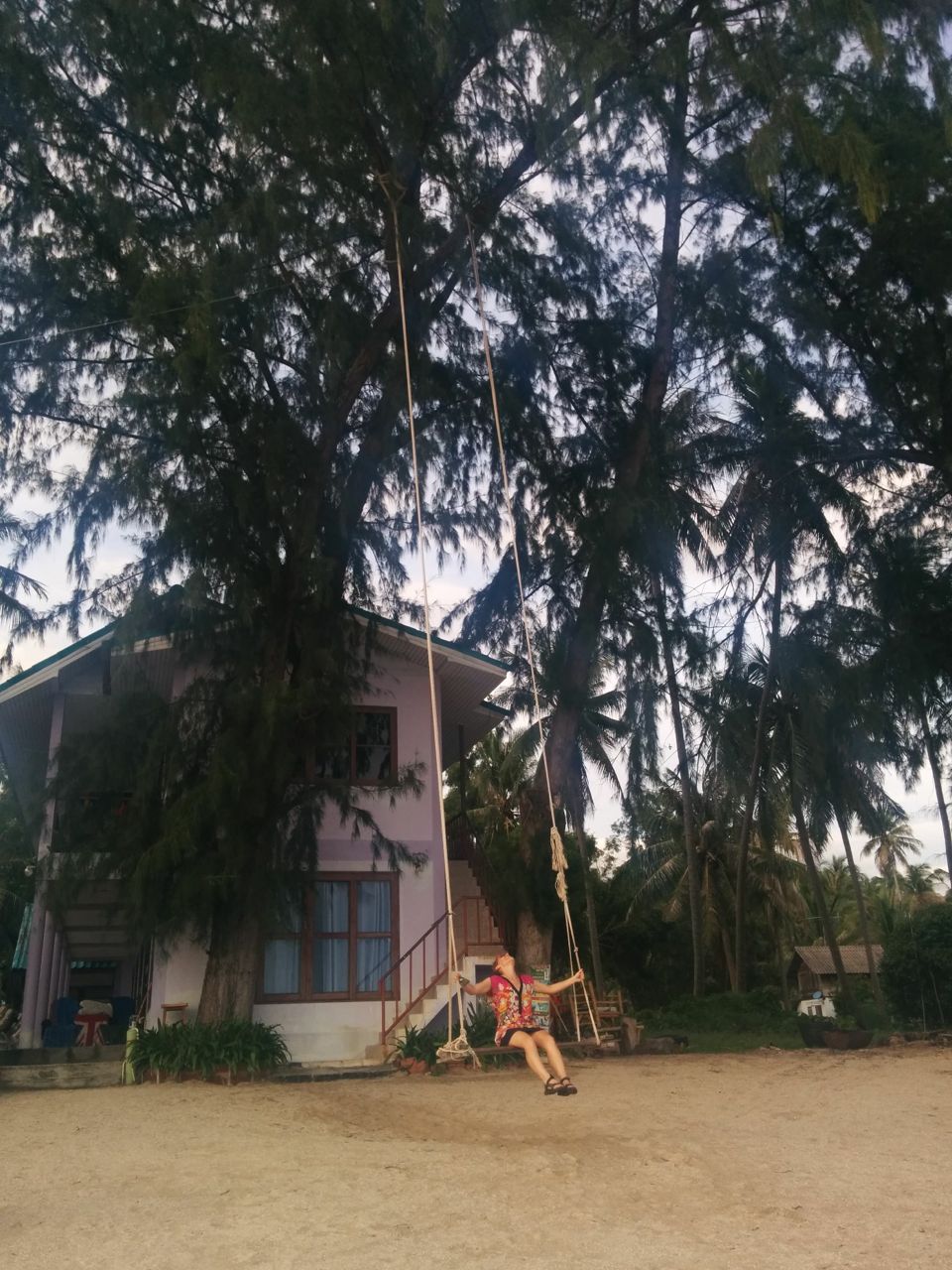 While traveling around the world is an absolute dream, one of the tougher things about the journey is that we are constantly on the move. Every 2-3 days having to unpack and repack our suitcases and getting on the road takes its toll. While we had originally planned to use the month of October for a more comprehensive tour of South-East Asia (e.g., Vietnam, Cambodia, Laos), we ended up deciding to stick to one place, Thailand, and take it more slowly. Christian had been to Thailand a couple of times before and described it as a laid back beach paradise. I was sold! But before paradise could begin, we had to take a long journey, flying from Bhutan to Bangkok, followed by the overnight train down South to Chumphon and then finally several hours on the ferry, before we arrived at our destination: Koh Tao.


Koh Tao is a small little island off the east coast of Thailand. The reason we chose Koh Tao is to get our PADI Scuba Diving certificate. Turns out the island graduates the greatest number of scuba divers in the world. I liked the place the minute we set foot on it. Barely more than a stretch of beach, the island is laid back enough to feel you’re in a remote place but with enough beach bars and restaurants to explore for a week. Our little hut right on the beach made us feel like in paradise. Amenities were limited (no AC, simple room with cold water shower) but the direct beach access and sunset views were worth the trade-off.


Before starting our scuba diving course, however, we set out for one more adventure. The legendary “Full Moon Party” was happening the next night on the neighboring island Koh Pha Ngan. It’s a gigantic, all-night beach party with several DJs. The event attracts several thousand people every month. We were curious to check it out even though somewhat skeptical based on what we had heard. Lots of young travelers that can go a bit overboard. But, we were already in Thailand. Plus, since our wedding was on the night of a full moon, it was technically our “3-month moon wedding anniversary”. So why not give it a try. The journey there was enjoyable in itself. A nice boat trip and long stroll along the beach in Koh Pha Ngan, followed by sunset beers at a cute beach bar.


We were ready for the party! First, we got ourselves a “bucket”. Literally, a flask of alcohol mixed with a soft drink in a bucket. Admittedly, not my favorite cocktail. Second, some hula hooping on the beach. Really fun with the music, especially in this unique setting. Christian and I got to know people from around the world and danced until the morning hours. Despite our original intentions to make it through the whole night without sleeping, we couldn’t resist to get a cheap room for a 4-hour nap before taking the morning ferry back to Koh Tao. I guess we are getting old 🙂 Overall it was beautiful to dance on the beach under the full moon, however, it’s more of a college-party scene and the music was a bit too mainstream for my taste. I had secretly hoped for a sliver of Tomorrowland DJ tunes. But, all in all, a worthwhile experience.


Back on Koh Tao, we were ready to go diving! The course took 4 days. Christian and I found ourselves “back in school”: a mix of (entertaining, 80s style) videos, some theory and then the actual dives. Anita, a teacher-turned-dive instructor from the UK, was our dive teacher. Very experienced, great instructor but also really fun to spend time with. Besides getting the actual certificate, I realized how special it felt to become more integrated into Koh Tao’s dive community. Our daily schedule gave us plenty of opportunity to socialize and hear people’s life stories: early morning 5:15am wake-up calls to hit the best dive sites before others, a Tuk Tuk to the pier, boat trip to the first dive site, back to town, out on the water again for more dives in the afternoon, back to the dive shop at around 5pm, followed by evening beers with the New Way Diving crew. The dive masters/instructors all had their own, interesting stories to tell. From different countries, ages, and backgrounds they came to Koh Tao for various reasons: to escape from the stressful corporate world in “the West” in search for a more balanced life, to finally pursue a long-had passion after retiring or to just have fun for a year or two before starting a career. I was contemplating if I could see myself as a dive teacher. Having a boat as an office, spending all day long in flip-flops in the sun and teaching people a fun sport does sound tempting. Yet, I don’t think it’s my life’s calling. Although I must say that both Christian and I got a true appreciation for the sport itself and the technical capabilities needed. On our last dive, having mastered the basics, we were able to immerse ourselves more into the actual experience. The weightless floating. The serenity of the underwater world. The incredibly diverse nature with all its unique shapes and creatures. Like a wonderland. I can see why people can’t stop exploring this magical place. Christian and I are hooked! A new sport we both enjoy.


After our lovely stay on Koh Tao, we opted for a change of scenery (mainly to evade the starting monsoon season on the east coast). Off we were, first to Khao Lak and then to Phuket on the west coast where the monsoon was just trailing off. We settled into a daily routine of meditation practice (more on that in a later post), lots of reading (also mainly on meditation), language learning (Christian is continuing his German practice; I started to learn Spanish), wedding blog writing and video editing, and some exercise. All of that with nice beach breaks, new activities (elephant riding & bathing!) and lots of tasty Thai food in between 🙂


It’s been really pleasant to “settle down” in Thailand for three weeks after having been on the move for three months. A great way to explore Thailand’s culture while carving out time for our personal projects. More details to come on the latter soon! Stay tuned, C&C

Exhilarating, strenuous, cold, remote, stunning, and very rewarding. Those are just a few of the words that come to mind when summarizing our recent 7-day trek to the Jhomolhari base camp in the Bhutanese Himalayas.
I was very much looking forward to this adventure and being back in the remote wilderness. I must admit, however, that I tend to romanticize those type of trekking trips, somehow forgetting the unavoidable painful moments. But Christian and I love the challenge. And with that challenge comes appreciation and a sense of accomplishment. And that’s what we feel looking back on our Himalaya adventure.
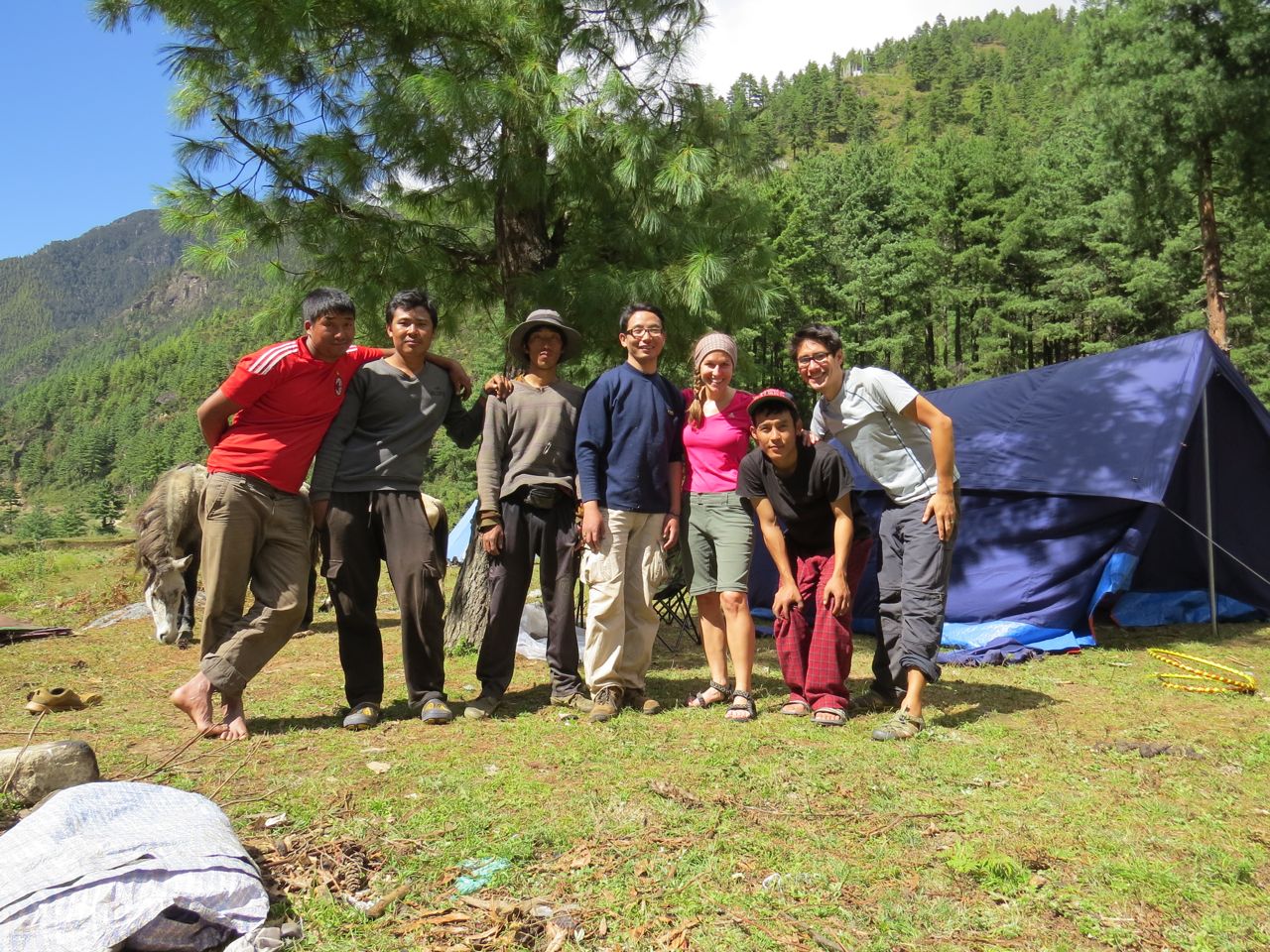
The incredible thing about an organized trekking tour (you have to book through a travel agency to get a tourist visa to Bhutan) is that you really “just” have to carry yourself up (and down) the mountains. Everything else is taken care of. Tenzin, our tour guide, brought us up to speed with Bhutan’s history and every imaginable story about Buddhism; our horse guide took care of our seven pack horses; and three other guys managed the camp. Yep, that’s right: 5 men and 7 horses supporting just the 2 of us! Sounds like luxury camping. But wasn’t. The whole experience was still an adventure. It was physically challenging (we hiked an average of 15km a day with an average altitude difference of 1500-2000m), it was hard to breathe (our highest pass was 4890m), and it was cold (freezing temperatures at night which made sleeping through pretty much impossible). But it was so worth it. Here is a glimpse of our daily “life in the mountains”:
Day 1: Talking about challenges, we didn’t even make it to our starting point on Day 1. Heavy rain in the days before our hike had caused some landslides, blocking the road. Our driver, determined to navigate through the narrow opening on the street, tried to make it through. That turned out to be a bad idea. The car slid to the left and hit a huge rock. Luckily, the damage wasn’t too bad.


There was no way, however, to drive any further so we packed up our stuff and decided to walk instead, adding 3 extra kilometers to the 22 kilometers planned for that day. And the fun was only about to begin. The rain had turned the rocky trail into an enourmous mud slide. What we expected to be a long but leisurely hike through the sub-tropical forests ended up being an 8-hour balancing and rock-jumping exercise.


Exhausted but proud of our progress, we reached the camp side where hot tea and a glimpse of the stunning Jhomolhari summit, Bhutan’s second tallest peak, awaited us.


Day 2: We woke up to sunny skies and a crystal clear view onto Jhomolhari. Just beautiful.


Energized we set out to conquer the next 17km of the trek, hugging the valley floor and a fast flowing river.


Close to the 4000m altitude mark we came through a small village. Really just an accumulation of a handful of houses. It’s hard to imagine to live in such a harsh climate. The place is snowcovered from November to March and people mainly live off yaks and sheep. Despite being remote, the people were quite inviting. A group of villagers that were catching up (outside in the cold) happily posed for pictures. And some school boys took the opportunity to practice a few English phrases with us.


After one more hour we reached the base camp (4080m) with spectacular views onto the 7314m high Jhomolhari. It got cold pretty quickly so we bridged the time until dinner, snuggling up and reading in our sleeping bags. Besides the actual hike, dinner was the main highlight of the day. We couldn’t wait for our daily dose of hot soup – the best imaginable thing when it’s cold outside. Well, actually, there was something that topped the soup. When we all huddled in the kitchen tent that night, our crew produced a whiskey bottle. Not being a big whiskey fan my enthusiasm was limited. But, hey, try that stuff with some hot water. It’s magic! The perfect way to warm up before jumping back into your sleeping bag.


Day 3: Our acclimatization day. In order to avoid altitude sickness, the itinerary plans in an acclimatization day at the base camp. While we had woken up to clear views, that soon changed.

We set out on a 4-hour hike up to the actual base of Jhomolhari and got caught in a hail storm before it started to snow a bit. Crazy how you can get all types of weather within a couple of hours.


Back at the camp in the afternoon, the sun reemerged. Time for some hooping with the crew! This turned out to be super fun. Our horse guide had the funniest technique and everyone cracked up laughing. Once dusk was upon us, the typical routine kicked-in: reading, dinner, mystical stories in the kitchen tent over our shot of “hot-water whiskey”, some more reading, bedtime 🙂
Day 4: This was a tough day with an ascent of 800m followed by a descent of 1000m. But also very rewarding. We passed yak herders through a stunning scenery with crisp blue alpine lakes and rivers. The weather gods kept challenging us with a hail storm during the last 200m of our ascent. But we made it up to the highest point on our route (4890m), cold and sweaty at the same time!


The amazing outlook was shortlived, however, as we needed to make a 1km vertical descent back down to our camp. Again, the scenery made up for the workout. Our path led us through rocky cliffs, wildfower meadows, various nomadic settlements and provided incredible views onto gigantic waterfalls.


Our camp was tucked away in a beautiful small opening in the wood right next to the river. Optimistic about the sun that broke through the clouds, I took a little “shower” in the river. But, somewhat predictably, the weather turned rainy and cold within minutes so my enthusiasm was shortlived. I jumped back in my usual 5-layer outfit immediately. The attempt to start a cozy bonfire was rained out. But we had gotten a few minutes of warmth.


Back to our usual treat: a bit of hot whiskey and hot water bottles. Yes, our crew prepared hot water bottles for the night for us! This was another nice surprise. Reminded me of my childhood when I was sick and my mum would tuck me into my bed with a hot water bottle. Without our little “heaters” I would have probably woken up even more times during night.


Day 5: Both Christian and I thought we had the hardest day of the trek behind us. Happily we jumped “out of bed”, stretched our stiff bodies and eagerly awaited our hot coffee and breakfast.


Our cook kept surprising us with new items. That day he produced pancakes. Strengthened, we continued the journey. But it was not as easy as expected. The previous four days of intense hiking in altitude must have taken a toll on us. Both Christian and I moved in slow motion, our bodies feeling incredibly tired. Like snails we dragged ourselves up the first 200m past hillsides lush with rhododendrons before gradually climbing above the tree line again. And then we hit the last killer ascent, a steep 550m climb up to our last pass (4520m) on the trek. Mentally, this was the toughest stretch for Christian and me. But I also knew it would be our last big one. And again, stunning views from the top. Only one more hour downhill to our camp for the day!


Arriving at the camp, Tenzin, our guide, surprised us with a Druk 11000. Druk is one of Bhutan’s national beers. The Druk 11000 is an extra strong version with 8%. We were happy 🙂

Day 6: Our last day of hiking. One more last, steep ascent before venturing into a 1.6km vertical, rocky downhill path. The weather gods on our side, we had sunshine for the whole day. After arriving at the camp site around lunch time, we ventured out to meet locals in the nearby village.


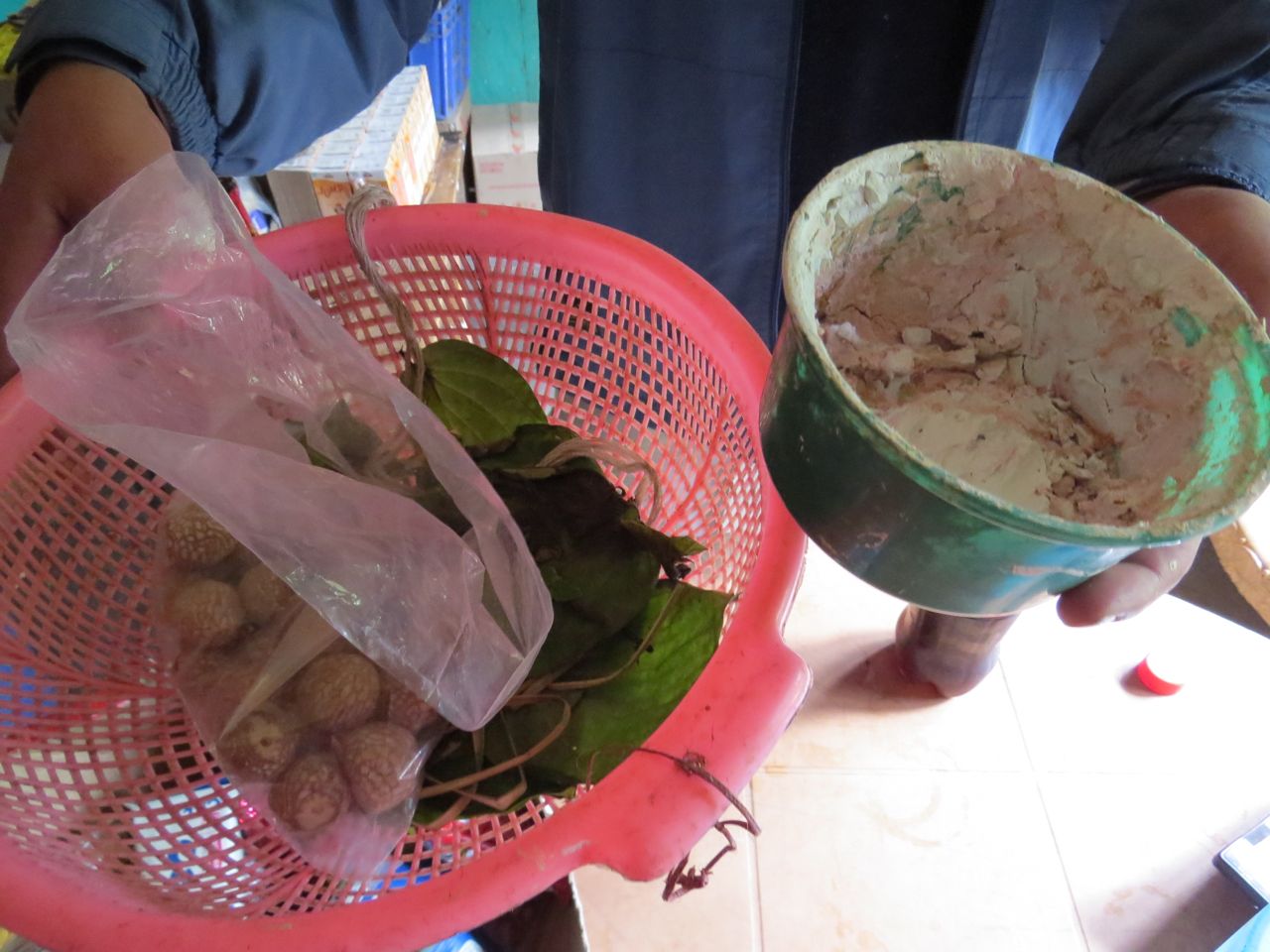
While enjoying a beer at a local grocery shop (really just a room with some basic goods), we got a peak at “doma”. Doma is an integral part of Bhutanese culture. It’s made out of betel nut, betel leave and lime (synthetic calcium carbonate). You chew the mixture which makes your mouth go slightly numb and stains your teeth red. It’s spat out after chewing, so you can see doma stains on the ground all over the place in Bhutan. These days the government is trying to reduce the use of it given its addictiveness and negative health implications. But it’s so ingrained in Bhutanese culture that people, especially older ones, won’t give up the habit.


Two little girls, just back from school, were curiously peaking through the shop window. Happy that I had brought the hoop, we attempted to teach them how to do it. Very timid at first, the girls barely dared to touch it. But with a little encouragement they went for it, and had a lot of fun.


Back at the camp there was one more game we wanted to try. A typical Buthanese stone-throwing game. Sounds pretty simple (i.e., just get the stone as close to the target as possible). Turns out it’s not. Both Christian and I were pretty bad at it. Our trekking crew, unsurprisingly, “rocked” the game.


With a little bit of nostalgia, we enjoyed our last trekking meal that evening. Our cook surprised us again – this time with empanadas and a pizza! What a treat on our last night camping. Satisfied, we stumbled into our tent and, admittedly, were both looking forward to a proper shower and sleeping in a real bed again the next day 🙂
History
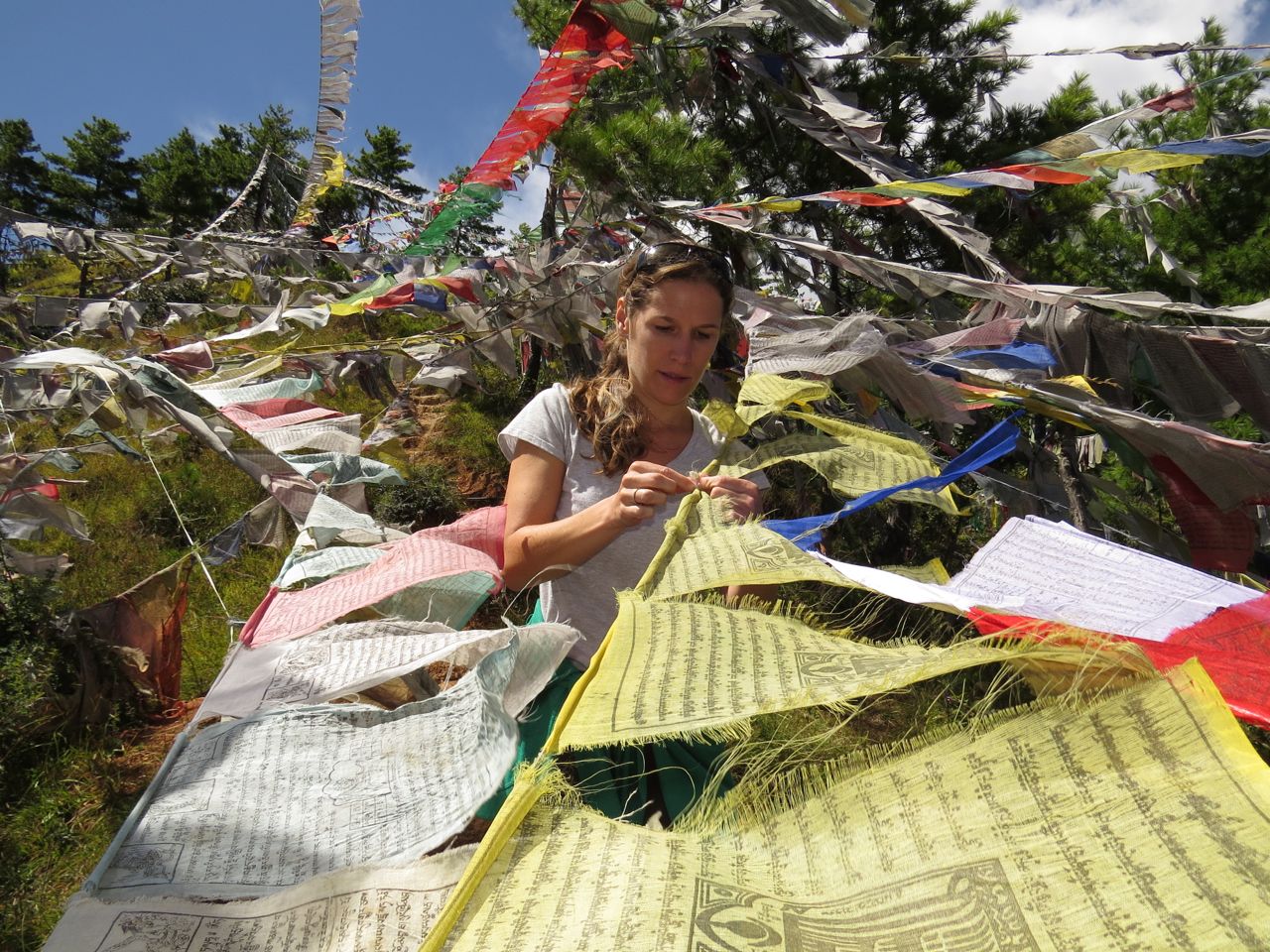
One of the most fascinating things about Bhutan’s history is how mystical it is. From gods flying on the back of tigers to reincarnation of leaders across generations, it is hard to distinguish between historical fact and religious belief. The underlying reason is that Buddhism is so fundamentally ingrained into the Bhutanese way of life. 75% of the population are Buddhist.


The origin of Buddhism in Bhutan began with the second Buddha, Guru Rinpoche. In the early 8th century he travelled from nearby Tibet and brought Buddhism to the region now known as Bhutan. Everywhere we went in Bhutan you couldn’t help but miss representations of Guru Rinpoche from paintings to statues to costumed dancers. Our tour guide, Tenzin, also had a seemingly endless number of stories to tell us about Guru Rinpoche. So as you can imagine, Guru Rinpoche is a really important figure in Bhutan.
To come to the origin of the Bhutanese national identity, you need to fast forward to the 17th century to the story of the “unifier of Bhutan”. Prior to then Bhutan was really only a number of separate states, often considered as a southern part of Tibet. This all changed when a man named Ngawang Namgyal established himself as a religious leader and unified the region of Bhutan separate from Tibet (hence, Bhutanese refer to him as the “unifier of Bhutan”). More than just a religious leader, he was also a military and administrative leader. One of his most important accomplishments was the construction of the system of “dzongs” as fortresses to allow Bhutan to successfully defend itself from Tibet and other rivals in the region. However, when the “unifier of Bhutan” died in the early 18th century, Bhutan underwent a period of instability as regional leaders vied for power and Bhutan again separated into smaller states. Around this period, Bhutan began to have contact with British explorers linked to the East India Company who were in search of goods of value in the regions of Bhutan and Tibet. At times, interactions were hostile including the “Duar Wars” over control of the region of Assam in the 19th century. However, one Bhutanese leader, by the name of Urgyen Wangchuck, found a way to use positive relations with the British to his and Bhutan’s advantage. His support of Britain’s invasion and subsequent treaty with Tibet gave him the backing of the British and credibility with his own countryman to emerge as the most powerful man in Bhutan. In 1907, he was elected unanimously by Bhutan’s chiefs and religious leaders as the hereditary ruler of Bhutan. And so began a new monarchy (among the youngest in existence today) with Ugyen Wangchuck as the first king.
Since then, there have been 5 kings of Bhutan, all coming from Urgyen Wangchuck’s lineage. The second king, Jigme Wangchuck reigned from 1926 to 1952. During his time he oversaw the establishment of a strong alliance with India as they gained independence from Britain. It was during this time that many of the treaties between Britain and Bhutan were transferred over to India and Bhutan.
The third king, named Jigme Dorji Wangchuck is known as the moderniser of Bhutan. Educated in India and England, he saw that a policy of isolation would not be feasible, particularly after seeing China taking control over Tibet. He oversaw the opening up of Bhutan to international relations (including recognition as a country in the UN) along with a series of modernisation projects to build out infrastructure in Bhutan.
The fourth king, Jigme Singye Wangchuck, took over in 1972 at age 17. He continued along the path of modernisation set by his father. As he formulated his development goals, he emphasised the need for Bhutan to strive for development that is for the good of Bhutan and its people, not just development for development’s sake. In stating this, he coined the term “Gross National Happiness” (GNH) as a counterpoint to GDP. Hence today, Bhutan is famous for assessing the merits of development on whether it promotes cultural and environmental good, not just economic good. Towards the end of the fourth king’s reign, he recognised that for Bhutan to truly be modernised, it needed to follow a path to democracy. The king is quoted as saying “monarchy is not the best form of government because a king is chosen by birth, not by merit.” This process started in 1998 leading to the country’s first democratic elections in 2008. At this time, Bhutan officially transformed from absolute monarchy to a democratic constitutional monarchy.
The fifth king, Jigme Khesar Namgyel Wangchuk took over in 2006. Since his coronation he has continued along the path set by the kings before him to develop Bhutan along the tenets of maximising Gross National Happiness.
Truly Bhutanese
Bhutan has a number of unique quirks. To name just a few:
 This odd looking creature is said to have been formed when the “Divine Madman” (another mystical Bhutanese historical figure) threw together the bones of a goat and a cow that he ate and formed the Takin. These animals are like nothing I’ve ever seen before. The way they move seems so awkward; kind of like a poorly animated beast in a 1980’s horror film. And their two toed hooves made them look pre-historic-like.


We learned before we arrived that the national sport was archery. Once on the ground, we realised that archery is only one of many similar target games they play. The Bhutanese love darts and another game where you throw rocks at a target. Christine and I tried it on our trekking tour but were pretty miserable at it.


Surprisingly, you see phalluses everywhere! Not your Washington Monument style impression of a phallus. The real deal! Generally you’ll see them painted or “hung” at the entrance to houses in order to provide protection. The history behind it, similar to the Takin, is said to date back to the antics of the Divine Madman, who would happily show his penis as a symbol of strength.


What we did


This place is simply stunning, built up high in the side of a mountain. The story behind it relates to Guru Rinpoche, the father of Buddhism in Bhutan, who is said to have flown there on the back of a Tigress and meditated there a while.


One of the main reasons Christine and I wanted to come to Bhutan was to do a trek in the Himalayas. Christine will write more about this in a separate blog post, but suffice to say, it was a highlight. It was visually spectacular and we felt very rewarded for the effort to hike up those peaks where the air was thin and the wind was cold.


After our trek we spent 3 days in Bhutan’s capital, Thimphu. Although it’s the country’s most populated city, it still felt small and charming. The main attraction while we were there was the annual Tsechu festival, a Buddhist religious celebration of song and dance. Beyond the performances, it was also really fun to see the locals decked out in their best attire.
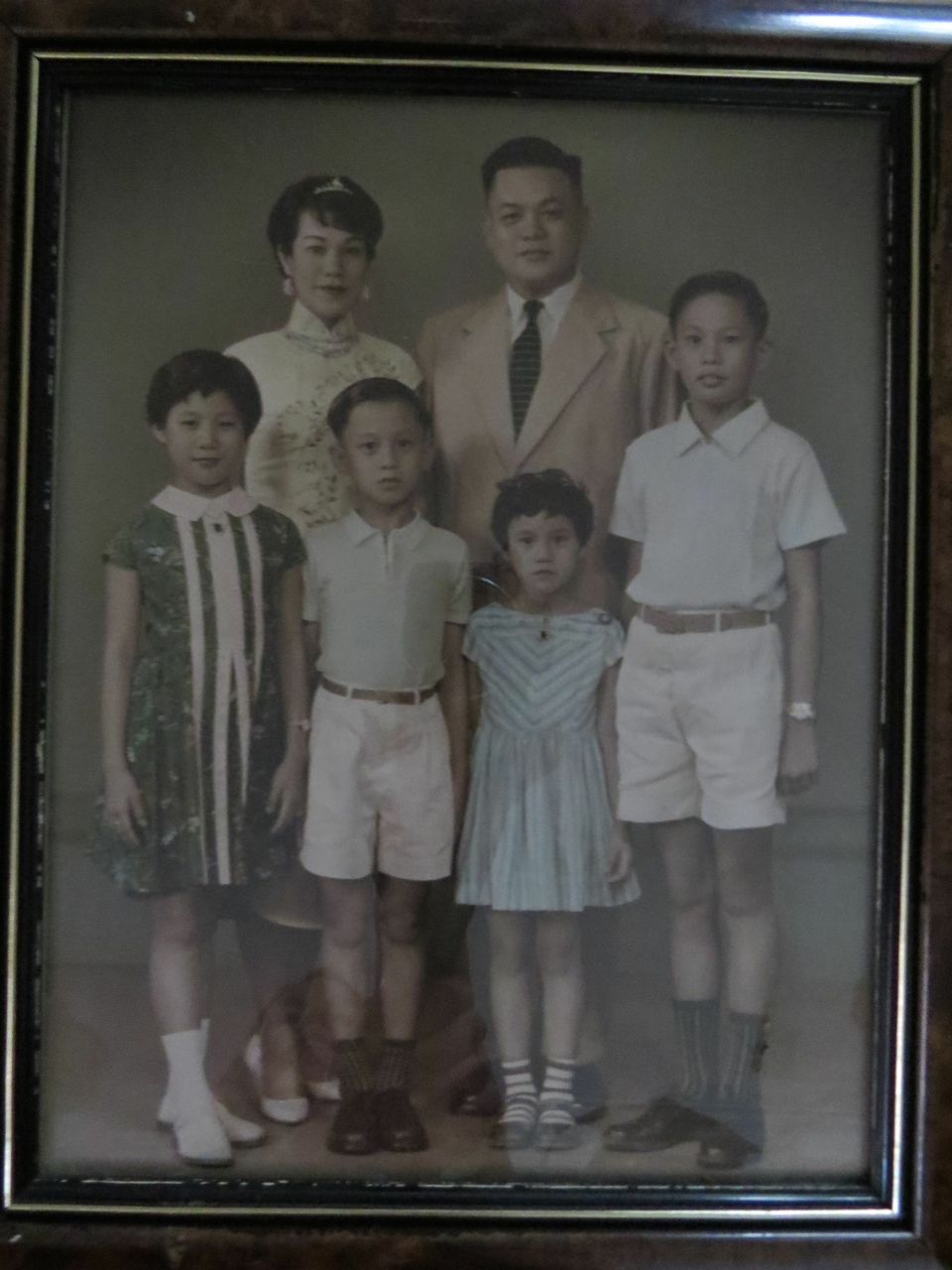
Wong family portrait. Back row (L to R): My grandmother and grandfather. Front row (L to R): Aunty Dorene, Uncle James, Aunty Lilian and my father
After spending 3 weeks traveling in China, it struck me that despite my Chinese heritage (i.e. the “Wong” in Sutherland-Wong), I don’t know much about who my Chinese ancestors were or why they left China. Today, all of my known extended family live outside of China in Australia, Malaysia and Singapore. While recently reconnecting with my Wong relatives in Singapore and Malaysia, I did a bit of investigation into my family history to find out more on this topic. What I learned was that a combination of major historical events along with adherence to a particular set of values have ultimately defined the path of the Wong family over the last 100 years.
From China to Malaysia
In Christine’s post on the history of China, she wrote about a particularly dark period in China’s history during the first half of the 20th century as China underwent a revolution from imperialism to a republic. It was a turbulent period as the Kuomintang and Communist Party (CCP) vied for leadership of China, until Mao and the CCP emerged victorious in 1949 (and even then, China would endure many difficult years ahead). During these years there was a mass exodus of Chinese away from China. Among them were the parents of my grandmother and grandfather (father’s side) who moved from China to Malaysia in search of a better life. It’s fascinating to think it was this period of turmoil in China that triggered a series of events that would one day lead to me being born in Australia.
My Grandmother and her parents (the Lee’s)


My grandmother is my sole living grandparent, at 91 years of age. Despite her body now being quite frail, her mind is sharp and her appetite surprisingly large for a woman who weighs less than 40kg and eats with false teeth. I try to visit my grandmother in Malaysia every few years. While she has grown frailer with each time I’ve seen her, it feels little else changes between visits. The smell of her place is always the same; a mix of incense from the Buddhist shrine at the front of her house along with the smell of cooked rice from her kitchen. And each time the smell immediately brings me back to memories of previous visits. The same photos on the walls; a couple of old family portraits along with the university graduation pictures of all of her children and grandchildren. The only updates happen when new graduation photos are added. The choice of photos offer an insight how highly my grandmother values education and family. Our relationship is good but admittedly not that deep. Language is a big barrier between us really getting to know each other; I regrettably don’t speak any Cantonese and her English is limited. However, I know she appreciates my visits and having family around.
Coming to the story of my grandmother’s family, her maiden family name is Lee (which is why my middle name is Lee). When her father, great grandfather Lee, arrived in Malaysia, he started out as a so-called “coolie” (effectively a servant labourer for the British colonists). One of the big industries in Malaysia at the time was tin. Malaysia is rich in tin resources, a valuable commodity to package tea that was being traded through Malaysia’s ports. From what my grandmother tells me, her father made a very positive impression on an English tin merchant. In her words “when the Englishman would leave his valuables out, my father would come and clean the room but not take any of the valuables. That was a sign for the Englishman that he could trust my father.” This trust seems to have led the English merchant to put great grandfather Lee in charge of a number of tin mines, ultimately making him a very rich and powerful man.
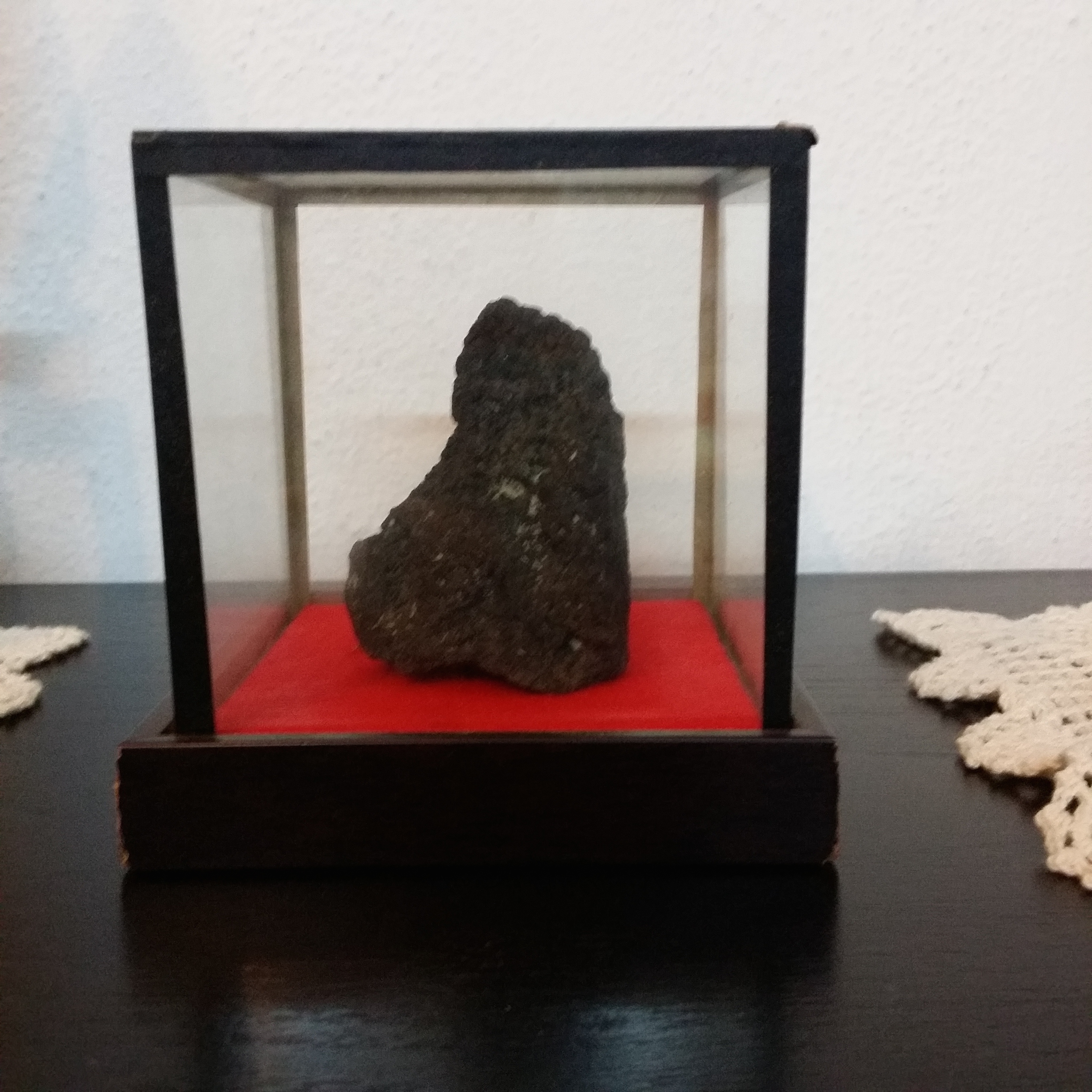
Family heirloom – piece of tin from my great grandfather’s mine passed down from my great grandfather to my grandmother to my uncle.
As my grandmother tells me this story, it is clear that she also intends to instil in me the importance of honesty and hard work – and her belief that they inevitably lead to good things. As for great grandfather Lee, what does a rich and powerful man do in Malaysia in the early 1900’s? Well, from what I understand, one way a man expressed his power and wealth in those days was by the size of his family. In the case of great grandfather Lee, he ended up with 4 wives and around 18 children. My grandmother was the daughter of his 3rd wife (who interestingly was the sister of the 2nd wife who had passed away during child birth). Today, she is the oldest surviving member of her family.
My Grandfather and his parents (the Wong’s)
My grandfather’s side is the originator of the Wong family name. I only have a vague recollection of my grandfather from when I was around 3 years old. He unfortunately passed away not long after that. I remember him being a big man (but I guess everyone looks big when you’re 3). Looking back at old photos, he does strike me as a big and imposing man. Most of my knowledge about my grandfather comes from the stories that my dad has told me. One of my favourite ones is that my grandfather would bring home 2 whole fishes to be cooked for dinner. One fish was for him. The other was for the rest of the family to share. So as you can see, my grandfather was quite the patriarch.
As for my grandfather’s parents, they also migrated from China to Malaysia in the early 1900’s. My great grandfather had 5 sons and a daughter. After his first wife passed away he married a second time. From what I hear, the daughter from the first marriage was shunned by his second wife and so not a lot is known as to what happened to her. My great grandfather was said to be a shrewd business man and merchant. He invested in real estate, rubber estates and tin mines. Similar to my grandmother’s family, my grandfather’s parents highly valued hard work to the point where they didn’t make much time to spend with their children or grandchildren. They ultimately believed that the rewards earned from hard work (i.e providing a large inheritance) would make up for the lack of participation in day-to-day life. When my great grandfather passed away in his eighties, my grandfather took over from him and ran the family business.
My Grandparents and their family
My grandparents came together as an arranged marriage. Although I didn’t delve into details with grandmother on how the marriage worked, it seemed to have worked well enough for it to survive until my grandfather’s death. They raised a family of two sons and two daughters in the small town of Kampar, Malaysia. They had a modest life. Not necessarily poor but also not rich. Given this, it says a lot that my grandparents invested in sending my father, the eldest child, to Australia when he was 17 for his final years of high school and then university. No doubt that would have been an expensive thing to do for a modest Malaysian family. They clearly valued education and believed in investing in their children. Despite intentions for my dad to return, he never did and settled in Australia. My dad tells me that Australia offered him a quality of life and freedom he couldn’t get back in Malaysia. I think this is both a reflection of the differences in lifestyles between Australia and Malaysia, and a reflection of my father’s desire to define his own path without the constraints of a strong patriarchal figure. Similarly, his brother, James, was given the opportunity to study medicine in Australia and afterwards settled in Singapore with his family. While my uncle was studying, his older sister, Aunty Dorene, helped support him by sending him money from what she earned as a nurse. This again illustrates how highly valued supporting family is in my family. I’m also reminded of this each time I visit my Uncle James in Singapore. My uncle and his wife, Aunty Theresa, are always incredibly generous to me and find a way to celebrate my visit. One of the highlights of our recent stay in Singapore was attending a big family dinner with the relatives of my uncle, the relatives of his wife and some close family friends.
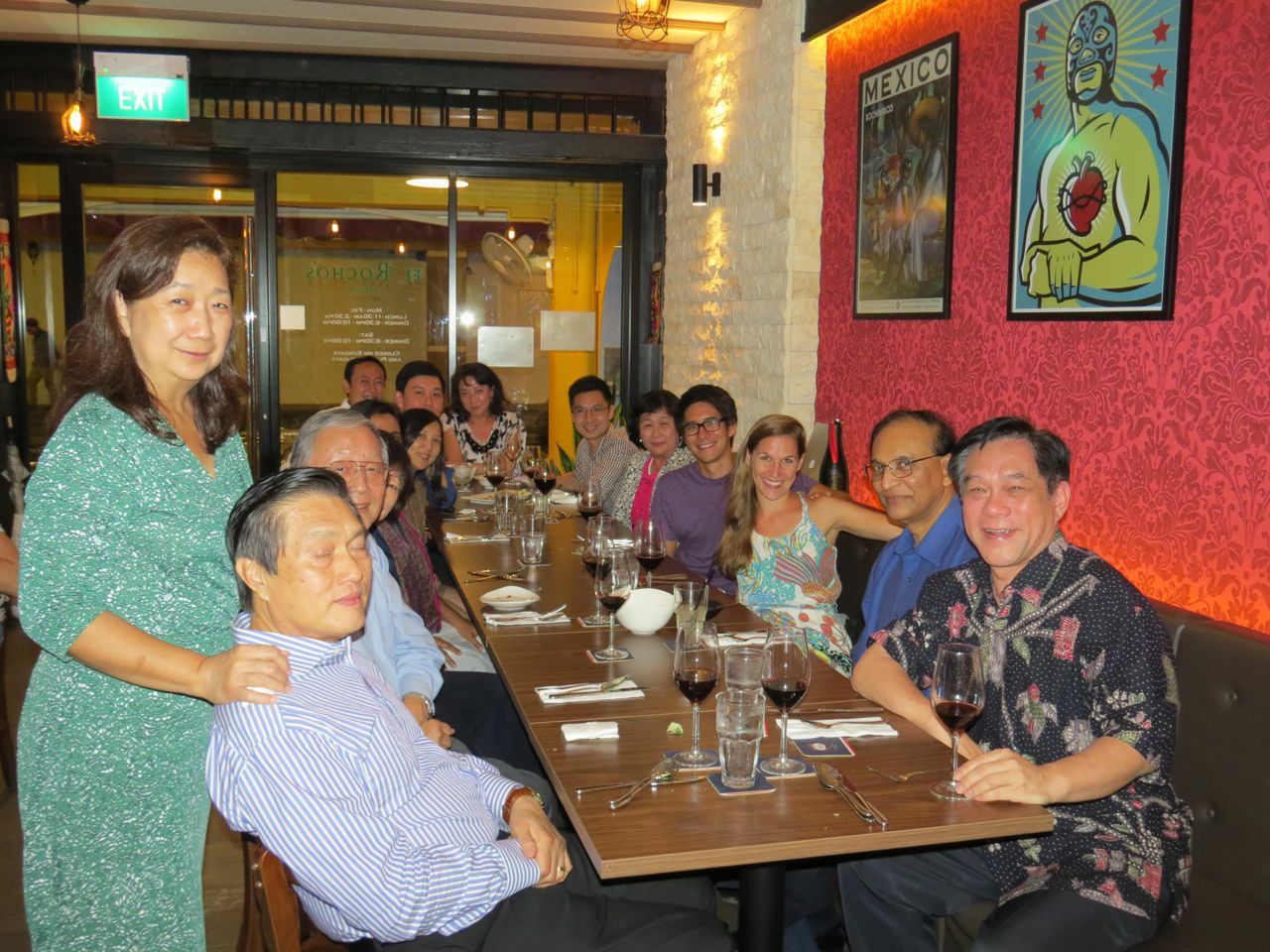
Extended family dinner in Singapore
As for my two aunties, Aunty Dorene and Aunty Lilian, they both have remained in Malaysia. Admittedly, it sounds like the opportunities that were given to the brothers (my father and uncle) were not necessarily also made available to the daughters. I think this was a matter of practicality that my grandparents couldn’t afford 4 overseas educations but also probably due to old cultural sexism between the importance of male vs. female education. Today my aunties, along with my grandmother, live in the town of Ipoh, not far from the smaller town of Kampar where they grew up. Aunty Dorene lives with my grandmother and cares for her. Aunty Lilian lives with her husband, Uncle Steven, and their son, Joe. Each works as cook. Funnily enough, my cousin works at an Australian restaurant in Ipoh (?!). My aunty and uncle run a hawker food stand making delicious dumplings and noodles (wonton mee).


So there you have it, the story of the “Wong” side of my family: troubles in China led to a migration to Malaysia in search of opportunity; the value of honesty and hard work led to opportunity being realised; and the value of investing in education and supporting family led my father to Australia where he would one day meet my mum and I would one day be born. No doubt, when we get back to Australia in November I’ll be quizzing my mum to find out more on the “Sutherland” story. Stay tuned.
 Schnitzel and Vegemite