2

5 decisions that helped make our wedding so special

20140712_181616-3473608036-O

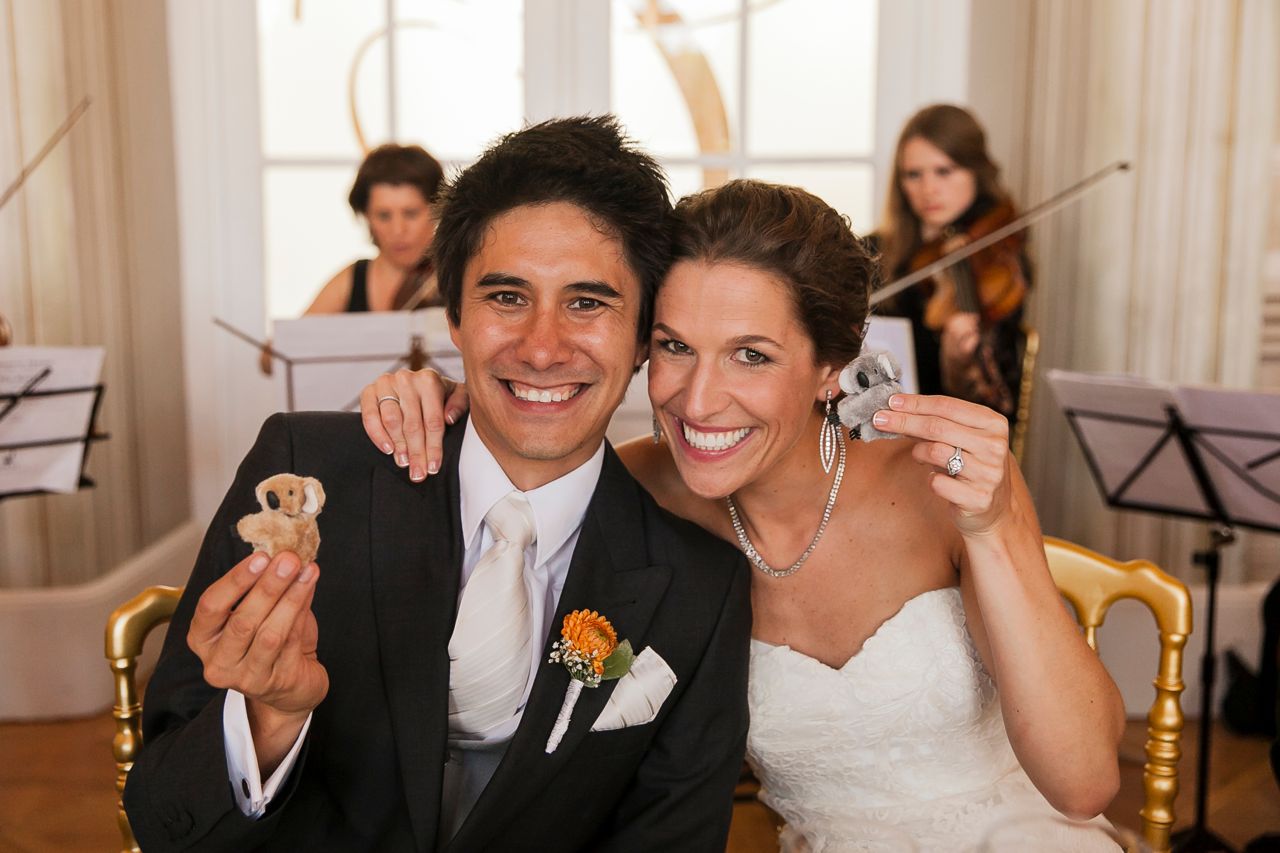
Christian and I are still dreaming about our wedding day four months ago. It feels like it was yesterday. I guess everyone feels that way, especially after re-playing in our heads the most special, fun and silly moments a gazillion times in the immediate post wedding days. What surprised Christian and me the most, however, was that we did enjoy every single minute of our big day. No lie. You always hear stories about “there will be moments that stress you out”, “you will miss parts of the wedding”, “it goes by too fast”, and “it’s hard to be truly present”. Yet, somehow, we had managed to enjoy every moment. Sounds a bit esoteric and unreal, I know. It actually surprised both of us as well because we wouldn’t claim we are specifically good at being zen and in the moment. So we reflected on specific decisions that helped us shape this unique day, enjoy it to the fullest and be truly present. Here is what we came up with:

1. We wrote our own ceremony and had our best friends marry us: Very early on, Christian and I knew that we wanted our wedding to be as personal as possible. We didn’t want a person we don’t know recite a text that we can’t relate to. So we made two decisions. First, we wrote our own ceremony. And second, we wanted our best friends to officiate the wedding. To get started, we brainstormed what we’d like the ceremony to be: traditional (at least for certain elements like the entrance of the bride), inspirational, emotional, personal but also a bit lighthearted and fun (with certain elements of surprise for us). We also wanted our family and friends to play an active role. I read through various blogs and stitched together a first draft that we iterated on together and with our two friends. Austrian law posed a minor challenge. You need an official registrar to marry you (friends can’t do that like in the US). Our creative solution was to integrate the registrar into our ceremony, limiting the offical part to the “must have’s” only. Our friends practically led 90% of the ceremony but we’d still be able to get officially married. It was a magical 45 minutes. Some highlights included: having my cousin perform the processional and recessional music on classical guitar; standing next to our best friends “at the altar”, and hearing them talk about the meaning of marriage and surprise us with thoughts from the wedding party about us as individuals and as a couple; personally thanking our parents for everything they did for us in our lives; having two married couples come upfront to give us practical advise about marriage; singing a Beach Boys group song together; saying our own personal vows; and jointly laughing over funny (and wise!) Whinnie the Poo quotes. I’m so glad we invested time in the crafting our own ceremony. The process itself was very fulfilling and it made the ceremony more meaningful and memorable.

2. We started the day separately and only saw each other “at the altar”: The idea of not spending the pre-wedding night and morning together always sounded very romantic. When it came down to practicalities, however, I preferred to take our wedding photos before the actual ceremony so that we could extend our time with guests during the cocktail hour. But Christian wasn’t very fond of this idea. So we went with the traditional path. I’m so glad we did as it made the ceremony even more special. I stayed in the hotel the night before the wedding. Christian stayed in our Vienna apartment. When I woke up, I couldn’t wait to read a personal note from Christian. We both gave each other a short letter the day before. It was early in the morning, the sun was rising, it was quiet. And here I was reading some lovely words from my husband-to-be. It was very special to have this moment to myself, being able to enjoy the serenity of it. Funnily enough, we both told each other in our letters to “enjoy every moment of our special day and be present” and “not bother about little things”. I would think about those words throughout the day and the mental framing made a real difference. Also, having some alone time in the morning with my mum, my siblings and two of my best friends created a special bond. Christian had a similar experience, spending the morning with his best friends. All together the morning created an exciting anticipation for the ceremony. And there is nothing more special (and emotional) than walking down the aisle, seeing your husband-to-be for the first time (and vice versa).

3. We made our first dance a bigger, joint project: Every Viennese Ball needs a Viennese Waltz. We needed to step up our dance routine (or develop one in the first place 🙂 ). Instead of doing a quick choreography we decided to go all in and properly learn how to waltz. Not only did we want to enjoy our first dance but also truly immerse ourselves in the classical ball part of our wedding. So we signed up for 10 dance lessons at Val Cunningham’s Dance Loft in San Francisco. What started as a tactical, goal-oriented venture turned into a really enjoyable process of learning a life skill together. And learning how to waltz was like couples therapy. Personalities shine through, moods impact your dancing. Luckily, Val is a great teacher – a therapist and dance instructor in one! It was a great learning experience about us as individuals and as a couple. And besides learning a new skill, we morphed our weekly dance lessons into proper date nights (that we protected from work committments). Being ambitious and a bit nerdy, we kept up the dance practice after the lessons were over. While we improved the dancing, we also kept telling ourselves that the main point is to have fun at our first dance. So we made the pact to call each other out and make each other smile if we’d get too serious or nervous. And that turned out to be key for our first dance. Knowing myself (I’m not a big fan of performing in front of crowds), I thought I’d contemplate about the dance all day long and get all nervous. But it was just the opposite. I didn’t even think about it for a second until it was about to happen. And I think there were two reasons for it. First, we were pretty relaxed because we knew from our practice runs that we could not only pull it off but also really enjoy it. And second, we also used our little, personal hints throughout which made it even more fun. I was so “in the zone” that I didn’t even notice anyone else. It was a magical few minutes.

4. We got a wedding planner (highly recommended, especially for a destination wedding): Not being from the US (where wedding planners are very common), Christian and I never thought of engaging a wedding planner. Besides it not being in our cultural make-up, it seemed an unnecessary expense. Plus, we both are good at organizing stuff so it seemed unnecessary from an organizational standpoint as well. Two months into the wedding planning things were coming along nicely, albeit slowly. The time difference between Vienna (our wedding location) and San Francisco (where we lived at that time) made coordinating with vendors incredibly cumbersome. Plus, the more we got down to the details of our “Viennese Ball” theme, the more we missed some practical and tailored advice. So we eventually decided to go for a wedding planner. We picked “Hochzeitshummel“, a well established company in Vienna, and worked directly with the owner Susanne. It might have been the best wedding related decision we made. Besides tapping into Susanne’s vast vendor network and getting additional creative advice, it was her deep experience that helped reassure our decisions and put our minds at ease. Working with us in the months leading up to the wedding she was on top of all the logistical details. We bascially just needed to sign off on decisions. More time for us to spend with family and enjoy the pre-wedding weeks to the fullest! Another key part was the day-of coordination. If we wouldn’t have taken a wedding planner, we would have definitely booked a “day-of coordinator”. For one, we didn’t want to ask a family member or friend to take on such a big task but rather have them fully enjoy the wedding and party with us. Plus, having someone professional do what they are trained to do put our minds completely at ease. We fully trusted Susanne to execute on our plan and troubleshoot where necessary. During our wedding day, Christian and I didn’t think a minute about the time or the next agenda point. Rather, we were just living in the moment, relying on Susanne to tell us what came next 🙂

5. We made a conscious decision to “be present”: Prior to our wedding, we kept asking married couples about their wedding day. Any advice they had for us thinking back to their own celebration? Almost everyone told us “You will get dragged into so many different directions. Try to take a step back, a few minutes, to take everything in because it will go by so fast”. “Don’t worry about the details.” That was some interesting food for thought. Especially for us, as we are both somewhat perfectionists and want things to go according to plan. So in the weeks leading up to the wedding we kept talking about how to be present. And we found that there is really no magical recipe. It’s all about our mental state. While we would do our best in the planning phase, we decided to not think about the execution anymore once the wedding festivities started on Friday (and left everything to our wedding planner). It was a pact. And we stuck to it. We both included a little “be present” reminder in our personal Saturday morning letters to each other. We both reminded ourselves during the ceremony (e.g., to look out over the crowd acknowledging all the people that came a long way to celebrate with us). We snuck away right after dinner for a short 5 minutes stroll around the premises to take a step back and reflect on what was happening. We had our little code words during our first dance to make each other laugh and have fun. All in all, I was really surprised by how well our “pact” worked. In the end it was all about managing expectations. I’m glad we took the advice from others on this point and consciously thought about being present beforehand.

Every wedding is such a unique celebration. There is a lot of advice out there on all the “should’s” and “should not’s”. In the end, it’s all about personal preferences and what matters to you. If I would pick only one takeaway from our wedding, it’d be to “be present and enjoy the moment”. To that end, do any preparation and engage anyone who will help you “be present” on your wedding day, and you will no doubt enjoy this special day to the fullest.

*** Special acknowledgements to all the people that helped make this day special:

  • Wedding planner: Susanne Hummel & Team from Hochzeitshummel  
  • Hair and Make-up: Stefanie Lichtenberger from Mist Stockholm 
  • Photography: Endre from Birta Photography 
  • Flowers & Decoration: Dagmar Mair from Blumenagentur 
  • Classical Orchestra: Barbara Helfgott and Rondo Vienna 
  • DJ: Axel Becker from Becker Events 
  • Dance classes: Val Cunningham from the Dance Loft in San Francisco 
  • Classical guitar during ceremony: Gudrun Otten
  • Registrar: Tanja Reifbaeck from Standesamt Moedling
  • Our “co-officiants”: Shilpa Jhunjhunwala & Paul Davison
  • Contributions during ceremony: Molly & Joshua Goshorn, Verena Raschke-Cheema & Bobby Cheema
  • Carrying of veil: Teeba Alkhudairi
  • MCs: Bobby Cheema and Martin Raschke
  • Speeches: Andreas Raschke, Vincent Wong, Shilpa Jhunjhunwala, Verena Raschke-Cheema & Martin Raschke, Paul Davison, Michelle Zatlyn, Teeba Alkhudairi & Patricia Otero
  • GoPro & Drone Video Footage: Basel Dahleh, Dan Abramson and Jamie Sutherland
  • Photobooth: David Abramson (software), Martin Raschke (design & set up)
  • And last but not least: our families and all our guests for making this an unforgettable day!
5

Thailand – Full Moon Parties, Scuba Diving and More

IMG_20141008_173651 While traveling around the world is an absolute dream, one of the tougher things about the journey is that we are constantly on the move. Every 2-3 days having to unpack and repack our suitcases and getting on the road takes its toll. While we had originally planned to use the month of October for a more comprehensive tour of South-East Asia (e.g., Vietnam, Cambodia, Laos), we ended up deciding to stick to one place, Thailand, and take it more slowly. Christian had been to Thailand a couple of times before and described it as a laid back beach paradise. I was sold! But before paradise could begin, we had to take a long journey, flying from Bhutan to Bangkok, followed by the overnight train down South to Chumphon and then finally several hours on the ferry, before we arrived at our destination: Koh Tao.

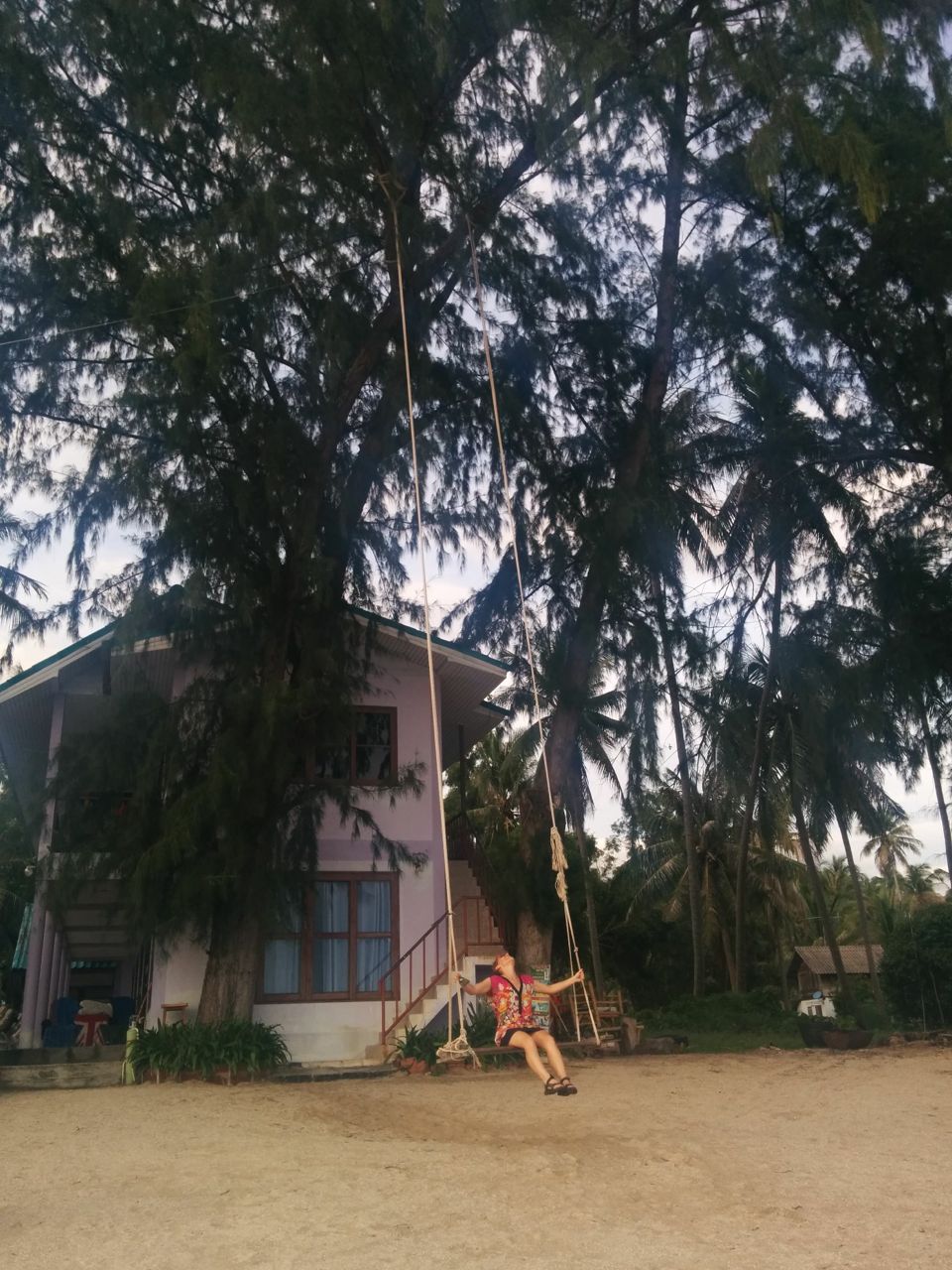
Koh Tao is a small little island off the east coast of Thailand. The reason we chose Koh Tao is to get our PADI Scuba Diving certificate. Turns out the island graduates the greatest number of scuba divers in the world. I liked the place the minute we set foot on it. Barely more than a stretch of beach, the island is laid back enough to feel you’re in a remote place but with enough beach bars and restaurants to explore for a week. Our little hut right on the beach made us feel like in paradise. Amenities were limited (no AC, simple room with cold water shower) but the direct beach access and sunset views were worth the trade-off.

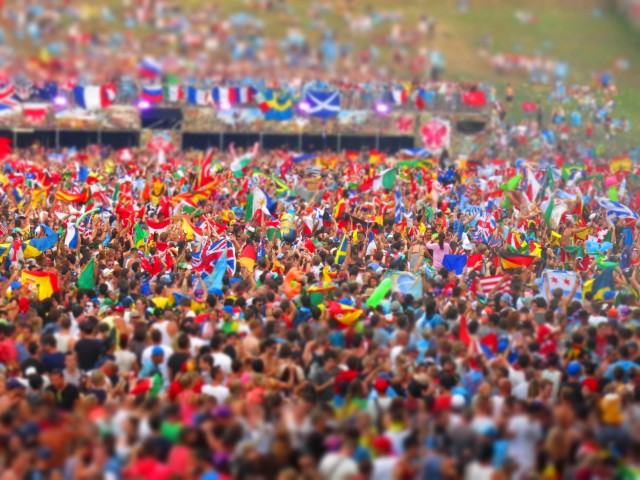
Before starting our scuba diving course, however, we set out for one more adventure. The legendary “Full Moon Party” was happening the next night on the neighboring island Koh Pha Ngan. It’s a gigantic, all-night beach party with several DJs. The event attracts several thousand people every month. We were curious to check it out even though somewhat skeptical based on what we had heard. Lots of young travelers that can go a bit overboard. But, we were already in Thailand. Plus, since our wedding was on the night of a full moon, it was technically our “3-month moon wedding anniversary”. So why not give it a try. The journey there was enjoyable in itself. A nice boat trip and long stroll along the beach in Koh Pha Ngan, followed by sunset beers at a cute beach bar.

We were ready for the party! First, we got ourselves a “bucket”. Literally, a flask of alcohol mixed with a soft drink in a bucket. Admittedly, not my favorite cocktail. Second, some hula hooping on the beach. Really fun with the music, especially in this unique setting. Christian and I got to know people from around the world and danced until the morning hours. Despite our original intentions to make it through the whole night without sleeping, we couldn’t resist to get a cheap room for a 4-hour nap before taking the morning ferry back to Koh Tao. I guess we are getting old 🙂 Overall it was beautiful to dance on the beach under the full moon, however, it’s more of a college-party scene and the music was a bit too mainstream for my taste. I had secretly hoped for a sliver of Tomorrowland DJ tunes. But, all in all, a worthwhile experience.

Back on Koh Tao, we were ready to go diving! The course took 4 days. Christian and I found ourselves “back in school”: a mix of (entertaining, 80s style) videos, some theory and then the actual dives. Anita, a teacher-turned-dive instructor from the UK, was our dive teacher. Very experienced, great instructor but also really fun to spend time with. Besides getting the actual certificate, I realized how special it felt to become more integrated into Koh Tao’s dive community. Our daily schedule gave us plenty of opportunity to socialize and hear people’s life stories: early morning 5:15am wake-up calls to hit the best dive sites before others, a Tuk Tuk to the pier, boat trip to the first dive site, back to town, out on the water again for more dives in the afternoon, back to the dive shop at around 5pm, followed by evening beers with the New Way Diving crew. The dive masters/instructors all had their own, interesting stories to tell. From different countries, ages, and backgrounds they came to Koh Tao for various reasons: to escape from the stressful corporate world in “the West” in search for a more balanced life, to finally pursue a long-had passion after retiring or to just have fun for a year or two before starting a career. I was contemplating if I could see myself as a dive teacher. Having a boat as an office, spending all day long in flip-flops in the sun and teaching people a fun sport does sound tempting. Yet, I don’t think it’s my life’s calling. Although I must say that both Christian and I got a true appreciation for the sport itself and the technical capabilities needed. On our last dive, having mastered the basics, we were able to immerse ourselves more into the actual experience. The weightless floating. The serenity of the underwater world. The incredibly diverse nature with all its unique shapes and creatures. Like a wonderland. I can see why people can’t stop exploring this magical place. Christian and I are hooked! A new sport we both enjoy.

After our lovely stay on Koh Tao, we opted for a change of scenery (mainly to evade the starting monsoon season on the east coast). Off we were, first to Khao Lak and then to Phuket on the west coast where the monsoon was just trailing off. We settled into a daily routine of meditation practice (more on that in a later post), lots of reading (also mainly on meditation), language learning (Christian is continuing his German practice; I started to learn Spanish), wedding blog writing and video editing, and some exercise. All of that with nice beach breaks, new activities (elephant riding & bathing!) and lots of tasty Thai food in between 🙂

It’s been really pleasant to “settle down” in Thailand for three weeks after having been on the move for three months. A great way to explore Thailand’s culture while carving out time for our personal projects. More details to come on the latter soon! Stay tuned, C&C

2

Trekking in the Bhutanese Himalayas

IMG_6201

Exhilarating, strenuous, cold, remote, stunning, and very rewarding. Those are just a few of the words that come to mind when summarizing our recent 7-day trek to the Jhomolhari base camp in the Bhutanese Himalayas.

I was very much looking forward to this adventure and being back in the remote wilderness. I must admit, however, that I tend to romanticize those type of trekking trips, somehow forgetting the unavoidable painful moments. But Christian and I love the challenge. And with that challenge comes appreciation and a sense of accomplishment. And that’s what we feel looking back on our Himalaya adventure.

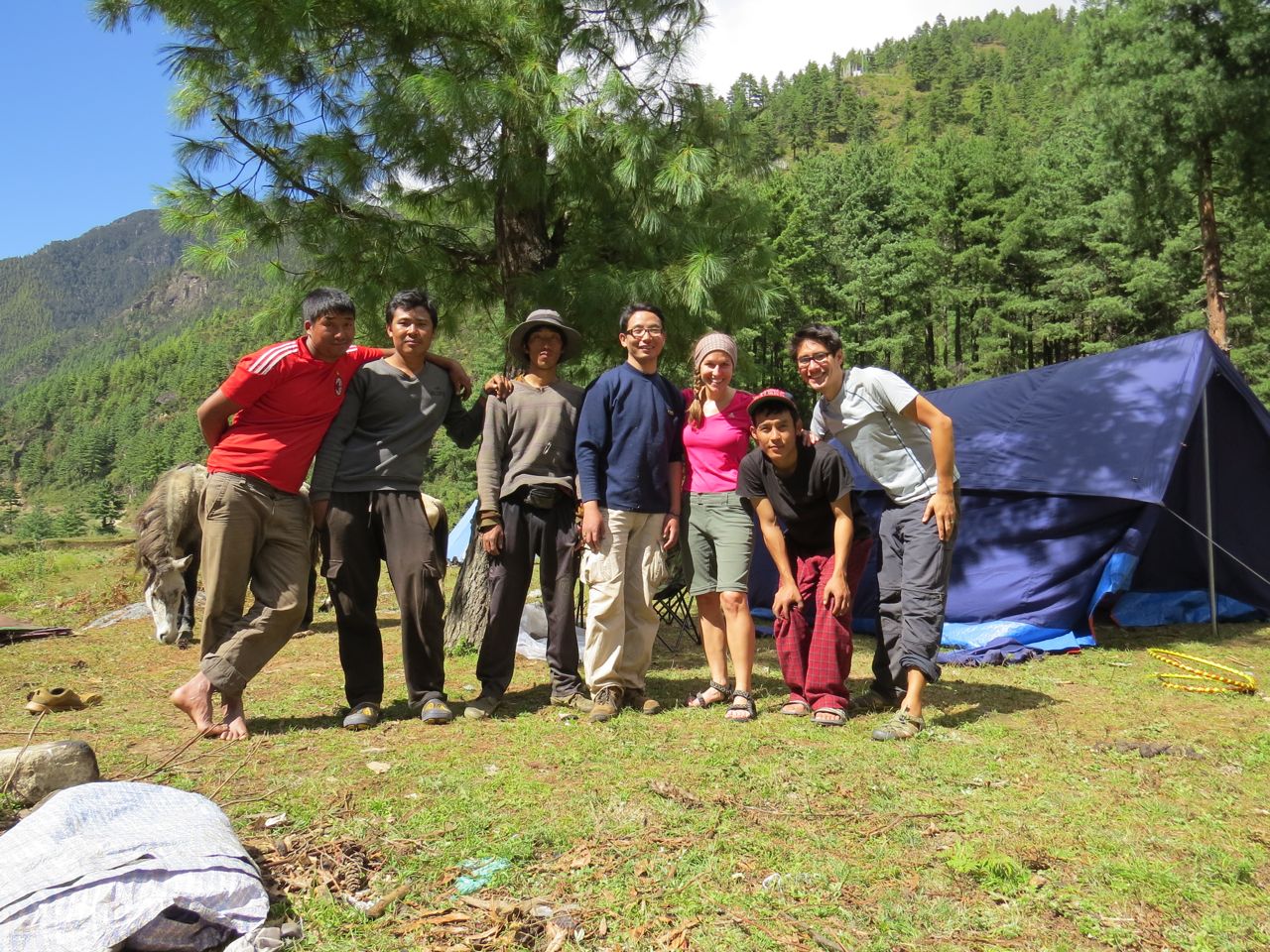
The incredible thing about an organized trekking tour (you have to book through a travel agency to get a tourist visa to Bhutan) is that you really “just” have to carry yourself up (and down) the mountains. Everything else is taken care of. Tenzin, our tour guide, brought us up to speed with Bhutan’s history and every imaginable story about Buddhism; our horse guide took care of our seven pack horses; and three other guys managed the camp. Yep, that’s right: 5 men and 7 horses supporting just the 2 of us! Sounds like luxury camping. But wasn’t. The whole experience was still an adventure. It was physically challenging (we hiked an average of 15km a day with an average altitude difference of 1500-2000m), it was hard to breathe (our highest pass was 4890m), and it was cold (freezing temperatures at night which made sleeping through pretty much impossible). But it was so worth it. Here is a glimpse of our daily “life in the mountains”:

Day 1: Talking about challenges, we didn’t even make it to our starting point on Day 1. Heavy rain in the days before our hike had caused some landslides, blocking the road. Our driver, determined to navigate through the narrow opening on the street, tried to make it through. That turned out to be a bad idea. The car slid to the left and hit a huge rock. Luckily, the damage wasn’t too bad.

There was no way, however, to drive any further so we packed up our stuff and decided to walk instead, adding 3 extra kilometers to the 22 kilometers planned for that day. And the fun was only about to begin. The rain had turned the rocky trail into an enourmous mud slide. What we expected to be a long but leisurely hike through the sub-tropical forests ended up being an 8-hour balancing and rock-jumping exercise.

Exhausted but proud of our progress, we reached the camp side where hot tea and a glimpse of the stunning Jhomolhari summit, Bhutan’s second tallest peak, awaited us.

Day 2: We woke up to sunny skies and a crystal clear view onto Jhomolhari. Just beautiful.

Energized we set out to conquer the next 17km of the trek, hugging the valley floor and a fast flowing river.

Close to the 4000m altitude mark we came through a small village. Really just an accumulation of a handful of houses. It’s hard to imagine to live in such a harsh climate. The place is snowcovered from November to March and people mainly live off yaks and sheep. Despite being remote, the people were quite inviting. A group of villagers that were catching up (outside in the cold) happily posed for pictures. And some school boys took the opportunity to practice a few English phrases with us.

After one more hour we reached the base camp (4080m) with spectacular views onto the 7314m high Jhomolhari. It got cold pretty quickly so we bridged the time until dinner, snuggling up and reading in our sleeping bags. Besides the actual hike, dinner was the main highlight of the day. We couldn’t wait for our daily dose of hot soup – the best imaginable thing when it’s cold outside. Well, actually, there was something that topped the soup. When we all huddled in the kitchen tent that night, our crew produced a whiskey bottle. Not being a big whiskey fan my enthusiasm was limited. But, hey, try that stuff with some hot water. It’s magic! The perfect way to warm up before jumping back into your sleeping bag.

Day 3: Our acclimatization day. In order to avoid altitude sickness, the itinerary plans in an acclimatization day at the base camp. While we had woken up to clear views, that soon changed.

IMG_6206

We set out on a 4-hour hike up to the actual base of Jhomolhari and got caught in a hail storm before it started to snow a bit. Crazy how you can get all types of weather within a couple of hours.

Back at the camp in the afternoon, the sun reemerged. Time for some hooping with the crew! This turned out to be super fun. Our horse guide had the funniest technique and everyone cracked up laughing. Once dusk was upon us, the typical routine kicked-in: reading, dinner, mystical stories in the kitchen tent over our shot of “hot-water whiskey”, some more reading, bedtime 🙂

Day 4: This was a tough day with an ascent of 800m followed by a descent of 1000m. But also very rewarding. We passed yak herders through a stunning scenery with crisp blue alpine lakes and rivers. The weather gods kept challenging us with a hail storm during the last 200m of our ascent. But we made it up to the highest point on our route (4890m), cold and sweaty at the same time!

The amazing outlook was shortlived, however, as we needed to make a 1km vertical descent back down to our camp. Again, the scenery made up for the workout. Our path led us through rocky cliffs, wildfower meadows, various nomadic settlements and provided incredible views onto gigantic waterfalls.

Our camp was tucked away in a beautiful small opening in the wood right next to the river. Optimistic about the sun that broke through the clouds, I took a little “shower” in the river. But, somewhat predictably, the weather turned rainy and cold within minutes so my enthusiasm was shortlived. I jumped back in my usual 5-layer outfit immediately. The attempt to start a cozy bonfire was rained out. But we had gotten a few minutes of warmth.

Back to our usual treat: a bit of hot whiskey and hot water bottles. Yes, our crew prepared hot water bottles for the night for us! This was another nice surprise. Reminded me of my childhood when I was sick and my mum would tuck me into my bed with a hot water bottle. Without our little “heaters” I would have probably woken up even more times during night.

Day 5: Both Christian and I thought we had the hardest day of the trek behind us. Happily we jumped “out of bed”, stretched our stiff bodies and eagerly awaited our hot coffee and breakfast.

IMG_6288

Our cook kept surprising us with new items. That day he produced pancakes. Strengthened, we continued the journey. But it was not as easy as expected. The previous four days of intense hiking in altitude must have taken a toll on us. Both Christian and I moved in slow motion, our bodies feeling incredibly tired. Like snails we dragged ourselves up the first 200m past hillsides lush with rhododendrons before gradually climbing above the tree line again. And then we hit the last killer ascent, a steep 550m climb up to our last pass (4520m) on the trek. Mentally, this was the toughest stretch for Christian and me. But I also knew it would be our last big one. And again, stunning views from the top. Only one more hour downhill to our camp for the day!

Arriving at the camp, Tenzin, our guide, surprised us with a Druk 11000. Druk is one of Bhutan’s national beers. The Druk 11000 is an extra strong version with 8%. We were happy 🙂

IMG_6305

Day 6: Our last day of hiking. One more last, steep ascent before venturing into a 1.6km vertical, rocky downhill path. The weather gods on our side, we had sunshine for the whole day. After arriving at the camp site around lunch time, we ventured out to meet locals in the nearby village.

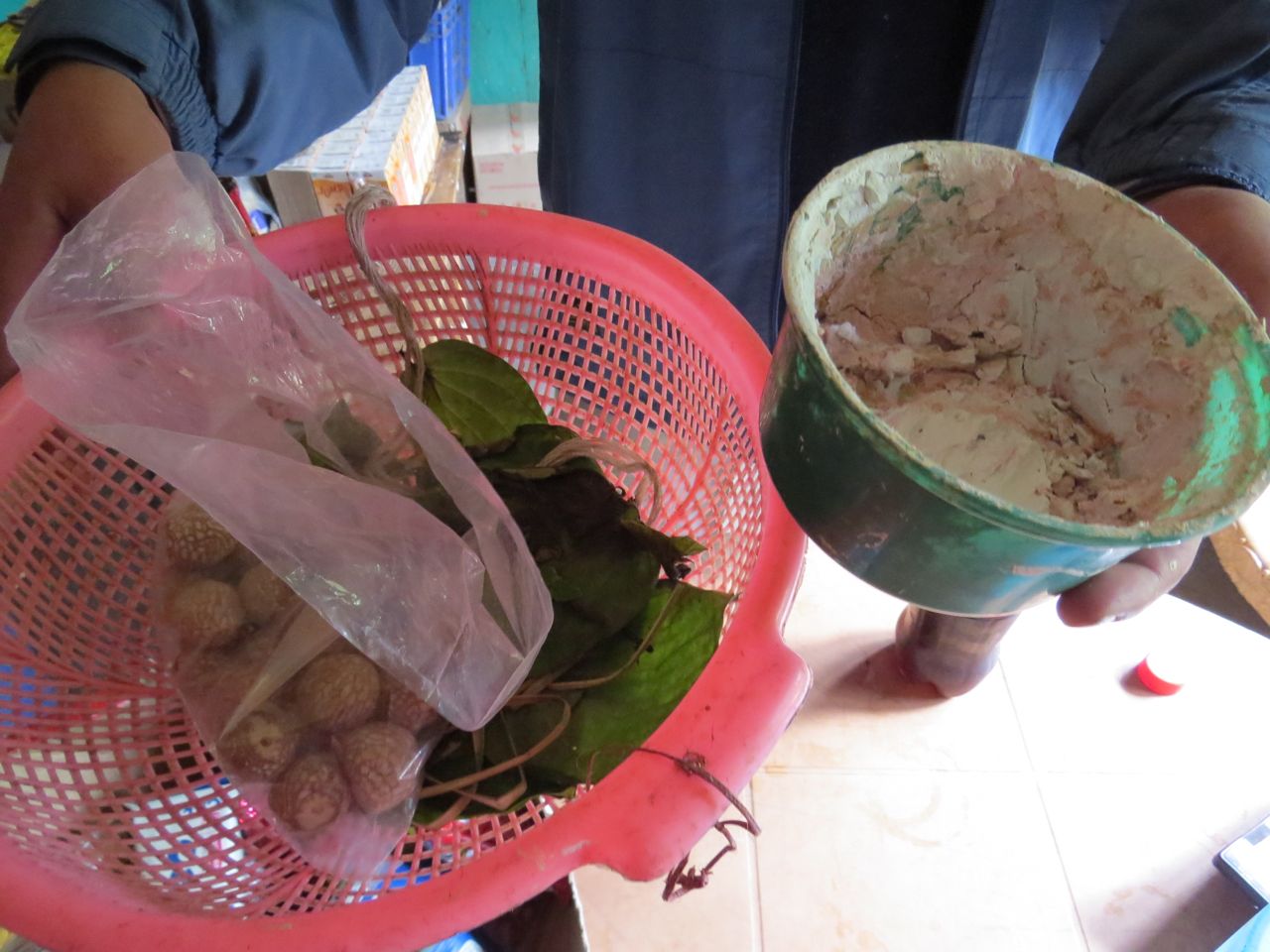
While enjoying a beer at a local grocery shop (really just a room with some basic goods), we got a peak at “doma”. Doma is an integral part of Bhutanese culture. It’s made out of betel nut, betel leave and lime (synthetic calcium carbonate). You chew the mixture which makes your mouth go slightly numb and stains your teeth red. It’s spat out after chewing, so you can see doma stains on the ground all over the place in Bhutan. These days the government is trying to reduce the use of it given its addictiveness and negative health implications. But it’s so ingrained in Bhutanese culture that people, especially older ones, won’t give up the habit.

Two little girls, just back from school, were curiously peaking through the shop window. Happy that I had brought the hoop, we attempted to teach them how to do it. Very timid at first, the girls barely dared to touch it. But with a little encouragement they went for it, and had a lot of fun.

Back at the camp there was one more game we wanted to try. A typical Buthanese stone-throwing game. Sounds pretty simple (i.e., just get the stone as close to the target as possible). Turns out it’s not. Both Christian and I were pretty bad at it. Our trekking crew, unsurprisingly, “rocked” the game.

With a little bit of nostalgia, we enjoyed our last trekking meal that evening. Our cook surprised us again – this time with empanadas and a pizza! What a treat on our last night camping. Satisfied, we stumbled into our tent and, admittedly, were both looking forward to a proper shower and sleeping in a real bed again the next day 🙂

IMG_6327

2

Snapshots of Bhutan

IMG_6627

History
One of the most fascinating things about Bhutan’s history is how mystical it is. From gods flying on the back of tigers to reincarnation of leaders across generations, it is hard to distinguish between historical fact and religious belief. The underlying reason is that Buddhism is so fundamentally ingrained into the Bhutanese way of life. 75% of the population are Buddhist.

The origin of Buddhism in Bhutan began with the second Buddha, Guru Rinpoche. In the early 8th century he travelled from nearby Tibet and brought Buddhism to the region now known as Bhutan. Everywhere we went in Bhutan you couldn’t help but miss representations of Guru Rinpoche from paintings to statues to costumed dancers. Our tour guide, Tenzin, also had a seemingly endless number of stories to tell us about Guru Rinpoche. So as you can imagine, Guru Rinpoche is a really important figure in Bhutan.

To come to the origin of the Bhutanese national identity, you need to fast forward to the 17th century to the story of the “unifier of Bhutan”. Prior to then Bhutan was really only a number of separate states, often considered as a southern part of Tibet. This all changed when a man named Ngawang Namgyal established himself as a religious leader and unified the region of Bhutan separate from Tibet (hence, Bhutanese refer to him as the “unifier of Bhutan”). More than just a religious leader, he was also a military and administrative leader. One of his most important accomplishments was the construction of the system of “dzongs” as fortresses to allow Bhutan to successfully defend itself from Tibet and other rivals in the region. However, when the “unifier of Bhutan” died in the early 18th century, Bhutan underwent a period of instability as regional leaders vied for power and Bhutan again separated into smaller states. Around this period, Bhutan began to have contact with British explorers linked to the East India Company who were in search of goods of value in the regions of Bhutan and Tibet. At times, interactions were hostile including the “Duar Wars” over control of the region of Assam in the 19th century. However, one Bhutanese leader, by the name of Urgyen Wangchuck, found a way to use positive relations with the British to his and Bhutan’s advantage. His support of Britain’s invasion and subsequent treaty with Tibet gave him the backing of the British and credibility with his own countryman to emerge as the most powerful man in Bhutan. In 1907, he was elected unanimously by Bhutan’s chiefs and religious leaders as the hereditary ruler of Bhutan. And so began a new monarchy (among the youngest in existence today) with Ugyen Wangchuck as the first king.

Since then, there have been 5 kings of Bhutan, all coming from Urgyen Wangchuck’s lineage. The second king, Jigme Wangchuck reigned from 1926 to 1952. During his time he oversaw the establishment of a strong alliance with India as they gained independence from Britain. It was during this time that many of the treaties between Britain and Bhutan were transferred over to India and Bhutan.

The third king, named Jigme Dorji Wangchuck is known as the moderniser of Bhutan. Educated in India and England, he saw that a policy of isolation would not be feasible, particularly after seeing China taking control over Tibet. He oversaw the opening up of Bhutan to international relations (including recognition as a country in the UN) along with a series of modernisation projects to build out infrastructure in Bhutan.

The fourth king, Jigme Singye Wangchuck, took over in 1972 at age 17. He continued along the path of modernisation set by his father. As he formulated his development goals, he emphasised the need for Bhutan to strive for development that is for the good of Bhutan and its people, not just development for development’s sake. In stating this, he coined the term “Gross National Happiness” (GNH) as a counterpoint to GDP. Hence today, Bhutan is famous for assessing the merits of development on whether it promotes cultural and environmental good, not just economic good. Towards the end of the fourth king’s reign, he recognised that for Bhutan to truly be modernised, it needed to follow a path to democracy. The king is quoted as saying “monarchy is not the best form of government because a king is chosen by birth, not by merit.” This process started in 1998 leading to the country’s first democratic elections in 2008. At this time, Bhutan officially transformed from absolute monarchy to a democratic constitutional monarchy.

The fifth king, Jigme Khesar Namgyel Wangchuk took over in 2006. Since his coronation he has continued along the path set by the kings before him to develop Bhutan along the tenets of maximising Gross National Happiness.

Truly Bhutanese
Bhutan has a number of unique quirks. To name just a few:

  • Tourist visa requirements – A great example of Bhutan striving to maximise GNH, is their approach to sustainable high value tourism. To enter Bhutan as a tourist, you have to organise everything through a regulated tour company, and you must pay a set fee of $250 per person per day (the fee covers all expenses including accommodation, food, transportation, and sightseeing). This is prohibitively expensive for the typical “backpacker” style tourist looking for bars and craziness, and instead you get more of the older/retiree style tourist looking to learn about Bhutanese culture. Christine and I felt like we were definitely among the youngest tourists in Bhutan, which makes sense given that we’re only semi-retired :).
  • The Takin  IMG_6528This odd looking creature is said to have been formed when the “Divine Madman” (another mystical Bhutanese historical figure) threw together the bones of a goat and a cow that he ate and formed the Takin. These animals are like nothing I’ve ever seen before. The way they move seems so awkward; kind of like a poorly animated beast in a 1980’s horror film. And their two toed hooves made them look pre-historic-like.
  • Cheese and chilly (ema datse) – Although Christine and I were served new and interesting dishes for each meal every day we trekked, the rest of our guides ate just one meal for breakfast, lunch and dinner every single day: cheese and chilli (ema datse). The guides were initially hesitant to let us try it because they thought it would be too spicy. In the end, the spiciness wasn’t the problem for us. It was that the cheese was so rich that we struggled to eat more than a few spoons full.
  • Target games –

    We learned before we arrived that the national sport was archery. Once on the ground, we realised that archery is only one of many similar target games they play. The Bhutanese love darts and another game where you throw rocks at a target. Christine and I tried it on our trekking tour but were pretty miserable at it.

  • Protective Phalluses –

    Surprisingly, you see phalluses everywhere! Not your Washington Monument style impression of a phallus. The real deal! Generally you’ll see them painted or “hung” at the entrance to houses in order to provide protection. The history behind it, similar to the Takin, is said to date back to the antics of the Divine Madman, who would happily show his penis as a symbol of strength.

  • Chewing “doma pani” although the tradition is slowly being phased out due to health concerns (similar to tobacco smoking in western societies), the tradition of chewing areca nut wrapped inside of betelnut leaves with lime is still very popular with the older Bhutanese. What makes this practice so interesting is that the mixture makes your entire mouth turn red, and all over the place you see these red patches where people have spat out their doma pani out.IMG_6344
  • National Dress: Gho & Kira – Christine and I both thought that the national dress in Bhutan looked really good: women looked beautiful and elegant in the colourful ankle length Kira dresses; men looked dapper and intellectual in the their Ghos.

What we did

  • Paro: The main airport into Bhutan is in the city of Paro. Paro is not the capital nor the country’s biggest city (both of those honours belong to Thimphu) but it is nonetheless rich in history as one of the most prominent cities in west Bhutan. The scenery is beautiful, nested in the Himalaya range. The town is very quaint. The highlight of our time in Paro was the trek up to the Tiger’s Nest monastery (Taktshang Goemba).

    This place is simply stunning, built up high in the side of a mountain. The story behind it relates to Guru Rinpoche, the father of Buddhism in Bhutan, who is said to have flown there on the back of a Tigress and meditated there a while.

  • Trekking in the Himalayas:

    One of the main reasons Christine and I wanted to come to Bhutan was to do a trek in the Himalayas. Christine will write more about this in a separate blog post, but suffice to say, it was a highlight. It was visually spectacular and we felt very rewarded for the effort to hike up those peaks where the air was thin and the wind was cold.

  • Thimphu Tsechu Festival:

    After our trek we spent 3 days in Bhutan’s capital, Thimphu. Although it’s the country’s most populated city, it still felt small and charming. The main attraction while we were there was the annual Tsechu festival, a Buddhist religious celebration of song and dance. Beyond the performances, it was also really fun to see the locals decked out in their best attire.

4

Wong family roots

IMG_5799

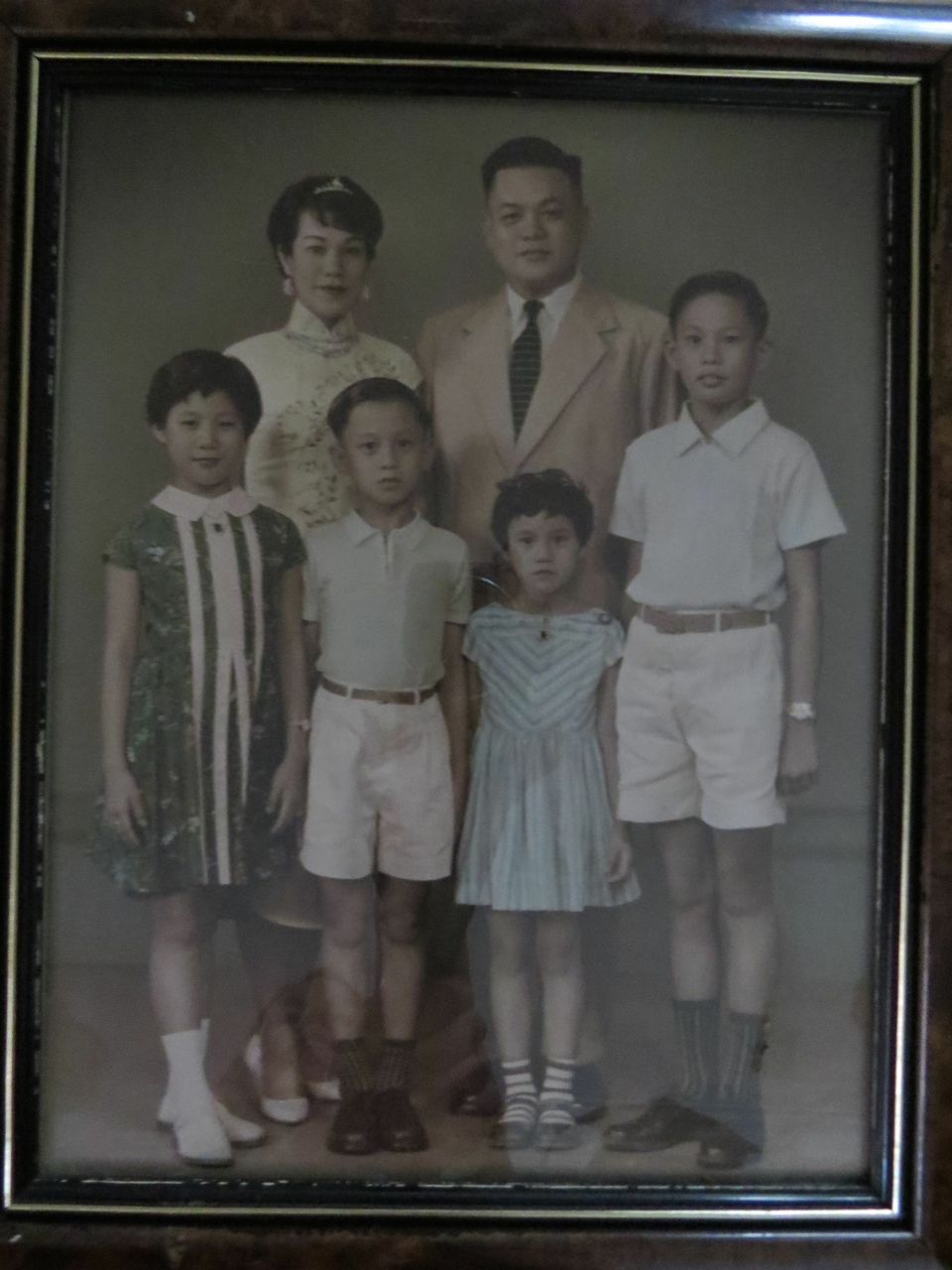
Wong family portrait. Back row (L to R): My grandmother and grandfather. Front row (L to R): Aunty Dorene, Uncle James, Aunty Lilian and my father

After spending 3 weeks traveling in China, it struck me that despite my Chinese heritage (i.e. the “Wong” in Sutherland-Wong), I don’t know much about who my Chinese ancestors were or why they left China. Today, all of my known extended family live outside of China in Australia, Malaysia and Singapore. While recently reconnecting with my Wong relatives in Singapore and Malaysia, I did a bit of investigation into my family history to find out more on this topic. What I learned was that a combination of major historical events along with adherence to a particular set of values have ultimately defined the path of the Wong family over the last 100 years.

From China to Malaysia

In Christine’s post on the history of China, she wrote about a particularly dark period in China’s history during the first half of the 20th century as China underwent a revolution from imperialism to a republic. It was a turbulent period as the Kuomintang and Communist Party (CCP) vied for leadership of China, until Mao and the CCP emerged victorious in 1949 (and even then, China would endure many difficult years ahead). During these years there was a mass exodus of Chinese away from China. Among them were the parents of my grandmother and grandfather (father’s side) who moved from China to Malaysia in search of a better life. It’s fascinating to think it was this period of turmoil in China that triggered a series of events that would one day lead to me being born in Australia.

My Grandmother and her parents (the Lee’s)

My grandmother is my sole living grandparent, at 91 years of age. Despite her body now being quite frail, her mind is sharp and her appetite surprisingly large for a woman who weighs less than 40kg and eats with false teeth. I try to visit my grandmother in Malaysia every few years. While she has grown frailer with each time I’ve seen her, it feels little else changes between visits. The smell of her place is always the same; a mix of incense from the Buddhist shrine at the front of her house along with the smell of cooked rice from her kitchen. And each time the smell immediately brings me back to memories of previous visits. The same photos on the walls; a couple of old family portraits along with the university graduation pictures of all of her children and grandchildren. The only updates happen when new graduation photos are added. The choice of photos offer an insight how highly my grandmother values education and family. Our relationship is good but admittedly not that deep. Language is a big barrier between us really getting to know each other; I regrettably don’t speak any Cantonese and her English is limited. However, I know she appreciates my visits and having family around.

Coming to the story of my grandmother’s family, her maiden family name is Lee (which is why my middle name is Lee). When her father, great grandfather Lee, arrived in Malaysia, he started out as a so-called “coolie” (effectively a servant labourer for the British colonists). One of the big industries in Malaysia at the time was tin. Malaysia is rich in tin resources, a valuable commodity to package tea that was being traded through Malaysia’s ports. From what my grandmother tells me, her father made a very positive impression on an English tin merchant. In her words “when the Englishman would leave his valuables out, my father would come and clean the room but not take any of the valuables. That was a sign for the Englishman that he could trust my father.” This trust seems to have led the English merchant to put great grandfather Lee in charge of a number of tin mines, ultimately making him a very rich and powerful man.

20141009_183504

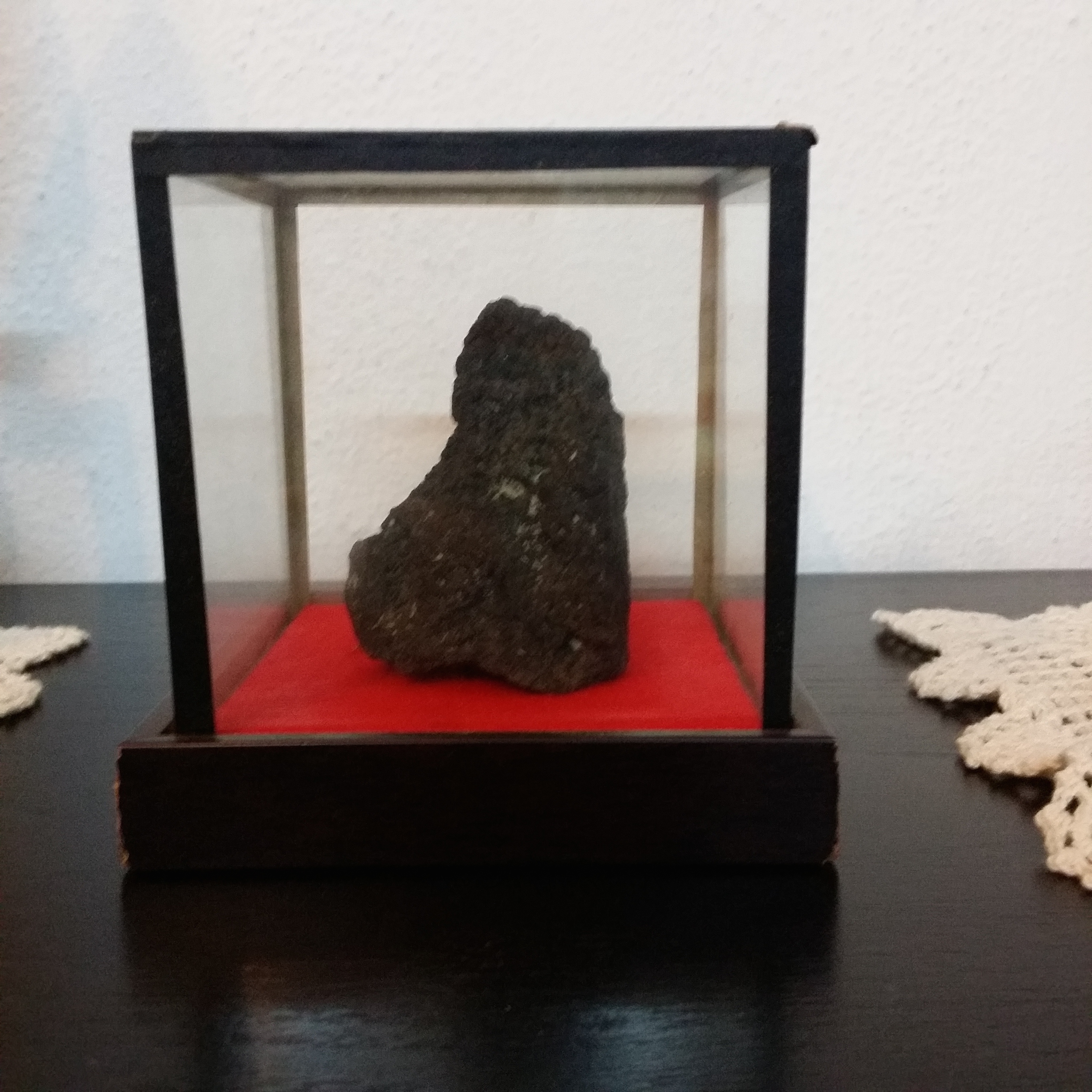
Family heirloom – piece of tin from my great grandfather’s mine passed down from my great grandfather to my grandmother to my uncle.

As my grandmother tells me this story, it is clear that she also intends to instil in me the importance of honesty and hard work – and her belief that they inevitably lead to good things. As for great grandfather Lee, what does a rich and powerful man do in Malaysia in the early 1900’s? Well, from what I understand, one way a man expressed his power and wealth in those days was by the size of his family. In the case of great grandfather Lee, he ended up with 4 wives and around 18 children. My grandmother was the daughter of his 3rd wife (who interestingly was the sister of the 2nd wife who had passed away during child birth). Today, she is the oldest surviving member of her family.

My Grandfather and his parents (the Wong’s)
My grandfather’s side is the originator of the Wong family name. I only have a vague recollection of my grandfather from when I was around 3 years old. He unfortunately passed away not long after that. I remember him being a big man (but I guess everyone looks big when you’re 3). Looking back at old photos, he does strike me as a big and imposing man. Most of my knowledge about my grandfather comes from the stories that my dad has told me. One of my favourite ones is that my grandfather would bring home 2 whole fishes to be cooked for dinner. One fish was for him. The other was for the rest of the family to share. So as you can see, my grandfather was quite the patriarch.

As for my grandfather’s parents, they also migrated from China to Malaysia in the early 1900’s. My great grandfather had 5 sons and a daughter. After his first wife passed away he married a second time. From what I hear, the daughter from the first marriage was shunned by his second wife and so not a lot is known as to what happened to her. My great grandfather was said to be a shrewd business man and merchant. He invested in real estate, rubber estates and tin mines. Similar to my grandmother’s family, my grandfather’s parents highly valued hard work to the point where they didn’t make much time to spend with their children or grandchildren. They ultimately believed that the rewards earned from hard work (i.e providing a large inheritance) would make up for the lack of participation in day-to-day life. When my great grandfather passed away in his eighties, my grandfather took over from him and ran the family business.

My Grandparents and their family

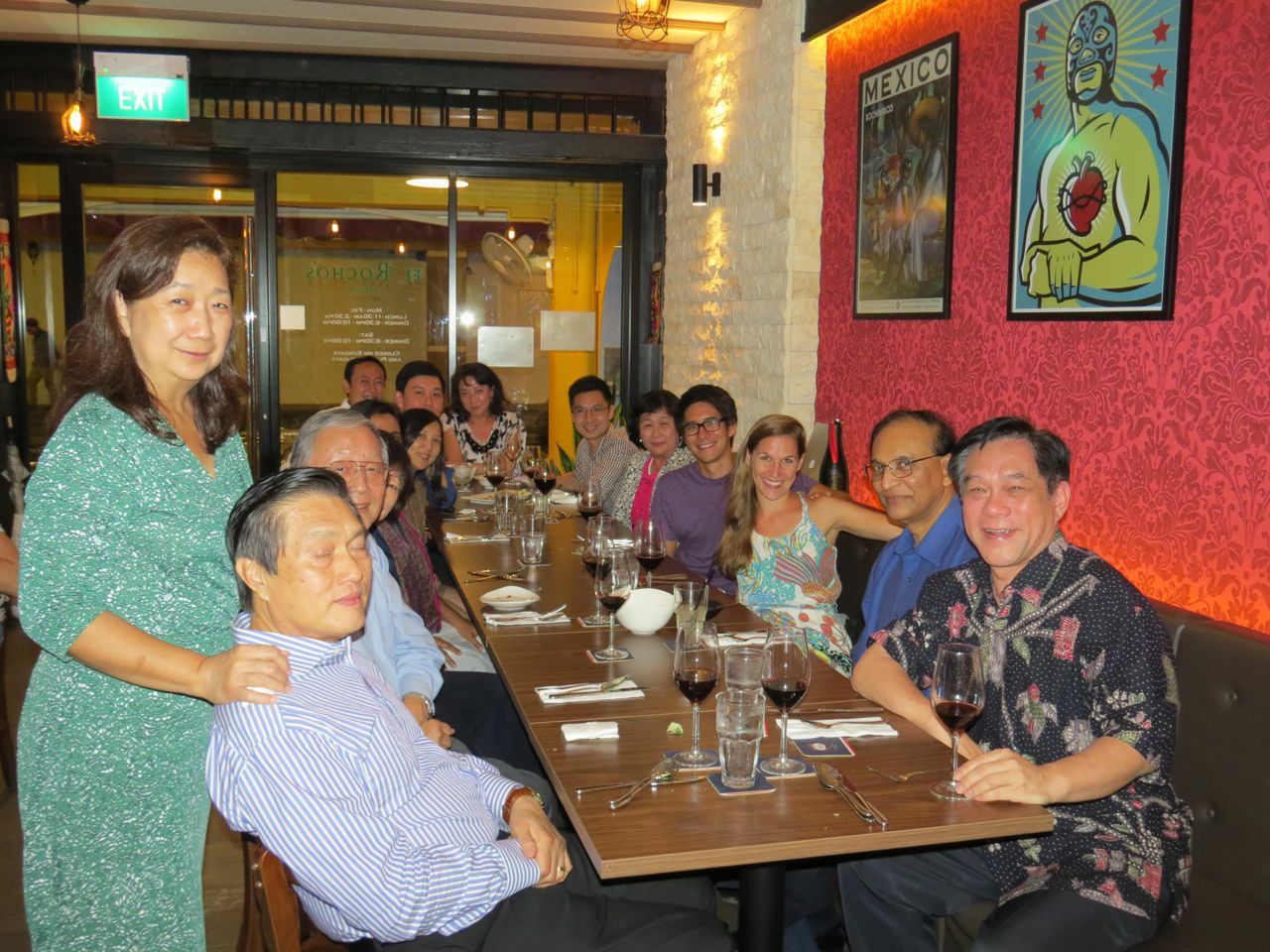
My grandparents came together as an arranged marriage. Although I didn’t delve into details with grandmother on how the marriage worked, it seemed to have worked well enough for it to survive until my grandfather’s death. They raised a family of two sons and two daughters in the small town of Kampar, Malaysia. They had a modest life. Not necessarily poor but also not rich. Given this, it says a lot that my grandparents invested in sending my father, the eldest child, to Australia when he was 17 for his final years of high school and then university. No doubt that would have been an expensive thing to do for a modest Malaysian family. They clearly valued education and believed in investing in their children. Despite intentions for my dad to return, he never did and settled in Australia. My dad tells me that Australia offered him a quality of life and freedom he couldn’t get back in Malaysia. I think this is both a reflection of the differences in lifestyles between Australia and Malaysia, and a reflection of my father’s desire to define his own path without the constraints of a strong patriarchal figure. Similarly, his brother, James, was given the opportunity to study medicine in Australia and afterwards settled in Singapore with his family. While my uncle was studying, his older sister, Aunty Dorene, helped support him by sending him money from what she earned as a nurse. This again illustrates how highly valued supporting family is in my family. I’m also reminded of this each time I visit my Uncle James in Singapore. My uncle and his wife, Aunty Theresa, are always incredibly generous to me and find a way to celebrate my visit. One of the highlights of our recent stay in Singapore was attending a big family dinner with the relatives of my uncle, the relatives of his wife and some close family friends.

IMG_5726

Extended family dinner in Singapore

As for my two aunties, Aunty Dorene and Aunty Lilian, they both have remained in Malaysia. Admittedly, it sounds like the opportunities that were given to the brothers (my father and uncle) were not necessarily also made available to the daughters. I think this was a matter of practicality that my grandparents couldn’t afford 4 overseas educations but also probably due to old cultural sexism between the importance of male vs. female education. Today my aunties, along with my grandmother, live in the town of Ipoh, not far from the smaller town of Kampar where they grew up. Aunty Dorene lives with my grandmother and cares for her. Aunty Lilian lives with her husband, Uncle Steven, and their son, Joe. Each works as cook. Funnily enough, my cousin works at an Australian restaurant in Ipoh (?!). My aunty and uncle run a hawker food stand making delicious dumplings and noodles (wonton mee).

So there you have it, the story of the “Wong” side of my family: troubles in China led to a migration to Malaysia in search of opportunity; the value of honesty and hard work led to opportunity being realised; and the value of investing in education and supporting family led my father to Australia where he would one day meet my mum and I would one day be born. No doubt, when we get back to Australia in November I’ll be quizzing my mum to find out more on the “Sutherland” story. Stay tuned.

0

5 steps to learn a new language in under a year

untitled%2520%25281%2520of%25201%2529-410 (Small)

As we travel around the world, Christine and I regularly have encounters that illustrate the opportunities that are unlocked by speaking more than one language. In Turkey, Christine wrote about an encounter with a restaurant owner that turned a simple meal into a wonderful evening of singing and learning about the lives of people in Cappadocia once we discovered he could speak German. A similar thing happened in Mongolia with the manager of a Ger camp we stayed in who similarly could speak German but not English.

I think most of us appreciate how powerful it is to speak more than one language. And yet, so few of us do (more than 75% of Australians and Americans only speak one language [1]). Why is this? My guess is that many of us believe that learning a new language is hard and takes years to achieve. I know that’s how I felt a year ago when I started to learn German. But now I know that this is not the case. In under a year, I’ve been able to get to a level of proficiency where I can watch many German TV shows, have conversations with my mother-in-law and spend 80% of my time with my wife speaking only German.

I firmly believe anyone can get proficient in a language in under a year and it only requires around 30 minutes of practice a day along with some creative ways to incorporate your new language into your day-to-day life. Here are 5 tips that were most useful for me in learning a new language. I’ve had the opportunity to test and refine these concepts with many multi-lingual travelers that we’ve met. Fortunately, each of these concepts resonated and they seem to be broadly applicable, regardless of background or language being learned.

1. Start with Duolingo:

Duolingo (www.duolingo.com) was the primary tool I used to learn German. And it is AWESOME. Most days I spent 30 minutes practicing (or perhaps maybe a more apt verb would be “playing”) with it. Almost every multi-lingual traveler I’ve met not only uses it, but like me, cannot help but sing its praises. To summarize why Duolingo is so great: a) there is a ton of science in the learning method. For example, it draws on research that learning sentences rather than words is more effective; it uses repetition at variably spaced intervals, which is also widely recognized as effective in learning; and it comprehensively covers reading, listening, writing and speaking; b) it’s personalized, identifying areas of weakness to provide greater content in those areas; c) it’s gamified and social which makes learning fun and motivating. ; d) it has a great mobile app which is one of the primary devices in which I used Duolingo (e.g. on the train to work); e) it’s entirely FREE thanks to one of the most ingenius business models.

2. Speak from day 1:

I remember in the early days of learning German that I didn’t feel like I was ready to speak. For example, when my fiancé and I spoke with her parents on Skype I spoke very little, embarrassed that I only knew a few words and afraid I would get things wrong. I had to push myself to get over this. Knowing words and phrases in your new language is great, but speaking them in real world situations is a whole other skill. It requires a level of quick recall and muscle memory that you can only develop by practicing to speak the language.

There are a range of ways you can find opportunities to practice speaking. You can find language meetups in your local town, sign up to websites (e.g. italki.com) that pair people learning new languages, or even just go out in public and spark up conversation with strangers who speak your language like these guys.

However, the best way to practice speaking is to…

3. …find a “Language Parent”:

Have you ever listened to how a parent speaks to their infant while she is learning to speak? What you hear is the parent speaking in simple phrases on a variety of topics, carefully listening when the child speaks, interpreting from broken phrases what the child means and often repeating back what they’ve heard in complete and correct sentences. The child feels completely safe to say whatever they want and to take risks in using their new language. This is probably the best environment possible to learn a language. And that is what your language parent will help you do.

A “language parent” is a term I heard coined in a TED talk by Chris LonsdaleIt refers to someone who is fluent in the language you are learning, who you feel very comfortable around to make mistakes, and who is obviously willing to be patient with you. In my case, my language parent is my wonderful and very patient wife. As soon as I began to learn, we started speaking German together and I was amazed at how quickly we were able to get to a place where the majority of our conversations were in German.

While not everyone may have a significant other to be their language parent, there are other ways to find one. In Turkey I met a woman who intentionally found a roommate that could speak English in order to practice her English. No doubt you’ll be able to find a friend (or befriend) someone fluent in your new language. See if you can make them your language parent!

4. Hammer through the grammar:

A couple of months into learning German, primarily using Duolingo, my language learning hit a brick wall. I was finding that no matter how much I practiced that I wasn’t really learning effectively or understanding the rules and constructs of German sentences. I ended up engaging a tutor for an hour a week for 10-weeks to intensively learn grammar. My time with the tutor essentially consisted of getting a grammar textbook and laboriously going through each exercise until we had gone through the book. It made the world of difference. While for some languages there aren’t as many new rules to learn, for most languages there are some grammatical differences you’ll need to get your head around so I encourage you to bite the bullet, buy a grammar textbook and hammer your way through it. I’d be interested to hear if other people have better (or more fun) ways to learn grammar, but this method worked well for me.

5. Immerse yourself:

One of the most impactful things I did in learning German was using my 3-weeks annual leave to go to Vienna and immerse myself, speaking only German with Christine’s parents and going to German classes each day. I highly recommend this type of experience. That said, even if this isn’t workable in your life there are other ways for you to immerse yourself in your new language. Read children’s books in your new language (and for European languages you may be able to find the CEFR level of the book to assist in matching the book to your level). Watch movies and TV shows (tip: turn on the subtitles for the language you are learning. Often having the words both spoken and written will help you understand what’s going on). Listen to songs and learn the lyrics. Read the world news in your new language. Change your phone settings to be in your new language (warning: there will no doubt be times where this decision will frustrate you, but it’s worth it). These are just a few ways to incorporate your new language into your day-to-day life, and there are surely many others. You just need to get creative.

I’d love to hear from others and their experiences in language learning. I hope these concepts resonate, or better still, are helpful in your current language learning. For those of you who are considering learning a new language, I hope that this encourages you to give it a go!

***

[1] Quote from US Secretary of Education, Arne Duncan in 2010 and 2011 Australian Census

0

A day at the ancient market in Shaxi

IMG_5693
It was bustling with people. Old and young, equipped with soon-to-be-filled wooden baskets on their backs, made their way through the narrow streets. Street vendors everywhere. Lined up one after the other on either side of the street or scattered throughout the middle. The air was filled with a variety of scents. Some of them quite good, tempting us to explore their origins, others less so. Christian and I found ourselves at the weekly Friday market in a town called Shaxi.
Shaxi, which is located in the Yunnan province only about a 2 hours drive away from Lijiang, started as a trading point for tea and horses during the Tang Dynasty (618-907). It’s said to be the most intact horse caravan town on the ancient tea route leading from Burma to Tibet. We were struck by Shaxi’s authenticity. Lijiang (known as the main attraction in the region), Shuhe Old Town (where we stayed at a lovely B&B called “The Bivou”) or Baisha (where we met Dr. Ho) were all beautiful but also felt somewhat gentrified and quite touristy. Shaxi, in contrast, felt more untouched, had more local shops and just in general seemed to go about its daily business instead of catering to tourists. It was beautiful and incredibly refreshing. At times Christian and I seemed to be the main attraction in town, getting curious looks from locals ourselves. Wandering the streets, we made some interesting observations.
Besides a very rich local produce offering, teas, staples, clothing and household items, people also stocked up on livestock (or alive animals that would meet the dinner table soon). A small “chicken market” offered a variety of alive chickens in the age range you desired. You just picked the chickens you liked, packed them in a cardboard box and tied the box to your wooden shopping basket.
Then there was the “fish market”, an accumulation of low, square plastic basins with all sorts of fish. You could get them gutted or alive (in a plastic bag).
That said, the most unexpected offering were dental and ear doctor services. Imagine the dentist’s office as a simple plastic chair next to a table with some accessories on the side of the road. The dental offering seemed to consist of cleaning services, teeth removal and also prosthetics. For the latter, one could choose from a few used (yes, used!) dental implants. Some of them were missing teeth. Others were decaying already. I guess better than nothing if options are limited. ‘Unfortunately’, no one seemed in need of (or was willing to undergo) any procedures while we were there.
The ear doctor, however, seemed in higher demand. He was examining the left ear of a middle-aged man. A crowd of onlookers had gathered in a close circle around the patient’s chair. I almost squirmed when the ear doctor, quite a young man, took his silver instrument and ‘dug’ into the patients ear. He moved the long tweezers forcefully from one side to the other. The patient grimaced out of pain. This was not pretty to watch. Suddenly, a dark brown piece (the size of a fingernail) materialized itself. The ear doctor dropped it in a little yellow metal jar on the table. That’s when I realized that the jar already contained dozens of others brown pieces. All of the pieces were earwax! Earwax that probably accumulated over many, many years. The patient played around with his ear, testing his hearing abilities. He seemed pleased with the results. With that ‘fluff’ removed his hearing ability must have just jumped 10x! I was, however, still questioning the doctor’s method. Couldn’t the patients ear get hurt in the process? The doctor, for sure, had attracted some more attention and would probably make good business that day.
Having worked up an appetite, Christian and I hit a few food stalls, eating our way through a selection of noodles and desserts. We didn’t really have an idea what exactly was offered but with an adventurous spirit we tried various dishes. The first dish was a mix of cold rice noodles with different spices, cilantro and a type of soy sauce. Then I saw some kids taste an interesting drink. It was of brownish color with some sort of solid, gelatinous balls inside. Upon tasting it I found it a bit too sweet but good nonetheless. And then we tried this dish that we had seen several times throughout the day. Grayish looking thick, solid custard that was mixed with noodles, spring onion, peanuts and a variety of sauces. Even to this day I still don’t know exactly what we ate. Christian thinks it was lard, I keep telling myself it was some gelatinous, rice-based substance.
With both of our stomachs and curiosity satiated, we made our way back to Shuhe Old Town with a quick stop over at Mount Shibao, renowned for its grottoes with Buddhist sculpture carvings. The day had been a highlight of our stay in the Yunnan region, truly transporting us back to another time.
0

Meeting the Famous Dr. Ho

IMG_5457

We had first learned about Dr. Ho from our Lonely Planet. Apparently he was a “world famous” Taoist doctor and herbalist, who was said to have cured illnesses from patients around the world. Curious to learn more and somewhat skeptical if this was one of those tourist attractions, we set out to find Dr. Ho in Baisha, a small town about 10km from Lijiang in the Yunnan province in Southwest China.

Upon finding Dr. Ho’s ‘clinic’ we were hit by a wall of Chinese and international newspaper articles. The articles were framed in glass and plastered all over the outside wall of the house. Somewhat more convinced that there might be something to this story we ventured into the building.

We found ourselves in a dark room with glass cabinets and sales counters that were covered in yet more newspaper clippings. Most of them were faded and yellowish but still readable. A middle-aged man called Ho Shu-Long, who introduced himself as Dr. Ho’s son, greeted us immediately and gestured us to sit down on a wooden bench. His English was fairly good and he could even speak a few words of German. His father had learned some German from Joseph Rock, an Austrian-born botanist who spent about 30 years in the Naxi region to study plants and herbs. Barely having sat down, Ho Shu-Long brought us yet more newspaper articles, in both English and German, neatly arranged in plastic covers.

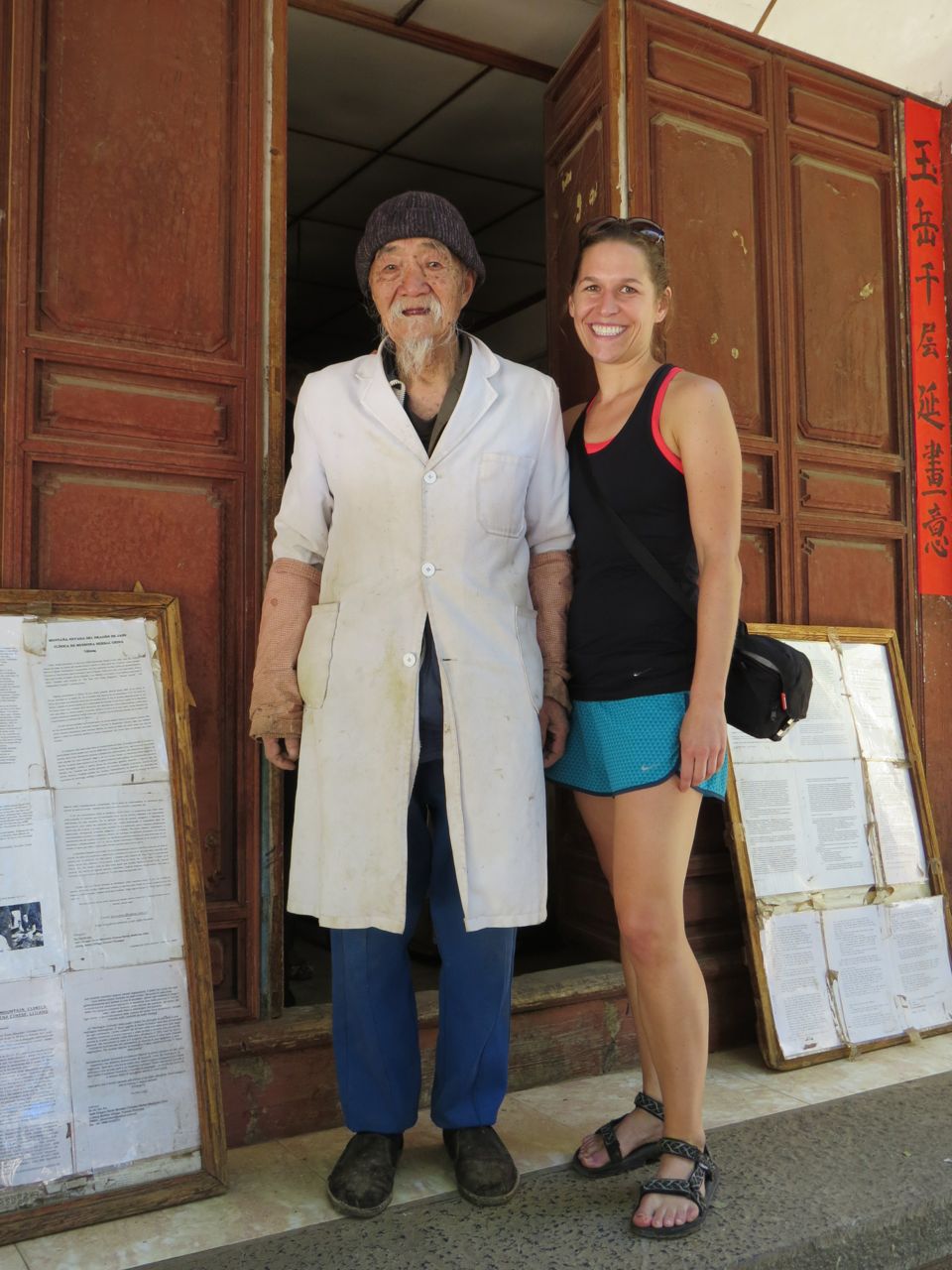
An old woman, that has been sweeping the outside area of the house when we arrived, slowly walked into the room. We were told that this was Dr. Ho’s wife, who was a respectable 91 years of age. She seemed unfazed by our presence, going about her daily business. We asked if we could meet Ho Shu-Long’s father but he said that wasn’t possible. I felt disappointed. Having found the clinic I had gotten curious to learn more. Two minutes later however an old men slowly walked in from the backdoor. It was Dr. Ho! He looked exactly like one would imagine a wise old Chinese man with his white wispy beard, a grey, head-hugging hat, and a white somewhat dirty doctor’s coat. He moved around with slow but intentional movements. For his 92 years he looked in great shape! We introduced ourselves and he seemed excited that I’m Austrian, probably evoking old memories from his friendship with Joseph Rock. Similarly, he was excited about Christian’s Australian origins as his doings had been covered by Australian TV and radio shows as well. He pointed us to books by Bruce Chatwin, an English travel writer. It was Chatwin’s 1986 New York Times article “In the little-known Kingdom of Joseph Rock” that shot Dr. Ho to fame. Many journalists and camera crews followed thereafter.

Dr. Ho investigated if we had any problems after he had positively remarked that we seemed to be in good shape (many of his patients seem to have weight problems). Well, that was a good start! Christian told him about his high cholesterol levels. That’s where it got interesting. The two set down at the corner of one of the sales counters. The consultation started. It was surprisingly short. Dr. Ho basically just asked Christian a few simple questions before taking off into the adjacent room. The room was overflowing with plastic jars and containers of all sizes. He took a brownish looking powdery mix out of a couple of containers and went outside to the back terrace where he mixed the dusty combination together. Back in the consultation room the instructions followed: drink the powder three times a day (for one month) mixed with hot water and some honey. Seems almost too easy. I was somewhat skeptical that this tea blend would mysteriously lower Christian’s cholesterol levels. But I was too quick to judge.

Dr. Ho gave us another flyer (this one in German) laying out his holistic philosophy for a happy and healthy life. While his medicine will help, he tells his patients that “Optimism is the best medicine” and urges them to: “Live a simple life. Eat simple. Don’t smoke or drink.” He also advocates that both Western and Chinese medicine in the right combination can have a very positive impact. That seemed very open-minded. His son elaborated on their philosophy: “Live with compassion as for a loving heart will be happy. Live your life in balance. It’s good to experience all emotions but not to the extreme”.

He continued: “My mother (remember she is 91) is completely self-sufficient. To this date she washes her own clothes, prepares and cooks food and cleans the house.” Truly stunning! “While some people would call me a bad son, my philosophy is that those chores give my mother’s life meaning and make her more happy.” He believes that for the same reasons his 92-year old father still runs the clinic

Besides getting Christian’s cholesterol-curing tea (we’ll report back on its effectiveness), this turned out to be a very inspirational visit. Good food for thought on what really matters to live a happy life.

IMG_5494

2

China: From ancient dynasties to modern republic

IMG_4945
I’ve always been fascinated by China, its rich history and multifaceted culture. Despite history class in school, reading Chinese literature, and seeing movies from the ‘Last Emperor’ to ‘Jackie Chan’, I was never quite able to stitch together a completely coherent picture of the various dynasties and political influences over the years. After having spent three weeks in this fascinating country, we learned a ton about the history. So much so that we wanted to give it a separate blog post. Here is what we’ve learned.


China’s Dynasties: Rivaling kingdoms, unification and foreign rule (6000 BC – 1911)
  • China is one of the longest lasting civilizations on earth, its roots reaching back to 6000 BC. The Song Dynasty (1766 BC) is considered to be the first “dynasty” even though it only controlled a very small part of the country. There was a lot of fighting going on during this period between neighboring kingdoms. Despite this turmoil, the land was intellectually fertile and Confucianism was able to take hold around 500 BC spreading thoughts on ethical behavior and hierarchical structures – a system that underpins China’s culture to this date.
  • The Qin dynasty (221-206 BC) was the first to unite the broader country. They unified measurements, the currency and the written language, thereby laying the ground work for a cohesive state. The first emperor Qin Shin Huang was the one who ordered the construction of a mausoleum in which he wished to be buried one day together with his “army”, the Terracotta Warriors. The Qin were also the ones that established the Great Wall from the various sections that had been built by separate independent states before.
  • Next up was the Han Dynasty (206 BC-AD 220). This dynasty was so important that the name “Han” still refers to ethnic Chinese today. During this period China was also a major trading partner on the Silk Road, showcasing its importance as an Eurasian power. Eventually economic struggles and social unrest led to the downfall of the Han, followed by centuries of rivaling kingdoms.
  • The Sui Dynasty (581-618) reunited the rivaling country and built the “Grand Canal” which up until the 19th century remained one of the most important communication routes between North and South China. The Sui lost power due to disastrous military setbacks it incurred trying to invade Korea.
  • The following Tang Dynasty (618-906) is seen as the cultural zenith of China due to its openness to ‘Western’ influence (e.g., intermarriages with Central Asia, fashion from India). Chinatowns around the world are still called Tangrenjie (Tang People Streets) to this day. Another noteworthy fact is that China’s only female emperor was part of the Tang lineage. Increasing provincial power eventually brought the dynasty to a downfall.
  • The disunity lasted until the Song Dynasty took over (960 – 1126). The economy flourished through increased scientific and intellectual advances across many disciplines and the emergence of a truly China-wide market.
  • External threats were growing, however, and Genghis Khan expanded his Mongol empire eventually taking over all of China and establishing the Yuan Dynasty (1279-1368). The Mongols eventually proved less able at governance than warfare and had to hand over the reign.
  • The following Ming dynasty (1368-1644), despite trying to impose strict traditional social norms on the population, saw commercial growth and social change continue. The construction of the Forbidden City in Beijing as well as the reconstruction of the Great Wall happened during this time. Traders from Europe started to arrive, bringing with them new crops and increased commercial activity. They were quickly followed by missionaries trying to spread Christian beliefs. Internal power struggles, however, eventually gave the opportunity for another foreign power to take over: the Manchu.
  • The Manchu, a nomadic war-like people from the North, ruled China as the Qing Dynasty from 1644 to 1911, creating much of the map of China as we know it today. During the 19th century several factors contributed to their downfall: the opium wars in the 1840s (resulting in British rule over Hong Kong and the opening of ports to foreign trade), the anti-Qing Taiping rebellion (1850-64) driven by a pro-Christian movement, broader foreign imperialist incursions nibbling away on China’s coastline (e.g., Macau) and the Sino-Japanese War (1894-95). The Chinese people called for reform and were in favor of a republic.

The first Republic (1912-1949)

  • The first republic lasted less than 40 years. Some describe this time as China’s darkest period, marked by external imperialist pressures and domestic political tensions. Sun Yatsen, the leader of the counter-dynasty movement, served as the first president but was soon overthrown by a military leader, followed by years of provincial in-fighting.
  • At the end of WWI, a time of intellectual turmoil and discontent with politics, the CCP (Chinese Communist Party) was founded. Among the founding group was Mao Zedong, a library assistant from Peking university. Sun Yatsen (back from exile) formed the ‘bourgeois’ Kuomintang party. The following years were marked by an alliance of the parties together with the newly formed Soviet Union. The goal was to reunite China. Much of China was “reunited” through military pressure over the following years, the alliance however came to an end when the Kuomintang themselves seized power in 1928 under Chiang Kaishek (a military leader who had taken over after Sun Yatsen’s death). What followed was a war waged against the CCP. The ‘Long March’ forced CCP members to flee 6400km across the country. Only a fraction survived.
  • The approach of WWII saved the CCP. Both the Kuomintang and the CCP played an important role in defending the country against Japan over the next seven years. The CCP emerged as the ultimate ‘winner’ after a 3-year civil war with the Kuomintang, having increased its troops size and party membership across the country thanks to its guerrilla role during WWII. As the head of the CCP, Mao Zedong declared the establishment of the People’s Republic of China.

Mao’s China (1949-1976)

  • Mao’s ideology was based on finding a role for every citizen in the new politics and society. The break-up of traditional structures (e.g., landlord and tenants) was liberating for many but a time of terror for others. The CCP focused on socialist economics to boost production. One of the most ambitious plans, the ‘Great Leap Forward’, promising to increase productivity across industry sectors turned out to be a disaster. The agricultural output from collectivization drastically fell short of expectations, causing famines responsible for more than 20 million deaths (some say the losses were even higher). The hardships continued despite a return to a somewhat more market-driven economy.
  • Concerned that China was growing too satisfied with the rising standard of living, Mao launched a massive campaign of ideological renewal, the ‘Cultural Revolution’. Self-promotion and propaganda helped Mao achieve cult status. His followers became known as the Red Guards. Critics of his direction (including CCP party members) disappeared. It was an era of violence that brought creative thinking and academic research to a standstill. Eventually, the police forced the Red Guards off the streets. In the early 1970s, China threatened by the now-hostile USSR started to engage in diplomatic talks with the US and the Cultural Revolution slowly died down. Many people responsible for crimes during the cultural revolution got away without any charges. Still today, the CCP discourages the open debate of this period.
Reform Era and China Today (1976-2014)
  • With Mao’s death in 1976, the CCP (mainly under the leadership of Deng Xiaoping) set out to modernize the economy. This included breaking down the collective farms, encouraging small enterprise, and establishing four Special Economic Zones (SEZ) to promote entrepreneurship and encourage foreign investment. Politics was kept on a much shorter reign.
  • The urban middle class, however, had appetite for more freedoms. This sentiment culminated in the 1989 demonstrations on Tiannamen Square. At their peak in June 1989, the internationally embarrassed CCP imposed Martial law, violently removing people from the square. The death rate is estimated to be in the hundreds.
  • After three years of a political freeze, the CCP engaged in further economic development, trying to address the growing regional inequality and rural poverty. Over the years, the question of political reform found itself shelved, partly because the economic growth was bringing prosperity to many (albeit in unequal fashion). In 2011, China became the 2nd largest economy in the world, overtaking Japan. Today, China’s economy, despite its high growth rates, remains imbalanced and is mainly skewed to the export industry and high-investment projects.
2

Snapshots of China

IMG_5712

Beijing

Having been to Beijing before during the frenetic times of the Beijing 2008 Olympics, I was curious to return to see what the city looked like when it was “business as usual.” Somewhat surprisingly, it almost felt like the city was even more frenetic this time round. Traffic was heavier. Air pollution was thicker (smog prevented us from seeing the sun during the 4 days we were there). And it even felt like security checks were more intense (for example, you now go through security checks for the metro and many popular public monuments). But after spending 3-weeks in almost isolation in Mongolia, Christine and I were ready to take on a big city.

We hit the key tourist sites like Tiananmen Square and the Forbidden City. We also did a tour of Peking University after I presented to the MBA class there on careers post business school and why they should be using LinkedIn (yep, months after leaving my job at LinkedIn I’m still cheerleading for them. Go LinkedIn.). And we searched around for the best food Beijing has to offer from Peking Duck to Cantonese specialties (stuff I grew up with) to Hot Pot.

Great Wall of China

Visiting the Great Wall was just breathtaking, even second time around. When I did it the first time back in 2008, we went to the more “popular” (read: touristy) section of Badaling. Luckily, this time my wonderful friend and China expert, Nat Gray, encouraged us to go to the more secluded section of Jinshanling. We followed her advice and are so grateful we did.

We visited on a Sunday morning. There was kind of an eery feeling we arrived, in part due to the dense mist in the air, but mainly due to the fact that there was no one else around. Here we were, visiting one of the world’s most popular tourist attractions on a weekend and we were the only people in sight! It took us almost an hour before we saw other people on the Wall, and even then, we probably only saw about 20 or so other people during the four hours we traveled along the Wall. It was an incredible experience.

While driving to and from the Great Wall we did a bit of reading up on the history. Many of us know it was built to help defend China from its aggressive neighbours like the Mongols. What we didn’t previously know is that sections of the Wall were originally built even before China was a unified kingdom by the separate independent states. It wasn’t until the Qin dynasty (221-207 BC) when China was unified as a single kingdom did the project begin to make it a Wall for a unified China, and hence the moniker the “Great” Wall. Interesting, no?

Xi’an and the Terracotta Warriors

We put a 2-day stop in Xi’an on our itinerary largely to see the Terracotta Warriors. We were pleasantly surprised that Xi’an is a wonderful city in its own right. It also has a rich history, being the original capital of the unified China up until the Tang dynasty ended around 907. Some of the top things to do in Xi’an are to visit the old town (particularly the Muslim Quarter where you get to taste some incredible street food) as well as marvel (or better still, bike ride around) the 14km city wall.

Nonetheless, seeing the Terracotta Warriors was the highlight of our trip to Xi’an. The quick history on the Terracotta Warriors is that they were built by the first emperor of the unified China, Qin Shi Huang back around 210 BC. The purpose was for the army to ensure he would be as powerful in his afterlife as he was during his time in the real world. It is said he kicked off the project when he was 13 years old, and had 600,000 people work on it until his death at age 50. But the project was never officially documented so it wasn’t until some peasant farmers in 1976 accidentally stumbled upon it when trying to get water from a well that the incredible work was discovered.

The museum is incredibly well done. It is built on the actual site that the Terracotta Warriors were found and excavated, leaving each of the pieces in their original places. Being there makes you feel like you are part of an archaeological excavation. But what blew me away was that while there are tens of thousands of these life-size warriors, each of their faces is distinct. Incredible.

Jiuzhaigou and Huanglong

One of China’s not-so-secret natural treasures is Jiuzhaigou National Park. I say “not-so-secret” because even though most people outside of China have probably never heard of this park, most people in China do know about it. And when we visited, it felt like EVERYONE in China was there visiting with us. While admittedly the crowds did detract somewhat from the experience, the park itself was nothing short of breathtaking. I truly have never seen lakes with such vibrant colours before. If I didn’t know better, I would have said they looked artificial because they were that spectacular. The blues, greens, turquoises, milky whites of them were really incredible. My words, and even our photos, don’t do it justice.

Huanglong is a couple of hours drive away from Jiuzhaigou. Although it’s a fair bit smaller, it is no less breathtaking and fortunately doesn’t attract the same drones of people as Jiuzhaigou. It ended up making for an even better experience.

We spent a full day at each of the parks. A full day was enough for Huanglong but you could probably do 2-days at Jiuzhaigou if you had the time.

Shanghai

Shanghai was the highlight of our time in mainland China. Partly because it is a great city. But mostly because we spent the time there with one of my closest friends, Nat Gray. As her wedding present to us, Nat organised our whole Shanghai itinerary and shouted us for everything. It was incredibly generous of her (thank you again, Nat!). First night we went out for a dinner with her and her friends at a great Sichuan restaurant followed by drinks and karaoke into the wee hours of the morning (we only could manage to stay out to 3am after getting up earlier that day at 5:30am to make our flight, but we heard others in the group sang until 5am!). Next day we were all a bit hazy but still managed to pull ourselves out of bed to have dim sum with Christine’s HBS sectionmate, Sandra Weng, and her beautiful daughter, Serena.

During our 4-nights in Shanghai, Nat organised a wonderful itinerary walking through the best parts of town; drinking with the best views of Shanghai’s famous “Bund”; and eating at incredible restaurants including a food walking tour (if you’re interested, we highly recommend “Untour” and their food tour of Shanghai). Nat also bought us tickets to take the high speed train to Nanjing (1hr 15 mins from Shanghai) so we could see the Memorial Museum to the Nanjing Massacre. Was very interesting to learn about the atrocities committed by the Japanese in China during World War II. A very moving experience.

After four incredible days in Shanghai with Nat, we got a good appreciation for life in Shanghai and felt sad to leave.

Lijiang, Shuhe and Shaxi

Lijiang was the last stop of our travels around mainland China. Again, it was a recommendation of Nat Gray (and her friend, Amanda). Funnily enough, we had several people we randomly met in China during our travels who also all recommended (unprompted) that we check out Lijiang. The charm of the place is the old town, with its old style buildings and cobble stone streets that really takes you back in time.

We had been warned that Lijiang Old Town can be a little overrun by tourists, and while it was busy, we didn’t think it was all that crowded compared to what we’d seen earlier on our trip in places like Beijing, Shanghai and Jiuzhaigou. Our accommodation was at a wonderful boutique hotel, The Bivou, which was in another old town called Shuhe, 4km from Lijiang Old Town. One of the charms of staying in Shuhe was that it was smaller and less crowded that Lijiang, while having all the same charm.

During our stay we rented bikes and rode around to other old towns in the area, including Baisha and Yuhu. The highlight of our excursion was meeting a famous doctor and herbalist, Dr Ho. Christine is going to write about this in a separate post soon.

On another day we hired a driver to take us to Shaxi (about a 2hr drive away). We had heard about the famous Friday markets in Shaxi, which have been happening since the days of trading along the Tea-Horse Road (similar to the Silk Road). It was a very special experience, and once again Christine will write a separate post on it.

There are actually so many other activities we could have done in the surrounding areas of Lijiang if we had more time. It’s funny, that even though we’re traveling the world for a year that we still sometimes feel rushed for time. But there’s just so many things to do and places to see!

Hong Kong

We had not initially planned a stop in Hong Kong. However when we found out that one Christine’s closest friends (who also acted as one of our marriage celebrants), Shilpa, had relocated there, we made sure it was a stop on our journey.

It was so nice to reconnect with Shilpa. Although I was out of action for a couple of days (recovering from a cold I caught on our last day in Lijiang), the girls explored the city together, bringing their hula hoops along for good measure. We also got to catch up with Greg, an Australian gut we met in Cappadocia, for dinner. He recently moved there with his fiancee to teach English at a local school. We learned from Greg that Hong Kong has a number of fantastic hiking trails and beaches, which he had just started exploring. They sound pretty amazing. We didn’t get around to doing any on this trip (my illness and a typhoon warning kept us mainly indoors) but now are keen to return to Hong Kong to check them out.